
Thoroughbred Aftercare Alliance Accredits 39 Organizations
All Posts & News Press Releases Success Stories Aftercare Editorials Retraining Tips Supporter Features Inspector Spotlights Humberger Toggle Menu [wpdreams_ajaxsearchlite] Previous Post Thoroughbred Aftercare Alliance Accredits 39 Organizations Thoroughbred Aftercare Alliance Accredits 39 Organizations FOR IMMEDIATE RELEASE October 17, 2024 News Tags:accreditation, Accredited Organizations, Organizations, TAA-accredited, Thoroughbred Aftercare, Thoroughbred Aftercare Alliance LEXINGTON, KY — Thoroughbred Aftercare Alliance announced today that 39 Thoroughbred aftercare organizations have been awarded accreditation for 2024. The 39 organizations include 38 organizations who are continuing their accreditation and 1 that earned accreditation this year. Thoroughbred Aftercare Alliance, the gold standard and only accrediting body in Thoroughbred aftercare, now has a network of 84 organizations with approximately 172 facilities in North America. The new organization earning accreditation this year is: Champions Retreat. The 38 organizations that are continuing their accreditation this year are: After the Races, Bright Futures Farm Inc., CANTER Kentucky, CANTER Michigan, Caribbean Thoroughbred Aftercare Inc., Center for Racehorse Retraining, Central Kentucky Riding for Hope, Days End Farm Horse Rescue Inc., Down the Stretch Ranch, Equestrian Inc., Equine Advocates Inc., Equine Rescue & Adoption Foundation Inc., Final Furlong Inc., Finger Lakes Thoroughbred Adoption Program Inc., Friends of Ferdinand Inc., Galloping Out, Harmony and Hope Horse Haven Inc., Healing Arenas Inc., Heart of Phoenix Equine Rescue, Hidden Acres Rescue for Thoroughbreds, Hope’s Legacy Equine Rescue Inc., Illinois Equine Humane Center NFP, Lollypop Farm (Humane Society of Greater Rochester), New England Equine Rescue (NEER) North, Our Mims Retirement Haven Inc., Out Side In Inc., Remember Me Rescue, Sandia Creek Ranch Auxiliary Foundation, Second Call Thoroughbred Adoption & Placement Inc., Second Chance Thoroughbreds Inc., Second Stride Inc., Square Peg Foundation, The Foxie G Foundation, The Susan S. Donaldson Foundation Inc., This Old Horse Inc., Thoroughbred Athletes Inc., Tranquility Farm, and TRRAC Inc. Accreditation from Thoroughbred Aftercare Alliance is an important recognition for organizations that provide care and support for retired racehorses. It signifies that these organizations meet certain standards and criteria in terms of horse welfare, facilities, and management. Thoroughbred Aftercare Alliance accredited organizations undergo a thorough application and inspection process prior to accreditation being awarded to ensure they meet the Thoroughbred Aftercare Alliance Code of Standards, which covers five key areas: operations, education, horse health care management, facility standards and services, and adoption policies and protocols. Facility inspections are conducted at all facilities housing Thoroughbreds for each organization. Ongoing updates and re-inspections are required of all organizations as a condition of accreditation. “We are excited to announce the accreditation of 84 organizations this year. Their unwavering dedication to meeting the highest standards in Thoroughbred aftercare underscores their commitment to the retraining, retirement, and rehoming of these horses. This achievement reflects a collective effort to ensure a brighter future for Thoroughbreds after their racing careers,” said Janice Towles, Director of Accreditation and Grants, Thoroughbred Aftercare Alliance. All organizations that hold Thoroughbred Aftercare Alliance accreditation are eligible to receive financial grants to support the care of their Thoroughbreds. Grant applications are currently being reviewed and the total grant amount awarded by Thoroughbred Aftercare Alliance will be announced next month. Since 2012, Thoroughbred Aftercare Alliance has awarded $31.9 million to accredited organizations. “We commend all the organizations that applied for accreditation this year. It is a rigorous process in which applicants undergo a series of reviews and inspections covering all aspects of their organization to demonstrate their adherence to the Code of Standards. All accredited applicants have shown adherence to non-profit operational standards and a remarkable commitment to excellence in Thoroughbred aftercare, reflecting their dedication to these horses and their futures,” said Stacie Clark Rogers, Operations Consultant, Thoroughbred Aftercare Alliance. Thoroughbred Aftercare Alliance accreditation applications will open again in January of 2025. For more resources about accreditation through Thoroughbred Aftercare Alliance, visit the links below: To learn more about accreditation: org/accreditation To learn more about the Code of Standards: org/code-of-standards For the 2024 Thoroughbred Aftercare Alliance Reference Guide: org/2024-taa-reference-guide About Thoroughbred Aftercare Alliance Based in Lexington, KY, Thoroughbred Aftercare Alliance is a 501(c)(3) nonprofit that accredits, inspects, and awards grants to approved aftercare organizations to retrain, retire, and rehome Thoroughbreds using industry-wide funding. Along with continued funding from its original partners Breeders’ Cup, The Jockey Club, and Keeneland Association, Thoroughbred Aftercare Alliance is supported by owners, trainers, breeders, racetracks, aftercare professionals, and other industry members. Since its inception in 2012, Thoroughbred Aftercare Alliance has granted more than $31.9 million to accredited aftercare organizations. Currently, 84 aftercare organizations comprised of approximately 172 facilities across North America have been granted accreditation. To learn more about Thoroughbred Aftercare Alliance, visit thoroughbredaftercare.org. Contact Thoroughbred Aftercare Alliance859-224-2756info@thoroughbredaftercare.org Accreditation & GrantsJanice Towles859-224-2762jtowles@thoroughbredaftercare.org Media ContactSamantha Smith Share This Release
Thoroughbred Aftercare Alliance Announces Fourth Annual Calendar Photo Contest Winners
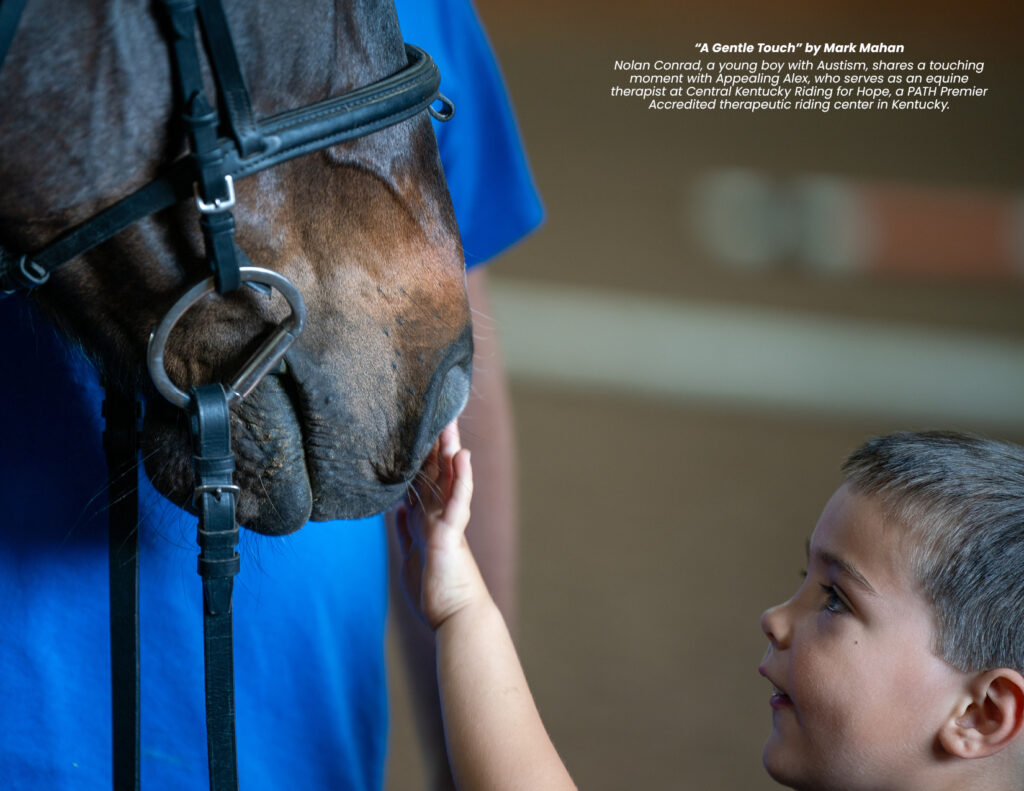
All Posts & News Press Releases Success Stories Aftercare Editorials Retraining Tips Supporter Features Inspector Spotlights Humberger Toggle Menu [wpdreams_ajaxsearchlite] Previous Post Thoroughbred Aftercare Alliance Announces Fourth Annual Calendar Photo Contest Winners Thoroughbred Aftercare Alliance Announces Fourth Annual Calendar Photo Contest Winners FOR IMMEDIATE RELEASE October 3, 2024 News Tags:2024 Calendar Photo Contest, Accredited Organizations, Calendar Contest, Central Kentucky Riding For Hope, Churchill Downs, churchill downs foundation, Churchill Downs Inc., Churchill Downs Incorporated, CKRH, Photo contest, Thoroughbred Aftercare, Thoroughbred Aftercare Alliance LEXINGTON, KY — Thoroughbred Aftercare Alliance hosted its fourth annual Calendar Photo Contest this year. Twelve winning photos of Thoroughbreds were selected to be featured in the 2025 Thoroughbred Aftercare Alliance Calendar, sponsored by Churchill Downs Foundation. Entries were accepted from June 26 to July 31. All photos feature a registered Thoroughbred that is either in residence at or has been rehomed by a Thoroughbred Aftercare Alliance accredited organization. Each winner will receive Thoroughbred Aftercare Alliance branded merchandise and a copy of the calendar. Out of the twelve winners, the grand prize winner was selected to be featured on the cover of the calendar and will receive a Tipperary helmet of their choice, sponsored by Tipperary Equestrian. The grand prize and cover feature winner of the calendar is Isabella Norrid. The photo, titled “A Gentle Touch” captures a young boy with Autism, Nolan Conrad, sharing a touching moment with Thoroughbred Appealing Alex. Appealing Alex serves as an equine therapist at Central Kentucky Riding for Hope (CKRH), a PATH Premier Therapeutic Riding Center. Central Kentucky Riding for Hope is a Thoroughbred Aftercare Alliance accredited organization, located in Lexington, Kentucky. Established in 1981, CKRH is a nonprofit organization that serves as a Therapeutic Riding Center and a Fayette County Public School. Their mission is to improve the quality of life and health of individuals with special physical, cognitive, or behavioral needs through equine-assisted activities and therapies. The winning photographs are: January: “Aurora Borealis” photographed and submitted by Jenn Marquis, featuring Moonshine Bay and Crossing the Line (NZ) at Down the Stretch Ranch. February: “Sunshine and Smiles” photographed and submitted by Andrea Gustafson, featuring Frosted Temptation and Stun Gun, who were both retrained and rehomed by Bowmen Second Chance Thoroughbred Adoption. March: “Being Seen” photographed and submitted by Joell Dunlap, featuring Fravel, who is currently a therapy horse at Square Peg Foundation. April: “Grazing Lineup” photographed and submitted by Ann Cheek, featuring Exciting Bucket, Play Book, Sweet Ambition, and Jo Jo’s Gypsy, who are residents at Our Mims Retirement Haven. May: “A Gentle Touch” photographed by Mark Mahan and submitted by Isabella Norrid, featuring Appealing Alex, who resides at Central Kentucky Riding for Hope as an equine therapist. June: “Criss-Cross” photographed by Julia Richter (Jules Richter Photography) and submitted by Kara Corpman, featuring Hot Tin Roof, who was retrained and rehomed by New Vocations Racehorse Adoption Program. July: “Diamond Junior and Jolene” photographed by Kylea Daugherty and submitted by Beverly Strauss, featuring Diamond Junior, who is available for adoption at MidAtlantic Horse Rescue. August: “Kansas Sunshine” photographed and submitted by Hillerie Hedberg, featuring Scott Pond, who was adopted from Second Stride. September: “Jumping into a Second Career” photographed and submitted by Addyson Cole, featuring Theheatofthenight who is in retraining at Second Wind Thoroughbred Project. October: “My Best Friend” photographed by Erin Berkery and submitted by Amy Luyster, featuring Holy Moses, who was retrained and rehomed by Secretariat Center. November: “Reminiscence” photographed and submitted by Sandra Pratt Silva, featuring Hi Time Ruler, who was adopted from Thoroughbred Retirement Foundation. December: “Happy Holidays” photographed by Maria Stockinger and submitted by Jenna Stockinger, featuring Long Awaited Guest, who was adopted from This Old Horse. 236 photographs were submitted to this year’s calendar photo contest. Along with the primary winners, 40 additional photos were chosen to be featured in the calendar as honorable mentions. A total of 57 Thoroughbreds are featured in the calendar, representing 37 Thoroughbred Aftercare Alliance accredited organizations and participating in many equestrian disciplines including: Hunter/Jumper, Dressage, Eventing, Western Riding, Fox Hunting, Sensory Training, Equine Assisted Therapy, and horses in retirement. “The Churchill Downs Foundation is dedicated to supporting the health, safety and welfare of our equine athletes,” said Cathy Shircliff, Director of Equine Industry Relations, Churchill Downs Incorporated. “The horses featured in the 2025 Thoroughbred Aftercare Alliance calendar highlight the versatility and intelligence both on and off the racetrack.” The 2025 Thoroughbred Aftercare Alliance Calendar, sponsored by Churchill Downs Foundation, will be available for a $20 pre-sale for the month of October 2025. The calendars will then be available starting on December 1, 2025 with every online donation of $50 or more made during the month of December. Donors may opt to receive a calendar by noting “2025 Calendar” in the comment field of the online donation form. Calendars will be available on a first come first served basis, until the inventory is depleted. Donations can be made at: thoroughbredaftercare.org/donation_now About Thoroughbred Aftercare Alliance Based in Lexington, KY, Thoroughbred Aftercare Alliance is a 501(c)(3) nonprofit that accredits, inspects, and awards grants to approved aftercare organizations to retrain, retire, and rehome Thoroughbreds using industry-wide funding. Along with continued funding from its original partners Breeders’ Cup, The Jockey Club, and Keeneland Association, Thoroughbred Aftercare Alliance is supported by owners, trainers, breeders, racetracks, aftercare professionals, and other industry members. Since inception in 2012, Thoroughbred Aftercare Alliance has granted more than $31.9 million to accredited aftercare organizations. Currently 86 aftercare organizations comprised of approximately 180 facilities across North America have been granted accreditation. To learn more about Thoroughbred Aftercare Alliance, visit thoroughbredaftercare.org. Contact Samantha Smith859-224-2882ssmith@thoroughbredaftercare.org Emily Dresen352-362-6934edresen@thoroughbredaftercare.org Share This Release
Supporter Feature: Emma-Jayne Wilson
All Posts & News Press Releases Success Stories Aftercare Editorials Retraining Tips Supporter Features Inspector Spotlights Humberger Toggle Menu [wpdreams_ajaxsearchlite] Previous Post Supporter Feature: Emma-Jayne Wilson Supporter Feature: Emma-Jayne Wilson By: Jay Privman September 18, 2024 Supporter Feature Tags:Industry Stakeholder, supporter, Supporter Feature, Thoroughbred Aftercare Alliance Supporter Photo Courtesy of Woodbine Entertainment Finding good homes for ex-racehorses, and worthwhile second careers for those horses, is something at which champion jockey Emma-Jayne Wilson had been deeply involved well before the advent of Thoroughbred Aftercare Alliance, so the organized structure, the accountability, that Thoroughbred Aftercare Alliance brought to the process was something to which Wilson was drawn. She has been an enthusiastic supporter now for years. “Thoroughbred Aftercare Alliance’s thorough and well-established process of accreditation provides assurance to the Industry that there’s careful review and thoughtful scrutiny as to the parties involved in aftercare,” said Wilson, who primarily has been based at Woodbine through her career. “This upholds and promotes the integrity of the programs, and serves to elevate the confidence in our aftercare options.” Wilson, who turned 43 earlier this month, won both the Eclipse Award and Sovereign Award as champion apprentice jockey for 2005. The native of Canada was eligible for the same Sovereign Award in 2006, and repeated. One of her favorite horses from those early years was the gelding Just Rushing, whose biggest win in concert with Wilson came in the Grade 3 Vigil Stakes in 2007 at age 6. When Just Rushing retired at age 9 at the end of 2010, having made 44 starts and socked away more than $1 million, Wilson took him in. It was one of her first experiences with off-the-track Thoroughbreds. “I was so fortunate to work closely with the connections and help to retire one of my favorite thoroughbreds,” she said of Just Rushing. She also assisted, in 2016, in retiring the gelding Bear No Joke, with whom Wilson won the Grade 2 Kennedy Road Stakes back in 2013. Bear No Joke “was claimed with the intent to secure his retirement,” Wilson said. “I worked closely with veterinarians to ensure he was at his best to enjoy a second career, and he went on to be paired with a young person whose connection with him was very special.” Wilson has helped with several rescues, “supporting efforts to secure and withdraw horses from unfortunate circumstances,” she said. One of those was Belle Gully, whom Wilson had ridden to victories in claiming races at Woodbine in 2005 and 2006. Belle Gully “is currently teaching children to ride at the age of 23,” Wilson said. Wilson has been a significant financial supporter of Thoroughbred Aftercare Alliance. “I have a deep appreciation for Thoroughbred Aftercare Alliance’s industry-wide impact,” she said. “My support is based on how crucial I consider their very broad role throughout the industry at large. Thoroughbred Aftercare Alliance’s work provides peace of mind to not only the trainers and owners with horses based at racetracks, but also the breeders, to the farm managers, and everyone in between — the horsepeople industry-wide that are committed heart and soul to our horses and can rely on Thoroughbred Aftercare Alliance’s work to ensure aftercare options are in order.” Wilson has gone on to be the winningest female jockey in Canadian racing history, with more than 1,900 victories, and earlier this year she surpassed the United States-based Hall of Famer Julie Krone for the top spot in career purse earnings by a female rider, her mounts having earned more than $90 million. Wilson’s biggest victory came in the Queen’s Plate in 2007, aboard Mike Fox. But it’s obvious that whether a horse has brought her a major stakes victory, or was a claiming horse who found himself in a tenuous circumstance years later, Wilson believes all deserve the dignity of a second career, and her support of Thoroughbred Aftercare Alliance is another example of that commitment. Emma-Jayne pictured with her retired Thoroughbred, Just Rushing; Photo Courtesy of Emma-Jayne Wilson. Emma-Jayne pictured with her retired Thoroughbred, Just Rushing; Photo Courtesy of Emma-Jayne Wilson. Learn more about Thoroughbred Aftercare Alliance’s supporters: Industry Stakeholders Share This Article
Thoroughbred Aftercare Alliance On-Site at Santa Anita Park for California Crown
All Posts & News Press Releases Success Stories Aftercare Editorials Retraining Tips Supporter Features Inspector Spotlights Humberger Toggle Menu [wpdreams_ajaxsearchlite] Previous Post Thoroughbred Aftercare Alliance On-Site at Santa Anita Park for California Crown Thoroughbred Aftercare Alliance On-Site at Santa Anita Park for California Crown FOR IMMEDIATE RELEASE September 18, 2024 News Tags:1ST, accredited aftercare, Best Turned Out, Best Turned Out awards, California Crown, LRF Cares, Santa Anita, Santa Anita Park, Thoroughbred Aftercare Alliance LEXINGTON, KY — Thoroughbred Aftercare Alliance will be on-site at Santa Anita Park on Saturday, September 28, 2024, for the inaugural California Crown. California Crown Day is headlined by the $1,000,000 California Crown (G1) at 1 1/8 miles on the Santa Anita main track. The California Crown is also a “Win and You’re In” race for the LONGINES Breeders’ Cup Classic that will be contested on November 2. California Crown day will offer more than $3 million in elevated purses, including the $750,000, California Crown John Henry Turf Championship (G2) presented by 1/ST BET, the $750,000, California Crown Eddie D Stakes (G2) presented by FanDuel, the $200,000, City of Hope Mile Stakes (G2) presented by MyRacehorse and the $100,000 Unzip Me Stakes presented by Thoroughbred Aftercare Alliance. Following the running of the $100,000 Unzip Me Stakes presented by Thoroughbred Aftercare Alliance, winning connections will be presented with a Thoroughbred Aftercare Alliance branded blanket and gift bag in the winner’s circle. A check presentation will be made from 1/ST to Thoroughbred Aftercare Alliance also following the running of the Thoroughbred Aftercare Alliance race. “We’re excited to host the inaugural California Crown and partner with Thoroughbred Aftercare Alliance to highlight accredited aftercare,” said Nate Newby, General Manager, Santa Anita Park. “This event spotlights the best of California racing, and collaborating with Thoroughbred Aftercare Alliance provides a great opportunity for race fans and participants to learn more about the mission to support Thoroughbreds after racing.” Thoroughbred Aftercare Alliance will present the Best Turned-Out awards for all six stakes races at Santa Anita, including the Thoroughbred Aftercare Alliance race. Additionally, all undercard Best Turned-Out winners will receive gift bags from Thoroughbred Aftercare Alliance, with awards also being given to three outriders. The Best Turned-Out awards are generously sponsored by LRF Cares. “Thoroughbred Aftercare Alliance is thrilled to be part of the inaugural California Crown,” said Emily Dresen, Director of Funding & Events. “Presenting the Best Turned Out awards with LRF Cares is a great way to showcase the importance of horse care both before and after the track.” About Thoroughbred Aftercare Alliance Based in Lexington, KY, Thoroughbred Aftercare Alliance is a 501(c)(3) nonprofit that accredits, inspects, and awards grants to approved aftercare organizations to retrain, retire, and rehome Thoroughbreds using industry-wide funding. Along with continued funding from its original partners Breeders’ Cup, The Jockey Club, and Keeneland Association, Thoroughbred Aftercare Alliance is supported by owners, trainers, breeders, racetracks, aftercare professionals, and other industry members. Since inception in 2012, Thoroughbred Aftercare Alliance has granted more than $31.9 million to accredited aftercare organizations. Currently 86 aftercare organizations comprised of approximately 180 facilities across North America have been granted accreditation. To learn more about Thoroughbred Aftercare Alliance, visit thoroughbredaftercare.org. Contact Samantha Smith859-224-2882ssmith@thoroughbredaftercare.org Emily Dresen352-362-6934edresen@thoroughbredaftercare.org Share This Release
The Importance of Traceability in Thoroughbred Racing & Aftercare
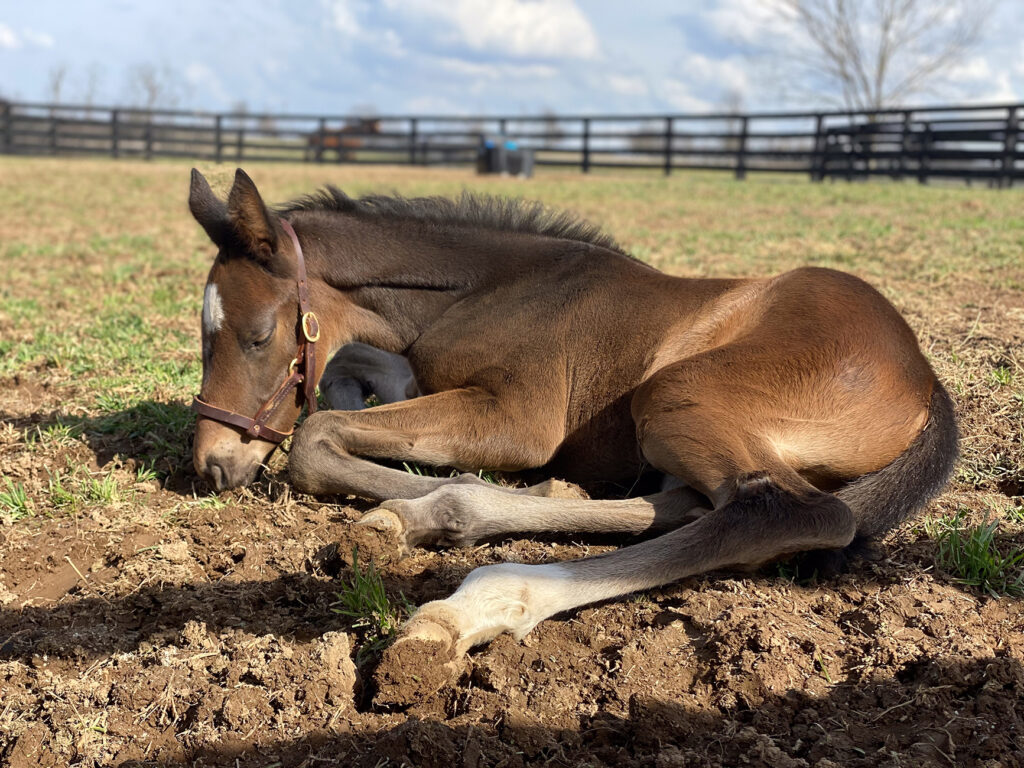
All Posts & News Press Releases Success Stories Aftercare Editorials Retraining Tips Supporter Features Inspector Spotlights Humberger Toggle Menu [wpdreams_ajaxsearchlite] Previous Post The Importance of Traceability in Thoroughbred Racing & Aftercare This article was originally featured in the July 2024 Issue of BloodHorse Magazine in the Second Acts series. This article is the original format and text. To read the BloodHorse article or to subscribe click HERE. The Importance of Traceability in Thoroughbred Racing & Aftercare By: Samantha Smith September 11, 2024 Aftercare Editorials Tags:BloodHorse Magazine, Equine Safety, Equine Welfare, Horse Inventory, The Jockey Club, Thoroughbred Aftercare, Thoroughbred Aftercare Alliance, Traceability Mom’s Reward pictured taking a nap. Tracking a horse’s information and whereabouts throughout its life, known as traceability, is indispensable in horse racing. It’s vital for equine welfare, industry integrity, and accountability. In North American Thoroughbred racing, traceability is essential from birth to post-racing but poses persistent challenges. Effective inventory control should be a priority, reducing uncertainty about Thoroughbreds’ whereabouts. Thoroughbred Aftercare Alliance mandates inventory reports from accredited organizations, although only after horses reach these facilities. Thoroughbred Aftercare Alliance consulted with various racing professionals, gaining insights into traceability challenges and perspectives across the industry. Jill’s Story: A Breeders’ Quest for Traceability and Accountability Jill Pritchard, a dedicated equestrian and breeder, emphasizes the importance of traceability in racing. Her firsthand experiences underscore the challenges breeders face in ensuring the welfare and whereabouts of their horses. Jill shares both positive and negative anecdotes, illustrating where challenges beyond her control persist and improvements can be made. Despite her best efforts, she couldn’t trace some foals after selling them as yearlings, reflecting broader industry challenges in ensuring Thoroughbred welfare and whereabouts. Mom’s Reward pictured as a foal. Photo Credit: Amy Lanigan. Mom’s Reward Mom’s Reward is a tragic example of a horse lost in the system. A 2021 filly by Preservationist out of Ventoux. After her sale, the filly never had a published workout, let alone raced. Despite Jill’s attempts to contact the trainer, she received no response. Eventually, Jill learned that Mom’s Reward was euthanized due to a breakdown in training, though this information remains unconfirmed. The lack of traceability and communication left Jill feeling helpless. Unable to confirm the horse’s fate or reach the trainer, she could do nothing to assist Mom’s Reward. Kicksandgiggles pictured at the sales. Kicksandgiggles Kicksandgiggles, trained by Jeff Hiles, stands out as a success story amid the challenges of traceability. Kicksandgiggles is a 2020 gelding by Bernardini out of Driving Rain. Thanks to the help of Buff Bradley, Jill was able to connect with the trainer when she sold him as a yearling and maintain communication with Jeff Hiles throughout the horse’s career. Jill was able to get the horse back when Jeff was ready to retire him, and ensured he transitioned into training for a second career. Today, Kicksandgiggles lives happily with his new owner in Minnesota, a testament to the importance of open communication and accountability in ensuring the welfare of Thoroughbreds beyond the racetrack. Bottle Rocket Bottle Rocket, a 2012 colt by Intense Focus out of Shoes to Match, was sold as a weanling for $5,500 and went on to win over $226,000. His first owner and trainer kept Jill updated on his progress, but after he was claimed and moved out West, communication became difficult. Eventually, Jill learned from a trainer that Bottle Rocket was retired to the owner’s farm after his last race at Del Mar. Over two years later, he resurfaced at a Quarter Horse meet in Los Alamitos. Despite her best efforts, including speaking with the track steward and reaching out on social media through the Posse Foundation and various Thoroughbred groups, Jill was unable to get any updates from his connections or determine his whereabouts after his last race in January 2020. Kicksandgiggles as a foal with his mother. Kicksandgiggles playing in the field. Kicksandgiggles as a foal. Jill with Mom’s Reward. Mom’s Reward taking a nap. The Registration Process The Jockey Club is the breed registry for North American Thoroughbreds, and it outlines the eligibility rules and requirements for a foal to become a registered Thoroughbred. Since 2017, the implant and reporting of a microchip has been a condition of registration, and in 2018 Digital Certificates of Foal Registration were introduced, replacing traditional paper documents. Both initiatives were aimed at improving identification tools for Thoroughbreds, but also to enhance means of traceability. While these measures have been a welcome development for the Thoroughbred industry, the responsibility of updating ownership still lies primarily upon individual stakeholders. Best practices would see ownership being updated to The Jockey Club each time a horse is transferred, but compliance isn’t guaranteed. Beyond Racing Once a Thoroughbred’s racing career ends, tracking its post-racing journey can be additionally challenging. While the breed registry does not mandate reporting a horse’s retirement, a process is available through The Jockey Club, called Transferred as Retired from Racing, that enables an owner to retire a Thoroughbred from racing without affecting its breeding privileges. If a Transferred as Retired from Racing Thoroughbred is entered at a North American racetrack, racing officials are electronically notified that the horse is retired. In addition, it is free to transfer ownership of a Thoroughbred using The Jockey Club Registry’s Interactive Registration at registry.jockeyclub.com. In addition, once a horse makes it to a Thoroughbred Aftercare Alliance-accredited facility, there are mandatory requirements in place for reporting and managing horse inventory. “Thoroughbred Aftercare Alliance mandates inventory reports from all accredited organizations four times annually,” said Suzie Oldham, Thoroughbred Aftercare Alliance, Inspections Administrator. “This meticulous approach ensures that horses at each of the organization’s facilities are registered Thoroughbreds creating a traceable record of horses passing through the program and offering peace of mind to previous owners who may be seeking their equine companions.” Conclusion From birth to retirement, every horse deserves a clear and accountable journey. With industry-wide initiatives and advancements in technology, the goal of comprehensive traceability is within reach. As The Jockey Club’s traceability
Supporter Feature: Kelsey Danner
All Posts & News Press Releases Success Stories Aftercare Editorials Retraining Tips Supporter Features Inspector Spotlights Humberger Toggle Menu [wpdreams_ajaxsearchlite] Previous PostNext Post Supporter Feature: Kelsey Danner Supporter Feature: Kelsey Danner By: Jay Privman August 19, 2024 Supporter Feature Tags:Industry Stakeholder, supporter, Supporter Feature, Thoroughbred Aftercare Alliance Supporter Photo Courtesy of Coady Media As someone who grew up in racing and got her first experience riding horses via retired Thoroughbreds, trainer Kelsey Danner knows first-hand what former racehorses can do, so she’s devoted to paying it forward now by making sure her ex-runners go on to worthwhile second careers. Most notable among them is the filly Phlox, who raced just three times, never won, and earned a little more than $5,000. But while she never reached her potential as a racehorse, Phlox is off to a sensational start in her second act, having finished first last fall in the polo division of the Retired Racehorse Project. “Thoroughbred retirement is one of the most-important issues in our industry,” Danner said recently from Saratoga, where she sent out her current stable star, the turf sprinter Danse Macabre, to a runner-up finish in the Grade 3 Caress Stakes, which brought the filly’s career earnings to nearly $1 million. Thoroughbred Aftercare Alliance helps with the transition of racehorses going on to second careers, and Danner is proud of being associated with Thoroughbred Aftercare Alliance. “I’ve had several horses who were retired and are now doing things like being trail horses, or hunter-jumpers,” Danner said. “They can do so much. Finding a good home for them, not just a soft landing, is important. It makes you feel good as a human.” Knowing horses go to places accredited by Thoroughbred Aftercare Alliance is critical to Danner. “Someone is checking, auditing. It’s important,” she said. Both Phlox and Danse Macabre are fillies who were foals of 2020. Their careers could not have unfolded more differently, and Danner gains satisfaction knowing both are living their best lives. For horses like Phlox, and other retirees, “it’s nice to see them go on and be successful,” Danner said. “It’s important they have a loving home,” she said. Danner – the daughter of Kelly Danner, the popular, respected, long-time manager of racing operations at Churchill Downs — is an accomplished horsewoman herself. She comes from a long line of trainers, including her father, Mark, and she rode hunter-jumpers and in dressage as a youth with horses who were off the track. “Retired racehorses paid off for me,” she said. Danner gravitated to the track, and apprenticed under several trainers, including Hall of Famers D. Wayne Lukas and Carl Nafzger, before going out on her own at the end of 2017. Her rise has been steady. Every year Danner has outperformed her previous year. In 2023, Danner’s runners earned a career-best $2.1 million. She currently trains approximately 65 runners, based out of Turfway. In a typical week this summer, it’s not unusual for her to have runners at Belterra, Colonial, Ellis, Horseshoe Indianapolis, Presque Isle, and Saratoga. Sounds like someone who’s always looking for exactly the right spot for her racehorses. Kind of how she treats her retirees, too. As someone who grew up in racing and got her first experience riding horses via retired Thoroughbreds, trainer Kelsey Danner knows first-hand what former racehorses can do, so she’s devoted to paying it forward now by making sure her ex-runners go on to worthwhile second careers. Most notable among them is the filly Phlox, who raced just three times, never won, and earned a little more than $5,000. But while she never reached her potential as a racehorse, Phlox is off to a sensational start in her second act, having finished first last fall in the polo division of the Retired Racehorse Project. “Thoroughbred retirement is one of the most-important issues in our industry,” Danner said recently from Saratoga, where she sent out her current stable star, the turf sprinter Danse Macabre, to a runner-up finish in the Grade 3 Caress Stakes, which brought the filly’s career earnings to nearly $1 million. Thoroughbred Aftercare Alliance helps with the transition of racehorses going on to second careers, and Danner is proud of being associated with Thoroughbred Aftercare Alliance. “I’ve had several horses who were retired and are now doing things like being trail horses, or hunter-jumpers,” Danner said. “They can do so much. Finding a good home for them, not just a soft landing, is important. It makes you feel good as a human.” Photo Courtesy of Coady Media Learn more about Thoroughbred Aftercare Alliance’s supporters: Industry Stakeholders Share This Article
Hallway Feeds’ Support for Racing Aftercare
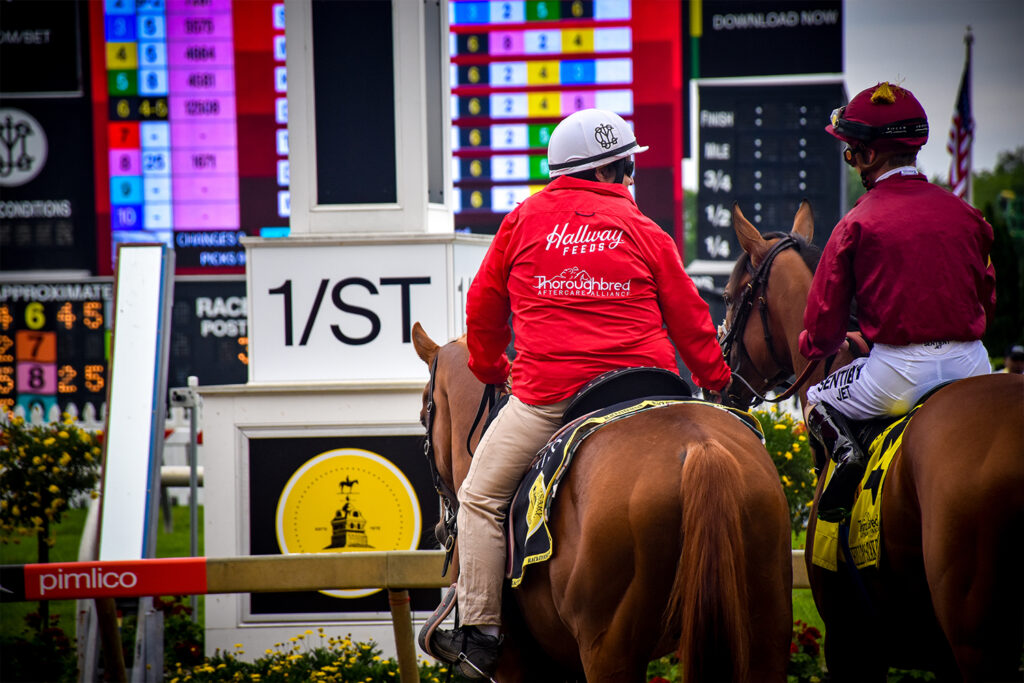
All Posts & News Press Releases Success Stories Aftercare Editorials Retraining Tips Supporter Features Inspector Spotlights [wpdreams_ajaxsearchlite] Previous Post Hallway Feeds’ Support for Racing Aftercare Hallway Feeds’ Support for Racing Aftercare By: Jay Privman June 17, 2024 Supporter Feature Tags:Hallway Feeds, Industry Stakeholder, supporter, Supporter Feature, Thoroughbred Aftercare Alliance Supporter Over the years, the family-owned Hallway Feeds had donated to several organizations that in are in the Thoroughbred aftercare space, but in recent years the company has stepped up its involvement via Thoroughbred Aftercare Alliance, most notably including prominent sponsorship at the Preakness Stakes festival at Pimlico in May. Hallway sponsored a stake on Black-Eyed Susan Day, sponsored awards for best turned-out runners in each race, had its logo on the jackets worn by outriders, and had signage throughout the facility. Sure, it was a great way to promote the popular company. It also had the satisfying benefit of helping a cause that Lee Hall believes the entire sport needs to get behind. “We feel like people are going to say, ‘If the feed guy is doing that, maybe we should, too,’” said Hall, the vice-president of Hallway Feeds, which is based in Lexington, Kentucky. “We all have an obligation in this area.” Hall, a fifth-generation farmer, said Hallway’s increased activity started at the prompting of long-time client Craig Bandoroff of Denali Stud. A subsequent meeting with Thoroughbred Aftercare Alliance board members, including president Jeffrey Bloom, resulted in the type of sponsorship on display at the Preakness. “Aftercare has become a far more prominent issue the past 10 years,” Hall said. “Thoroughbred Aftercare Alliance qualifies facilities, sets standards. It’s better than giving a little here, there, and yon. They set the standards.” But as much as Thoroughbred Aftercare Alliance does, Hall realizes that the funding for all aftercare needs in the Thoroughbred world are still insufficient. “Raising money for these things is difficult. Often it’s the same people giving,” he said. To that end, Hall would love to see racing adopt a mandated, across-the-board funding mechanism. He said the Beef Checkoff Funds, established in 1985 by the Cattlemen’s Beef Promotion and Research Board, offers a template. It has been a raging success. In the 2022-23 fiscal year, ending last September, it raised nearly $43 million, according to the organizations financial statements. The pork industry has a similar checkoff fund. “There’s a fee of $1 the seller contributes every time there’s a sale,” Hall said of the Cattlemen’s Fund. “When sold as a calf, $1. Sold to the feedlot, $1. Harvested, $1. Each time that animal is sold. “We need sustainable funding in the horse industry for aftercare. You just can’t keep going back to the same people over and over.” The price per sale at all auctions would need to be adjusted to reflect the funding required for aftercare. And private sales would have to be addressed. But the framework is there, and Hall believes running it through Thoroughbred Aftercare Alliance would allow aftercare to scale up to the level needed. “The model is there for sustainable funding,” he said. In the meantime, Hall said Hallway Feeds will do whatever it can to support aftercare. “We can’t do business as usual,” Hall said. “We have to show that we are taking care of these animals differently than in the past. We as an industry have to support these kinds of things. “We are very blessed being able to sell to the racing industry. We feel the need to give back. It’s the culture of our business.” Learn more about Thoroughbred Aftercare Alliance’s supporters: Industry Stakeholders Share This Article
How to Teach Your Retired Racehorse to Jump
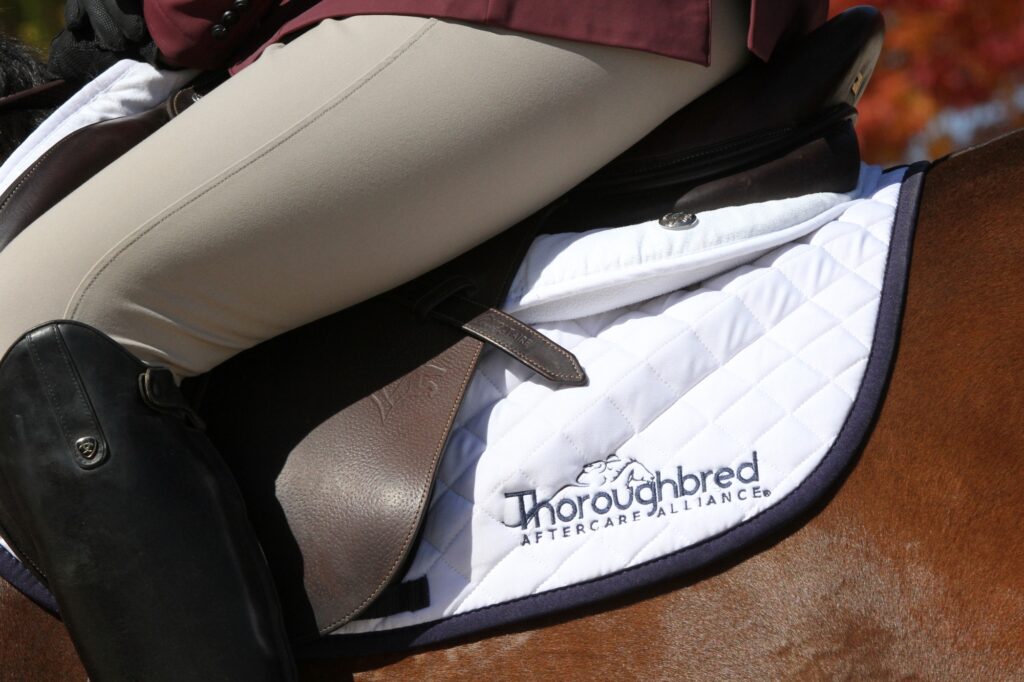
All Posts & News Press Releases Success Stories Aftercare Editorials Retraining Tips Supporter Features Inspector Spotlights [wpdreams_ajaxsearchlite] Previous Post How to Teach Your Retired Racehorse to Jump How to Teach Your Retired Racehorse to Jump By: Alexis Arbaugh June 6, 2024 Retraining Tags:Friends of Ferdinand, hunter jumper, hunters, jumper, jumpers, Jumping, Retraining Tips, show jumping Alien Invasion – Photo provided by Lori Miller Lori Miller, Friends of Ferdinand Many people who adopt a Thoroughbred after it is retired from racing hope to train their horse for a second career, often in disciplines that involve jumping. Training a Thoroughbred to jump can be a brand-new experience for these retired athletes, as racehorses—unless experienced in steeplechase—don’t engage in jumping or even handling poles. Their primary focus is running on the flat and being trained for speed. Therefore, it can be challenging to teach an off-the-track Thoroughbred how to carefully and skillfully navigate a course of jumps. Lori Miller is the head trainer at Friends of Ferdinand, an organization accredited by Thoroughbred Aftercare Alliance. Located in Indianapolis, Indiana, Friends of Ferdinand specializes in retraining, rehabilitation, adoption, and providing sanctuary homes for Thoroughbreds retired from racing. Lori has extensive experience with racetracks and retired racehorses and takes pleasure in the retraining process, knowing that racehorses can have happy and healthy lives in new careers. Lori’s wealth of experience and knowledge makes her the perfect person to help fellow adopters navigate their new horse’s retraining process. It is difficult to determine if a horse will be a good jumper just by looking at them, as there are many factors to consider and different contexts for evaluation. “If you are at the track, it’s tough. A horse that races in blinkers or wears a shadow roll might be one that has a lot to think about,” Lori wrote. Horses that need to wear blinkers to focus generally have excess energy and are spooky. Lori generally tries to avoid spooky horses because it creates more problems when teaching them to jump. “I prefer the horses that will walk with confidence through whatever,” Lori wrote. Lori also considers conformation when assessing whether a horse would be good at jumping. She likes horses that seem to float when they travel, rather than stomp. She avoids horses with crooked legs, tiny feet, or a downhill build. Instead, she looks for horses that are balanced with an uphill build and correct angles. She prefers straight legs that allow the horse to stand under themselves and a neck that ties in high to their shoulders. Although there are outliers—horses with unconventional conformation that make wonderful jumpers—they are few and far between. A horse with a good attitude is always easier to work with than one that is grumpy or has a poor attitude. When asked about the kind of attitude or temperament she looks for, Lori replied that she seeks “the horse that wants to work with you, the horse that looks to the person rather than away”. A horse that wants to learn and seeks guidance from people is always going to excel. However, it is easier to evaluate a horse’s willingness after they have had a chance to settle down on a farm following their racing career. It usually takes some time after leaving the track for a horse to come out of its shell and show its true personality. “How they are at the track is frequently very different than they are away from home,” Lori wrote. Any horse that is friendly and easy to work with and around is a good start. “I want the horse to learn to go over what is put in front of it. Systematically by never asking it to do something we haven’t built up to. Teaching the horse to stay in a rhythm and not run, that there is no reason to get tight and anxious. I want my horses to learn it’s all positive”. Lori Miller Friends of Ferdinand So, now that you have your horse, how do you start jumping? Lori begins with basic flat work to ensure the horse is supple and responsive to the bit. She encourages the horse to move forward off the leg and be quick and accurate with transitions, ensuring the horse is always listening. After establishing a strong flat foundation, she introduces poles on the ground, having the horse casually walk, trot, and canter over them until they are no longer an issue. She wants the horse to get used to riding around standards, poles, and jumps in the arena, encouraging them to watch and continue working. When Lori feels the horse is ready to jump, she starts with a small jump that the horse can easily walk over. If the horse stops in front of the jump, she breaks it down to make it more inviting. “Slow work to build a confident horse,” Lori wrote. By this point, the horse is accustomed to going over poles and small boxes, so a small cross rail shouldn’t be a big deal. Their first actual jump might be a cross rail or a small log in the field, and the horse shouldn’t be fazed by it. Desensitizing your horse to various obstacles helps prevent stress or nervousness about jumping. When asked what Lori would like the horse to take away from their first jumping experience, she replied, “I want the horse to learn to go over what is put in front of it. Systematically by never asking it to do something we haven’t built up to. Teaching the horse to stay in a rhythm and not run, that there is no reason to get tight and anxious. I want my horses to learn it’s all positive”. Lori often trots over fences in the beginning stages of teaching a horse to jump. This allows the horse to learn to make a shape and stay straight while building confidence at a slower and more balanced pace. She advises against over-jumping young horses or those learning to jump,
Thoroughbred Aftercare Alliance to be Present at Saratoga Race Course for Belmont Stakes
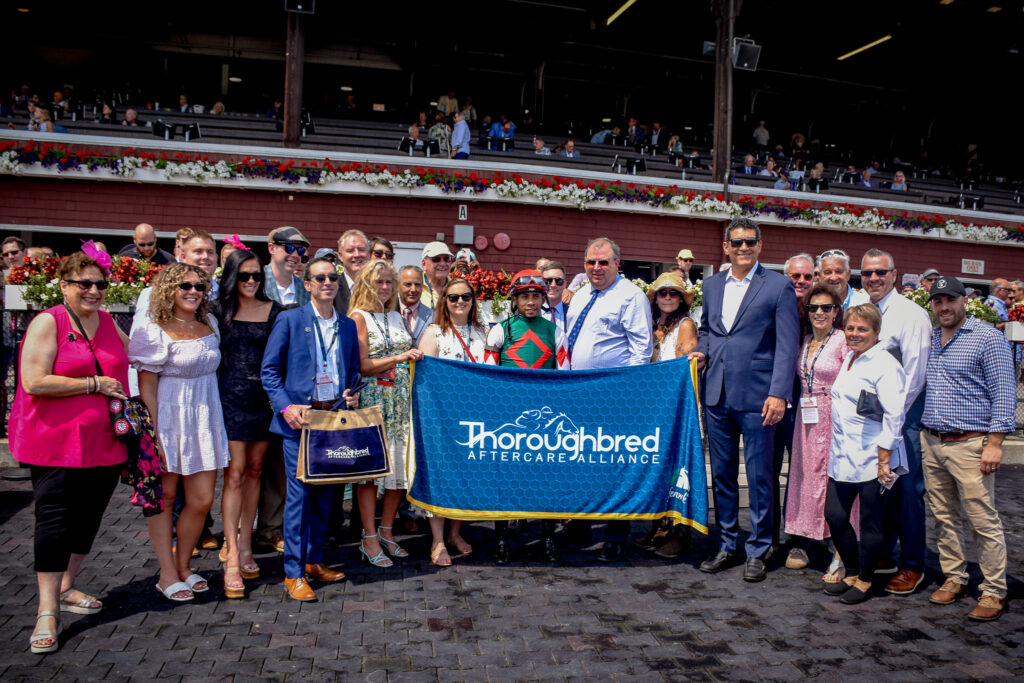
All Posts & News Press Releases Success Stories Aftercare Editorials Supporter Features Inspector Spotlights [wpdreams_ajaxsearchlite] Previous Post Thoroughbred Aftercare Alliance to be Present at Saratoga Race Course for Belmont Stakes Thoroughbred Aftercare Alliance to be Present at Saratoga Race Course for Belmont Stakes FOR IMMEDIATE RELEASE May 30, 2024 News Tags:Belmont Stakes, New York Racing Association, NYRA, Saratoga Race Course, Triple Crown LEXINGTON, KY — Thoroughbred Aftercare Alliance will be present at Saratoga Race Course during the Belmont Stakes Racing Festival. The 156th Belmont Stakes Presented by NYRA Bets will be held on Saturday, June 8, 2024. This exciting final leg of the Triple Crown will kick off with a week of live racing beginning on Thursday, June 6. To highlight accredited aftercare, the New York Racing Association (NYRA) has honored Thoroughbred Aftercare Alliance with a named race on the undercard on Friday, June 7. Following the running of the race, a presentation will be made to the winning connections, including a Thoroughbred Aftercare Alliance branded blanket and gift bag. “NYRA is pleased to welcome Thoroughbred Aftercare Alliance to Saratoga for this year’s Belmont Stakes Racing Festival,” said Patrick McKenna, Vice President of Communications, NYRA. “This ongoing partnership reflects our shared commitment to protecting and re-training these equine athletes when their racing days are done, and we thank Thoroughbred Aftercare Alliance for all they do.” Representatives from Thoroughbred Aftercare Alliance will be present to host the winners of the VIP experience that was auctioned off earlier in the year in the “Off to the Races” Campaign to support accredited aftercare. The winners of this experience will enjoy a table for four and a day of racing on Friday and Saturday, admission into the paddock on Friday, and much more. This exciting VIP experience was generously donated by NYRA. About Thoroughbred Aftercare Alliance Based in Lexington, KY, Thoroughbred Aftercare Alliance is a 501(c)(3) nonprofit that accredits, inspects, and awards grants to approved aftercare organizations to retrain, retire, and rehome Thoroughbreds using industry-wide funding. Along with continued funding from its original partners Breeders’ Cup, The Jockey Club, and Keeneland Association, Thoroughbred Aftercare Alliance is supported by owners, trainers, breeders, racetracks, aftercare professionals, and other industry members. Since inception in 2012, Thoroughbred Aftercare Alliance has granted more than $31.9 million to accredited aftercare organizations. Currently 86 aftercare organizations comprised of approximately 180 facilities across North America have been granted accreditation. To learn more about Thoroughbred Aftercare Alliance, visit thoroughbredaftercare.org. Contact Samantha Smith859-224-2882ssmith@thoroughbredaftercare.org Emily Dresen352-362-6934edresen@thoroughbredaftercare.org Share This Release
NYRA’s Commitment to Thoroughbred Aftercare
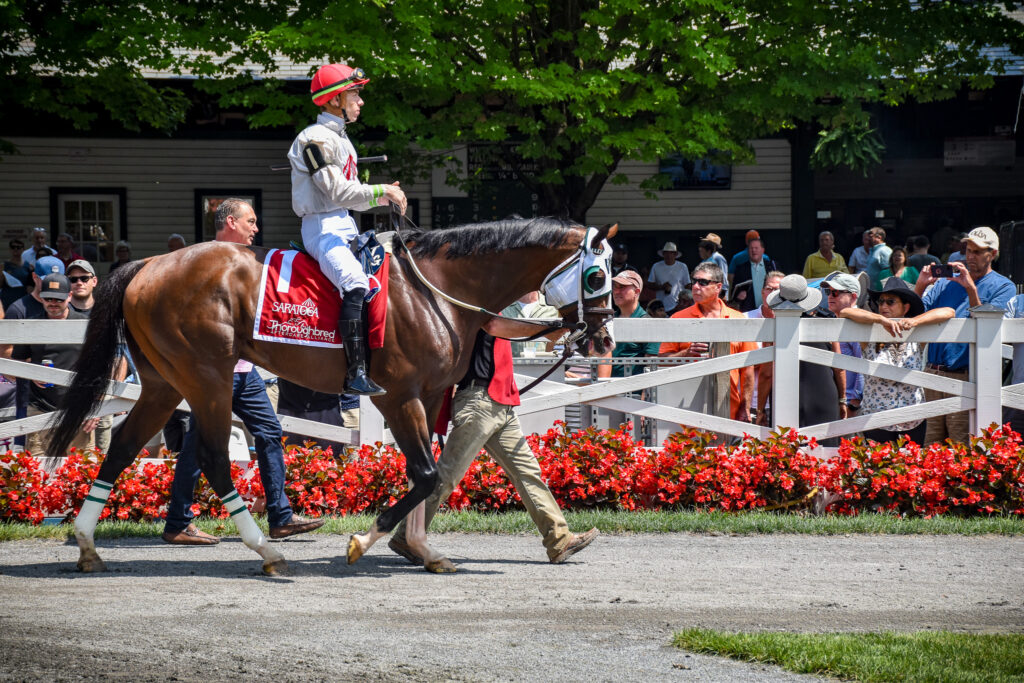
All Posts & News Press Releases Success Stories Aftercare Editorials Supporter Features Inspector Spotlights [wpdreams_ajaxsearchlite] Previous Post NYRA’s Commitment to Thoroughbred Aftercare NYRA’s Commitment to Thoroughbred Aftercare By: Jay Privman May 28, 2024 Supporter Feature Tags:Industry Stakeholder, New York Racing Association, NYRA, supporter, Supporter Feature, Thoroughbred Aftercare Alliance Supporter Anticipation is high for this year’s Belmont Stakes, to be held for the first time at Saratoga Race Course June 8 during a special four-day race week. As host to the final leg of the Triple Crown, and with high-quality racing year-round, the New York Racing Association is among the nation’s leaders in showcasing the best racing has to offer, and NYRA’s focus doesn’t end when the race does. NYRA has been steadfast in its support of aftercare, with a multi-pronged approach that includes significant, mandated funding from its participants to aid Thoroughbred Aftercare Alliance. NYRA, in conjunction with the New York Thoroughbred Horsemen’s Association, as well as the New York Thoroughbred Breeders, as well as owners who race at NYRA tracks, contribute more than $1.2 million annually to aftercare, according to David O’Rourke, the chief executive officer and president of NYRA. “In 2014, NYTHA adopted a per-start fee for owners of $5 that provided funding to Thoroughbred Aftercare Alliance,” O’Rourke said. “In July 2019, NYRA and NYTHA increased the per-start fee to $10. NYRA matches those contributions, and then donates the proceeds to Thoroughbred Aftercare Alliance at the conclusion of each race meet conducted at NYRA. “In 2019, NYRA and NYTHA launched an aftercare assessment program that requires owners claiming a horse subject to contribute a 1.5 percent aftercare assessment on top of the claiming price of the horse, with funding allocated to Thoroughbred Aftercare Alliance and TTL,” he said, referring to Take The Lead, a retirement program for Thoroughbreds stabled at NYRA tracks. “For example, an owner claiming a horse for $50,000 will contribute an additional $750 toward aftercare. This program generates more than $250,000 per year.” Saratoga’s summer meeting is a major point of emphasis for NYRA’s relationship with Thoroughbred Aftercare Alliance. “Thoroughbred Aftercare Alliance plays a prominent role on-site during some of NYRA’s biggest days, including Whitney Day and others,” O’Rourke said. “In 2021, NYRA, NYTHA, and the NYTB held the inaugural Thoroughbred Aftercare Day at Saratoga Race Course to celebrate and highlight the work of the New York State aftercare community.” O’Rourke said aftercare is paramount in importance because NYRA believes “the athletes who have given so much to the sport deserve to retire with dignity when their racing days are done.” “New York is a national leader when it comes to supporting and investing in a variety of meaningful aftercare efforts,” O’Rourke said. “Fortunately, the New York racing community at-large cares deeply about Thoroughbred aftercare. That is reflected in the investments we see from NYTHA, NYTB, and so many groups and individuals who work to re-home and re-train these athletes. “We work to educate the public about these efforts because misconceptions abound.” Thoroughbred Aftercare Alliance’s accreditation program is among the many ways quality control is maintained, and can be used as a concrete example to push back against those misconceptions. “Our friends at Thoroughbred Aftercare Alliance recognized that establishing a clear set of standards for accreditation is incredibly important,” O’Rouke said, adding that Thoroughbred Aftercare Alliance is “an organization that enjoys national support from racing’s biggest entities because of their professionalism and care. “And they are passionate about the work!” he said. Learn more about Thoroughbred Aftercare Alliance’s supporters: Industry Stakeholders Share This Article