
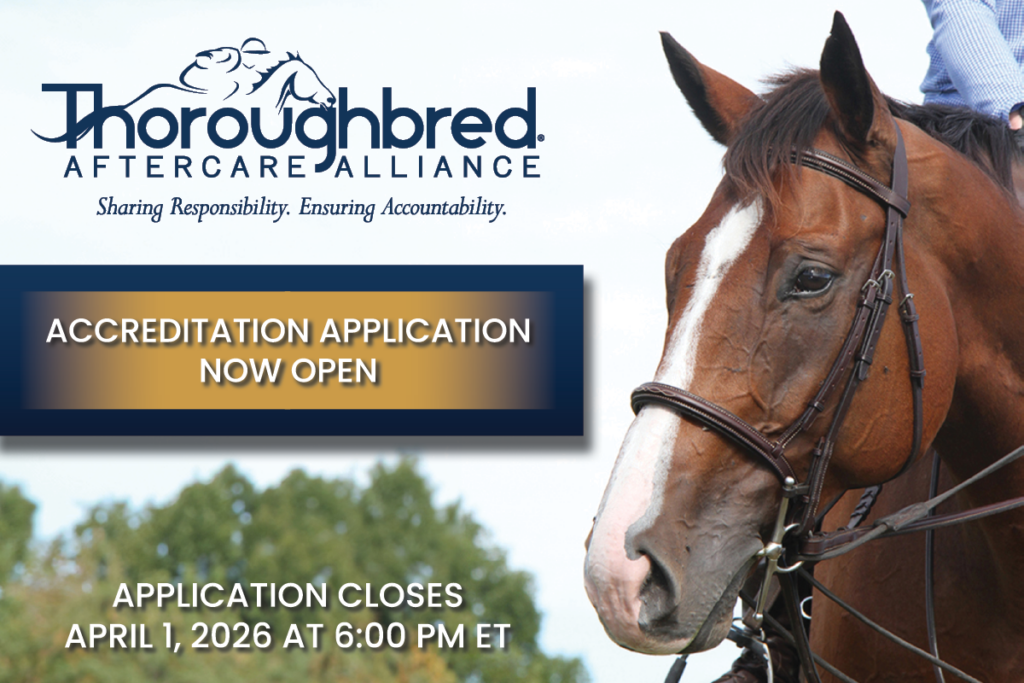
Thoroughbred Aftercare Alliance Announces Accreditation Application Now Open for 2026
LEXINGTON, KY — Thoroughbred Aftercare Alliance Board of Directors elected two new directors at its meeting on December 15 for 2026. For a second consecutive year, Walter S. Robertson, Jr., a member of the law firm Stites & Harbison, PLLC, will serve as President of Thoroughbred Aftercare Alliance.
New Directors Elected to Thoroughbred Aftercare Alliance Board
LEXINGTON, KY — Thoroughbred Aftercare Alliance Board of Directors elected two new directors at its meeting on December 15 for 2026. For a second consecutive year, Walter S. Robertson, Jr., a member of the law firm Stites & Harbison, PLLC, will serve as President of Thoroughbred Aftercare Alliance.
Fourth Annual Holiday Giving Campaign Announced for Thoroughbred Aftercare Alliance

LEXINGTON, KY — Thoroughbred Aftercare Alliance announces its fourth annual Holiday Giving Campaign, running from December 1 through December 31, 2025. T
Thoroughbred Aftercare Alliance Grants $4.7 Million to 86 Accredited Organizations
LEXINGTON, KY — Thoroughbred Aftercare Alliance announced today that $4.7 million in grants will be awarded to 86 Thoroughbred aftercare organizations that currently hold accreditation status for 2025.
Thoroughbred Aftercare Alliance Accredits 49 Organizations
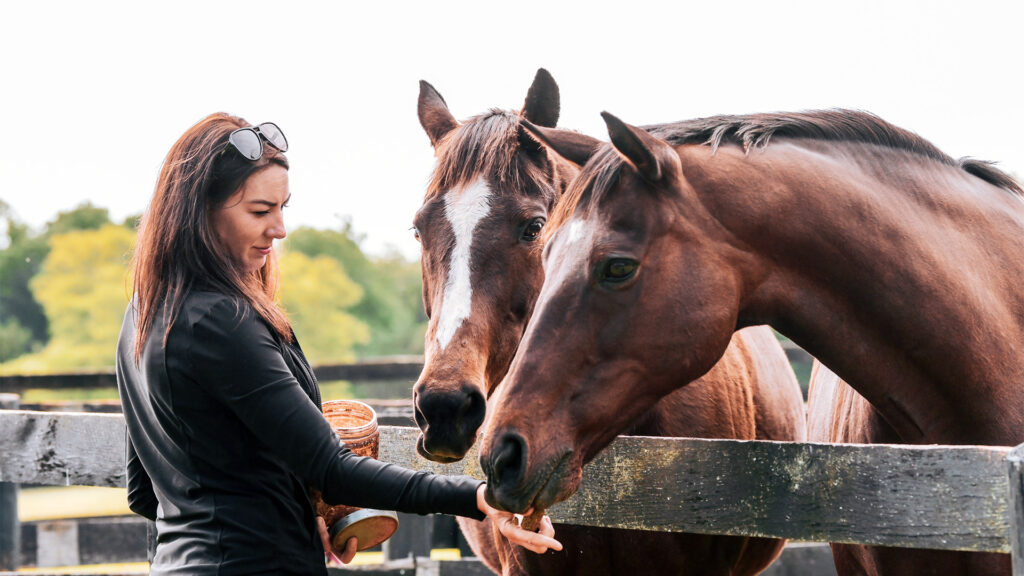
LEXINGTON, KY — Thoroughbred Aftercare Alliance announced today that 49 Thoroughbred aftercare organizations have been awarded accreditation for 2025.
CJ Wilson’s Week in South Korea Teaching Thoroughbred Aftercare
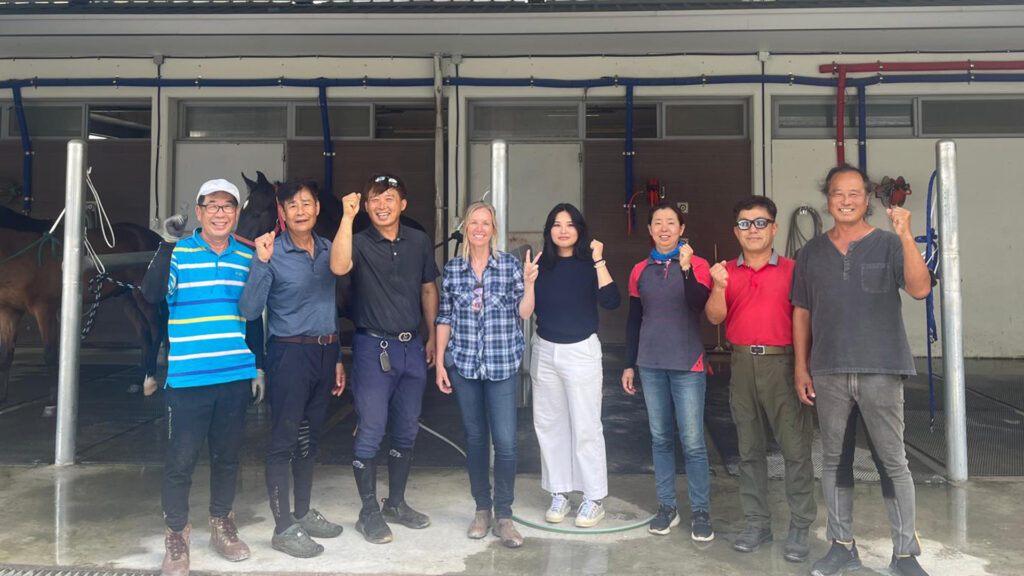
This August, CJ Wilson was invited to South Korea to share her expertise in Thoroughbred aftercare. As the founder and lead trainer of Win Place Home, a Thoroughbred Aftercare Alliance-accredited organization, she draws on years of experience working with retired racehorses. In this blog, CJ recounts her daily experiences, from classroom lectures to hands-on training, and the connections she made along the way.
Healing After Heartbreak: Champions Retreat Welcomes First Responders
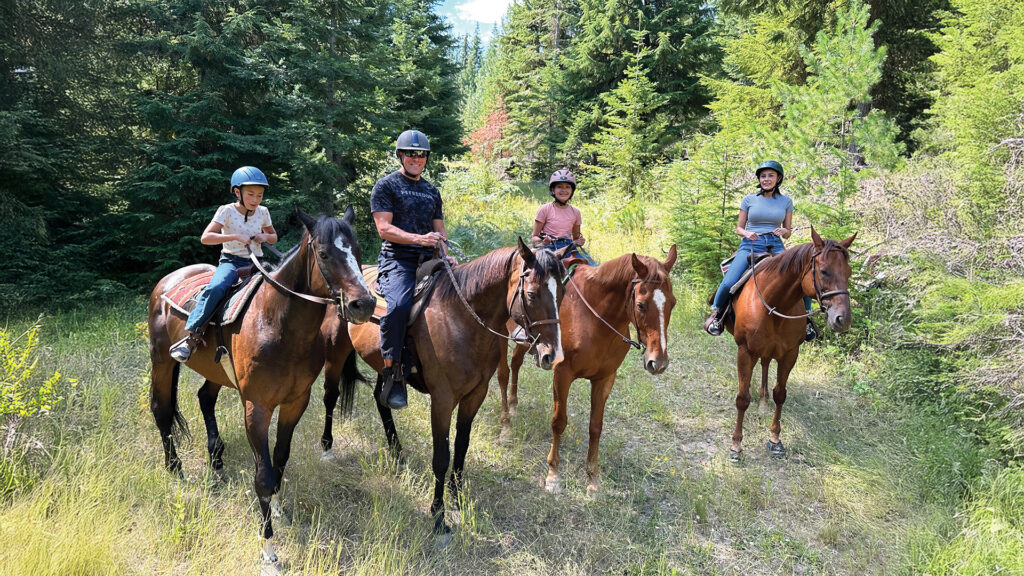
All Items Success Stories Aftercare Editorials Retraining Tips Supporter Features Equine-Assisted Learning Sanctuary Living Inspector Spotlights Hamburger Toggle Menu Previous PostNext Post Healing After Heartbreak: Champions Retreat Welcomes First Responders Healing After Heartbreak: Champions Retreat Welcomes First Responders August 4, 2025 Other Tags:Accredited Organization, Champions Retreat, Thoroughbred Aftercare Alliance In late June, the small northern Idaho community near Coeur d’Alene was shaken by a tragic incident that claimed the lives of two firefighters and left another injured. In the days that followed, Champions Retreat, a Thoroughbred Aftercare Alliance-accredited organization in Hayden, Idaho, offered a quiet gesture of support to those most affected: an invitation for local first responders and their families to spend time with the retired racehorses that call the farm home. “[The incident], very near our farm, was horrific and we wanted to support our first responders as best we could,” said Candace Chew, who co-founded Champions Retreat with her husband, Matt. Among the first to visit was Brandon, a firefighter and EMT from the Northern Lakes Fire District, who brought his wife and two daughters for a day on the ranch. Horses are: (L to R) London Follies (Freckles), Broadcaster (Parker), Point Breeze (Luke) and Relieve (Renzo). Set on 18 peaceful acres overlooking Hayden Lake, Champions Retreat is home to a rotating herd of eight retired Thoroughbreds from West Coast tracks. While the ranch serves as a rehabilitation, retraining, and adoption facility, it also offers equine-assisted therapy, particularly for youth in the foster care system. “This group was really fun and the horses were extremely accommodating, so we took them out for a trail ride,” Candace said. She and Matt lead the trail ride on OTTBs Midnight Casanova (Hayden) and Probable (Reba). The Thoroughbreds, London Follies (Freckles), Broadcaster (Parker), Point Breeze (Luke) and Relieve (Renzo), carried their guests gently through the pine-covered hills, offering the kind of calm that only horses can provide. “They were very excited to be on former racehorses and enjoyed themselves immensely,” Candace said. “Brandon, his wife and two daughters are now big fans of OTTBs!” The visit from local first responders was a meaningful way for Champions Retreat to give back to the community. The organization’s mission has always centered on second chances, not only for retired racehorses, but also for the people who connect with them. Offering time, space, and the calming presence of horses was a simple but sincere way to support those who show up for others every day. Learn More About Champions Retreat Here Share This Article
Healing Through the Heart of Summit County
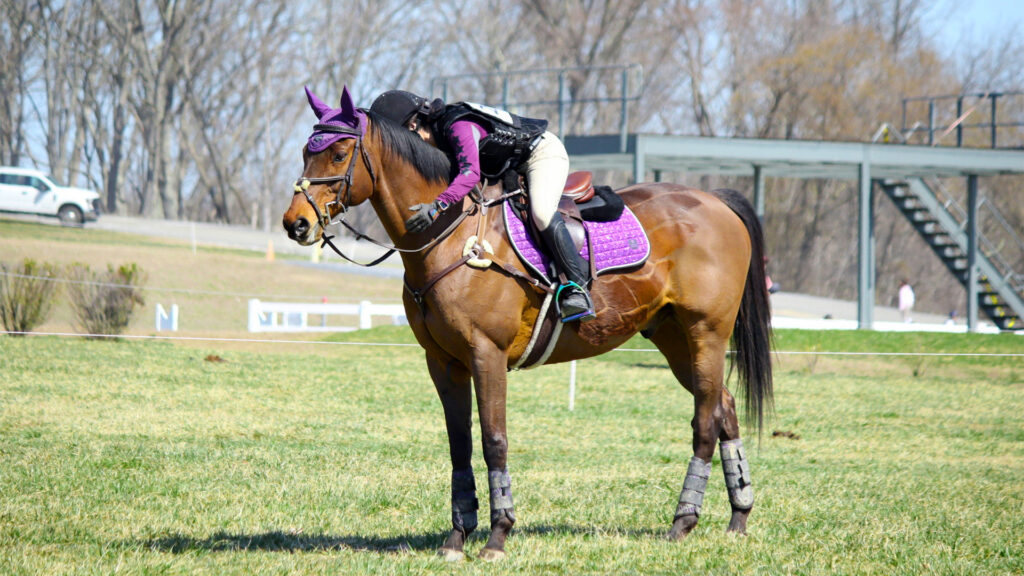
All Posts & News Press Releases Success Stories Aftercare Editorials Retraining Tips Supporter Features Equine-Assisted Learning Inspector Spotlights Hamburger Toggle Menu [wpdreams_ajaxsearchlite] Previous Post Healing Through the Heart of Summit County Healing Through the Heart of Summit County By: Alexis Arbaugh April 14, 2025 Success Stories Tags:accredited aftercare, Accredited Organization, Eventing, Mid-Atlantic, Mid-Atlantic Horse Rescue, Thoroughbred Aftercare Alliance Photo Credit: Ak Dragoo Photography Brianna DiRocco-Toy’s journey to finding Summit County was far from straightforward. She tried 13 different horses, each one bringing her closer to her perfect match, yet none quite right. Initially, Summit County wasn’t even on her radar. Brianna had her eyes set on another horse, only to discover that it had too many limitations. That’s when Sally, a trainer at Mid-Atlantic Horse Rescue, recommended Summit County, saying, “You have to try Summit County if you want a horse with confidence.” Those words struck a chord with Brianna, and she knew she had to meet him. Out of the multiple stakes-winning Katahaula County mare Socorro County, Summit County concluded his racing career in July 2017 with a solid record of 10 wins, 4 seconds, and 13 thirds from 62 starts, earning $206,185. While he spent most of his six-year career in the claiming ranks, he stepped up to stakes company a few times, finishing fourth in the Bourbon Stakes (G3T) before running in the 2012 Breeders’ Cup Juvenile Turf (G1T). When his racing connections decided it was time for him to transition into a second career, he retired and found his way to Mid-Atlantic Horse Rescue, a Thoroughbred rescue, rehabilitation, and retraining organization in Chesapeake City, Maryland, accredited by Thoroughbred Aftercare Alliance. The team at Mid-Atlantic guided Brianna through every step of the adoption process. “Their dedication to matching horses with the right person was evident, and I owe it to their guidance that I found my perfect match,” Brianna shared. From the moment she laid eyes on Summit County, she felt something different. His calm yet confident demeanor stood out in a way no other horse had. “Summit County has a personality that’s impossible to miss,” Brianna said. She quickly discovered that he was confident, friendly, and incredibly personable. With his kind eyes and sweet face, he has an uncanny ability to put people at ease. What truly sets him apart, however, is his unique blend of goofiness and elegance. From the start, Brianna was drawn to Summit County’s playful yet graceful nature, and he quickly became her heart horse. The last six years with Summit County have been an incredible journey. Brianna initially used him in her college equine classes, where he proved to be the perfect partner. During college, they took their time with the retraining process, and eventually, Summit County’s talent and love for Eventing began to shine through. He excelled in all three phases, making each ride a rewarding experience for them both. Looking ahead, Brianna has big goals for herself and Summit County. She hopes to continue advancing in Eventing, move up to the beginner novice level, and reach a dressage score in the low 20s. “These goals are steps toward making us a stronger, more skilled pair, and I’m excited for what lies ahead,” she said. “Summit County truly means the world to me. He has been my strength, my rock, and my therapist through one of the hardest chapters of my life,” Brianna shared. Diagnosed with ulcerative colitis in 2020, she faced some of her lowest moments but found comfort and support in Summit County. During this difficult time, Brianna and Summit County discovered their mutual love for Eventing. Being on the Cross-Country course with him became the best medicine, offering her a temporary escape from her illness. “Trotting down the centerline or galloping across open fields allowed me to forget, even if just for a little while, that I was battling UC,” Brianna recalled. One memory that remains etched in Brianna’s mind is when her fiancé and family brought Summit County to their home. She had been sick for weeks, but just seeing Summit County brought her a sense of peace. Eventually, Brianna made the difficult decision to undergo surgery to regain her quality of life. Just six weeks post-op, with the support of her fiancé and trainer, she took Summit County on a gentle trail ride, where he was the perfect gentleman. As she continued to heal, Brianna began creating TikTok videos with Summit County to raise awareness about ostomy life. Summit County proved to be the ideal partner in helping her share her story. Just three months after her surgery, they were back to Eventing. “That day, we took home a beautiful pink fifth-place ribbon, and I was overwhelmed with pride,” Brianna recalled. Summit County had not only helped her navigate the physical and emotional toll of her journey, but he also helped her return to the sport she loved. That moment, back on the Eventing field with Summit County, reminded Brianna that she had her life back. For that, she will always be grateful. Share This Article Do you have a success story that you would like to share? Submit your experience with an accredited organization here: Success Story Submission
Headlights On, Future Bright
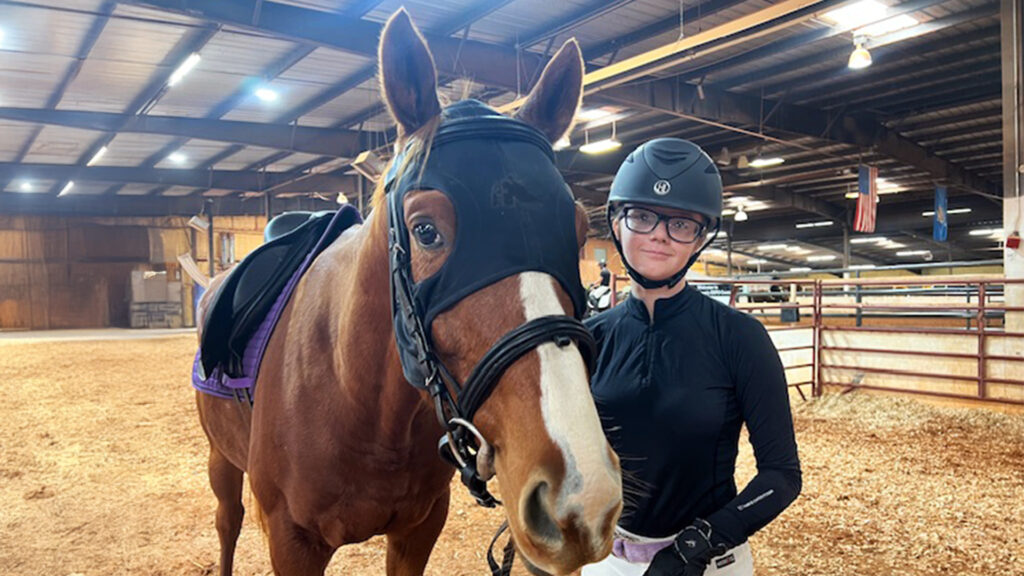
All Posts & News Press Releases Success Stories Aftercare Editorials Retraining Tips Supporter Features Equine-Assisted Learning Inspector Spotlights Hamburger Toggle Menu [wpdreams_ajaxsearchlite] Previous Post Headlights On, Future Bright Headlights On, Future Bright By: Alexis Arbaugh April 14, 2025 Success Stories Tags:accredited aftercare, Accredited Organization, dressage, Horse and Hound Rescue Foundation, hunter jumper, Thoroughbred Aftercare Alliance, Thoroughbred Athletes, United States Pony Clubs, USPC Headlights On, a chestnut gelding born in April 2019, never raced but found a new purpose through the Horse and Hound Rescue Foundation, where he arrived in September 2022. Bridgett Nicole and her family had been browsing the Horse and Hound Rescue Foundation website for several months when her youngest daughter, Aspyn, expressed a serious interest in adopting a horse of her own. Aspyn’s older sister, Erin, already owned an off-the-track Thoroughbred, so Aspyn knew she wanted a Thoroughbred as well. Erin had adopted Red Road Okie, now known as Dexxter, from Thoroughbred Athletes in 2013. Both Horse and Hound Rescue Foundation and Thoroughbred Athletes are accredited through Thoroughbred Aftercare Alliance. Their missions are centered on rehabilitating and retraining off-the-track Thoroughbreds in the hope of successful rehoming. Aspyn led the search herself, browsing available horses until she felt ready to take the next step. One name stood out to everyone: Headlights On. While color wasn’t a dealbreaker, his chestnut coat was a definite bonus in her eyes. After narrowing down the options, Bridgett sent Aspyn’s list to Nelda Kettles, executive director of Horse and Hound. Fortunately, Nelda felt Headlights On would be a perfect fit. When the family met him in person, Aspyn fell instantly in love. Now affectionately called Arashi, the Japanese word for “storm”, the gelding has adjusted to his new life with ease. After his arrival at Horse and Hound in 2022, he was restarted under saddle by Jamie Jennings of Fly Over Farm, who helped prepare him for a second career. “Arashi’s personality is very much ‘supervisor-like.’ He’s got to be involved in everything,” Bridgett said. Arashi is extremely intelligent, and stubborn, according to Aspyn. “He’s not fond of Dressage—it’s all intro level at this point. Circles are boring to him. But put a cross rail in front of him, and he’s happy.” Currently, Aspyn and Arashi are training for the hunter ring with Sam Powell of Paradigm Farm. They also practice lower-level Dressage on their own. “He takes care of Aspyn, and Aspyn takes care of him,” Bridgett shared. Aspyn recently founded a brand-new Pony Club team in Norman, Oklahoma. With her own horse and her own team, she now dreams of competing at the Pony Club Championships in Kentucky and hopes to attend a few rated shows. Share This Article Do you have a success story that you would like to share? Submit your experience with an accredited organization here: Success Story Submission
Getting Started with Groundwork & Manners for Your Ex-Racehorse
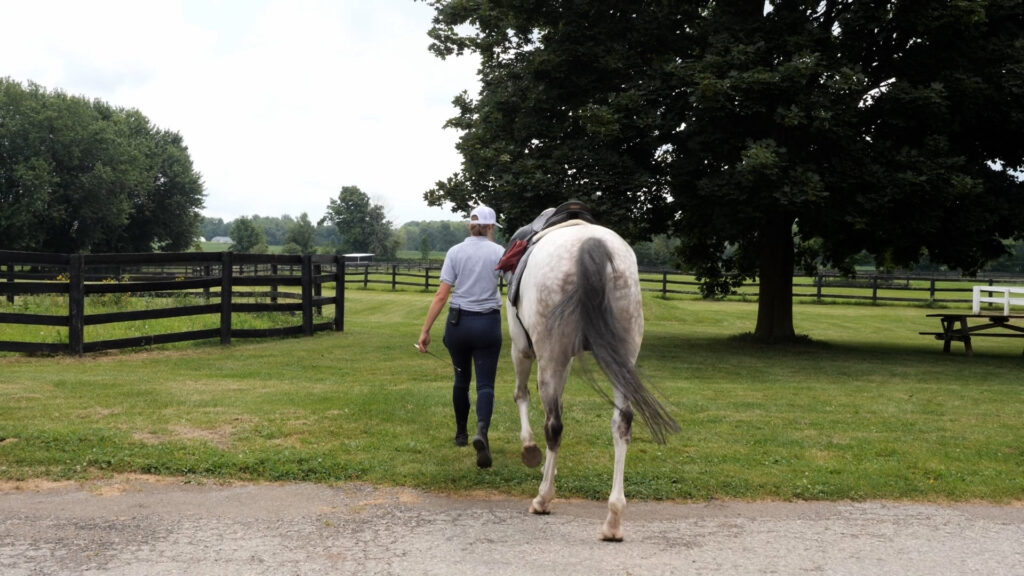
All Posts & News Press Releases Success Stories Aftercare Editorials Retraining Tips Supporter Features Equine-Assisted Learning Inspector Spotlights Hamburger Toggle Menu [wpdreams_ajaxsearchlite] Previous Post Getting Started with Groundwork and Manners for Your Ex-Racehorse Getting Started with Groundwork and Manners for Your Ex-Racehorse By: Alexis Arbaugh April 11, 2025 Retraining Tags:Accredited Organization, Groundwork, LongRun Thoroughbre, Manners, Retraining, Thoroughbred Aftercare Alliacne Lauren Millet, LongRun Thoroughbred Retirement Society Thoroughbred Aftercare Alliance recently had the pleasure of speaking with Lauren Millet, the trainer at LongRun Thoroughbred Retirement Society, about her approach to retraining ex-racehorses. Based in Toronto, Canada, LongRun is a Thoroughbred Aftercare Alliance-accredited organization dedicated to the rehabilitation, retraining, and adoption of retired Thoroughbred racehorses. Growing up, Lauren frequented the racetracks in Canada and hoped that one day she would have a job working with racehorses. Years later, Lauren became the Farm Manager at LongRun, where she oversees the training and riding of all the horses that enter the facility. Her role involves assessing the training of each horse and building upon their foundation. Additionally, she evaluates each horse once the retraining process begins to determine the most suitable second career for them. “Groundwork in racehorses totally varies based on where they come from, who their groom was and what they were allowed to do at the racetrack,” writes Lauren. Nearly all racehorses are hand-walked almost daily from the time they are weaned, which instills good manners and ensures they walk confidently and respectfully beside their handlers. However, Lauren notes that most ex-racehorses are not taught the following: “how to move away from pressure, back up when asked, step over or around obstacles, stand in crossties or tied outside.” The life of a racehorse is quite different from that of a sport horse, so they’re taught different skills from an early age to help them succeed in their specific careers. “They [racehorses] are taught the things that they need to know at the track, such as: how to tie in a stall, lead to the left, pick all 4 feet from the left side etc.,” Lauren says. She encourages people to recognize the importance of understanding what that specific horse was taught on the track, as it directly influences how they should be trained off the track. At LongRun, horses arriving directly from the racetrack will either require rehabilitation with stall rest or benefit from a period of downtime before beginning their retraining program. “If a horse is on stall rest, obviously in-hand manners cannot be tested, but we do look for stall manners,” Lauren comments. Observing whether a horse respects your presence or shows signs of any bad behavior when you enter their space can be crucial in determining what to focus on during stall rest. It is the person’s job to show and teach the horse what you want from them. “With some it is easy, while others might be annoyed and irritated that they are on stall rest,” notes Lauren. She is essentially saying that there is a limited number of things that you can teach a horse while in a stall, but you can teach them to respect your space and to move away from pressure. For horses that retire sound from the track and only need downtime, it’s easier to assess their groundwork and manners. Each horse will require a varying amount of downtime before beginning their retraining. Lauren feels that you can learn a great deal about a horse based on their behavior while walking to and from the pasture, “this gives us a chance to see which horses might require some ground to learn respect before jumping into the saddle and which horses might be good to go”. Teaching a horse to walk over poles, back up, and move away from pressure are essential skills for riding. Therefore, starting with groundwork—regardless of the horse’s prior training—provides them with a solid foundation and helps ensure the safety of both you and the horse. “It just helps to ease their confusion when learning all the new things at once,” Lauren expresses. “Once they understand, it makes for a much happier time for both horse and human.” Lauren Millet LongRun Thoroughbred Retirement Society Once a horse has completed their rehabilitation or downtime, it’s time to focus on skills that will assist them in their second career. Lauren mentions that it usually becomes clear what kind of retraining a horse will need after they’ve been on the farm for a couple of days. Horses that arrive at LongRun with prior handling and riding experience typically transition more smoothly, as they already have a head start. In contrast, those with less experience require additional time to learn the basics before formal retraining can begin. “Many racehorses carry tension, and it’s important to teach them right away to let that go,” observes Lauren. She emphasizes the importance of ensuring that all horses are comfortable in their own bodies and able to move freely and without stress. Teaching a horse to remain relaxed and not feel tense can be challenging; it requires a significant amount of patience and understanding from the trainer, especially during the initial stages. “The goal is to teach the horse that whatever the encounter, their response should be to remain calm and think about what they are doing,” Lauren emphasizes. Horses are intelligent and eager to please, but it’s essential to clearly demonstrate to the horse what behaviors are acceptable and which are not. “If you let them [horses] take an inch, they will take and mile,” writes Lauren. It’s important to kindly discipline a horse when they exhibit undesirable behavior and to praise them when they do something you approve of. A horse will remember the discipline and will be less likely to repeat the behavior that got them in trouble. Conversely, when a horse is praised for doing the right thing, they are likely to remember that positive reinforcement and want to replicate the behavior to receive more praise. Establishing clear ground rules from the beginning
Diana McClure
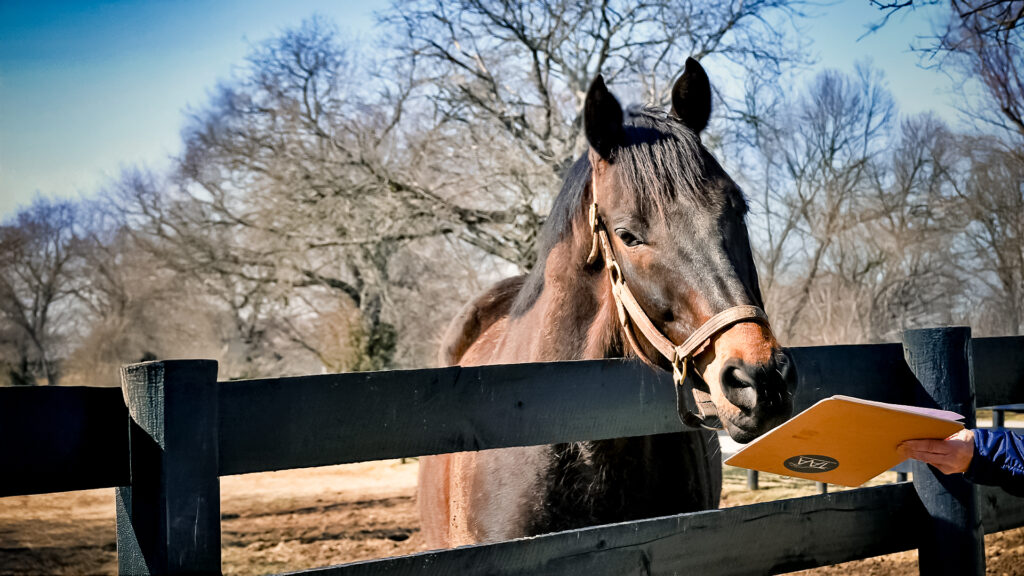
All Posts & News Press Releases Success Stories Aftercare Editorials Retraining Tips Supporter Features Equine-Assisted Learning Inspector Spotlights Hamburger Toggle Menu [wpdreams_ajaxsearchlite] Previous PostNext Post Inspector Spotlight: Diana McClure Inspector Spotlight: Diana McClure By: Alexis Arbaugh April 10, 2025 Inspector Spotlight Tags:Accredited Facility, Accredited Organization, Inspection, Inspector, Inspector Spotlight, Thoroughbred Aftercare, Thoroughbred Aftercare Alliance, Thoroughbred Retirement Foundation, TRF To qualify for accreditation and receive a grant from Thoroughbred Aftercare Alliance, every facility within an organization must undergo a comprehensive inspection. These inspections are carried out by either Thoroughbred Aftercare Alliance staff or one of many approved inspectors located across the country. Site inspectors are Thoroughbred Aftercare Alliance’s eyes at every facility. They include veterinarians and other equine professionals. Inspectors have prior experience in animal care and Thoroughbred aftercare, which makes them well-equipped to assess facilities seeking accreditation. During an accreditation inspection, the facility and everything that goes into running it is under review. This includes the staff, equine management and care practices, fields, barn/buildings, cleanliness standards, maintenance protocols, and financial management, among numerous other factors, taking pictures as they go. When an inspector visits a facility, all these elements are thoroughly examined. Diana McClure has been a long-time and dedicated inspector for Thoroughbred Aftercare Alliance. Since 2021, Diana has served as an inspector for the organization, focusing primarily on facilities in Virginia and Maryland. Her involvement began through the encouragement of Dr. Pug Hart and his wife, Susie Hart—a former board member—who motivated Diana to explore the opportunity to give back to the racing industry by becoming an aftercare organization inspector. Shortly thereafter, Suzie Oldham, Inspections Administrator at Thoroughbred Aftercare Alliance, reached out to Diana to discuss her background in Thoroughbred aftercare. That conversation deepened Diana’s understanding of the organization’s mission and led to her first facility visit. In her interview, Diana emphasized again and again that “accredited aftercare is so very important to provide a safe landing for any Thoroughbred.” Over the years, she has been an invaluable member of the team, sharing her expertise and passion for aftercare. Diana has devoted most of her life to horses. She grew up competing in Hunters and Equitation, but her love for racehorses began with Secretariat. His story sparked her interest in racing and inspired her to shift her focus from showing to the track. Her enthusiasm eventually convinced her parents to buy her a pony to ride in pony races. During high school, she connected with a neighbor who allowed her to help break his racehorses. She would travel with him to Charles Town Races near Washington, D.C., serving as an exercise rider and assisting at the starting gate during races. “When I meet facility caretakers who know every horse by name and can tell me about their personalities and who their friends are, my heart wants to explode with joy for the horses and with gratitude for the caretakers.” Diana McClure In college, Diana met an assistant trainer and began traveling with him to Monmouth Park in New Jersey. After gaining valuable experience on the track and obtaining her trainer’s license, she returned to Virginia and began training out of the Middleburg Training Center. It was there that she met her husband, a former steeplechase jockey. The couple married and worked hard to purchase a 100-acre field in Berryville, Virginia, where they built their training facility. Beginning in 2006, they developed a large clientele and trained both flat and jumping racehorses. Today, they focus exclusively on training and breeding flat racehorses. They personally break all their horses, using a methodical approach that incorporates walk, trot, canter, and cavaletti work to ease their transition into second careers. All of Diana’s homebred horses are guaranteed a place on her farm should they no longer be wanted after their racing careers conclude. With daily exposure to Thoroughbreds and a few retirees living on her farm, Diana possesses a deep and practical understanding of the breed. Her experience as a trainer gives her insight into the life of a racehorse, while her role as an aftercare provider highlights the specific accommodations Thoroughbreds require after the track. She emphasizes the importance of knowledgeable caretakers at aftercare facilities, noting, “… make sure they [Thoroughbreds] receive proper nutrition and care, especially as they age.” Photo at Thoroughbred Retirement Foundation Accredited aftercare plays a vital role in the racing industry. It provides peace of mind to owners and breeders, knowing their horses will receive the highest standard of care once their racing careers end. For adopters, accredited facilities uphold defined practices and standards, creating a trustworthy environment in which to make adoption decisions. These safeguards not only protect the welfare of the horses but also strengthen the integrity and sustainability of the racing community. In her three years of conducting inspections, Diana has developed a list of personal best practices she hopes to see at every facility. At the top of her list is a well-managed herd. She enjoys observing horses that coexist peacefully, forming a cohesive and friendly group. Her next priority is proper nutrition. Diana appreciates facilities that prioritize and continuously improve their horses’ nutritional programs—providing balanced diets with grain, hay, and access to pasture. She also underscores the importance of complementing nutrition with annual dental care and regular hoof trimming to support each horse’s health and happiness. Diana’s favorite inspection memory comes from her first-ever visit to a Thoroughbred Retirement Foundation facility. Aimee Leach, who managed the facility, gave Diana a warm welcome and a full tour of the barns and pastures. “Their horses were some of the best I have ever seen,” Diana recalled. She was impressed not only by the horses’ excellent condition and calm demeanors, but also by the individualized attention each received. Diana was particularly touched to see that the senior horses were housed closest to the barn so Aimee could keep a close watch on them. Each horse was fed individually to ensure they had time to finish their meals. Diana vividly remembers being amazed to learn that
Finding Home Again: Concord Joe’s Journey
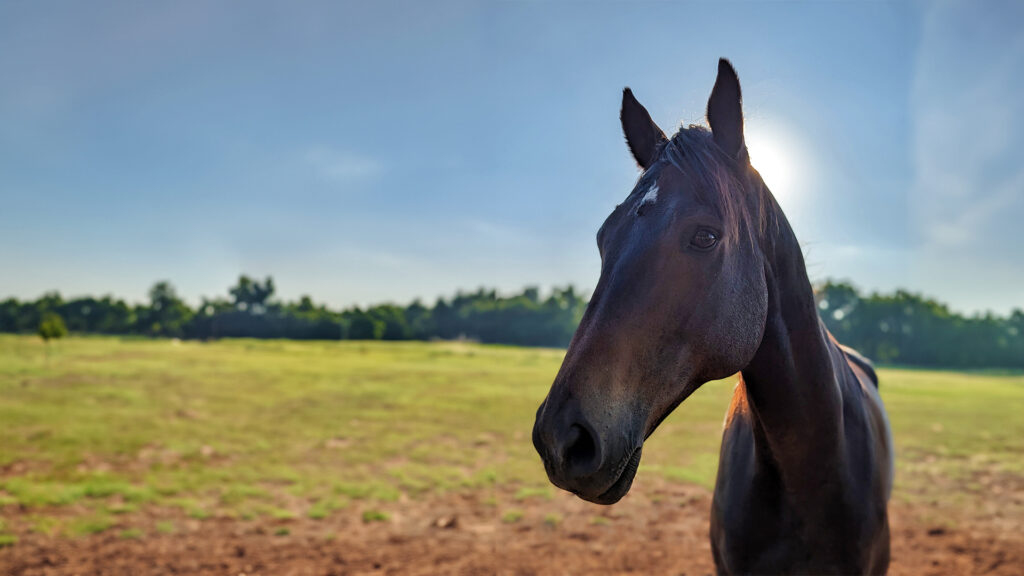
All Posts & News Press Releases Success Stories Aftercare Editorials Retraining Tips Supporter Features Inspector Spotlights Hamburger Toggle Menu [wpdreams_ajaxsearchlite] Previous Post Finding Home Again: Concord Joe’s Journey Finding Home Again: Concord Joe’s Journey By: Alexis Arbaugh April 3, 2025 Success Stories Tags:accredited aftercare, Accredited Organization, Equine Therapy, equine-assisted therapy, Horse and Hound Rescue Foundation, Natural Horsemanship, Therapy horse, Thoroughbred Aftercare Alliance Photos courtesy of Allison Moorhead Allison Moorhead and her mother, Robin, first met Concord Joe at Horse and Hound Rescue Foundation in May 2018. The 2013 Kentucky-bred gelding had raced 13 times between 2016 and 2018, earning $33,254. Robin immediately fell in love with Joe, a sweet and gentle giant, but at the time, another tall, dark bay named Yarnaby Road also caught her eye. In the end, Roadie went home with them. Meanwhile, Joe was adopted by a loving family in Kansas. Though Robin had adored Joe, she knew he was going to a wonderful home. For several years, Allison’s family remained active volunteers at Horse and Hound, but as life got busy and the COVID-19 pandemic set in, they found it difficult to maintain their commitment to the organization. However, fate had a way of bringing Joe back into their lives. In May 2022, Horse and Hound posted a photo of Joe on Facebook after he was returned to the rescue. When Robin saw that familiar face, she immediately called Allison and said, “We need to go back out to volunteer and see Joe!” That call changed everything. Once they reconnected with Horse and Hound and resumed volunteering, Allison and her mom knew they couldn’t let Joe slip away again. In September 2022, they brought him home, adding another beloved member to their family. Allison recalled feeling “so blessed and lucky to now have both of those tall, dark, and handsome geldings.” Today, Concord Joe is not only their trusted trail horse but also their “treat monster” and a source of equine therapy. Since Joe’s return, Allison’s connection to Horse and Hound has only deepened. She now volunteers several times a week and was even selected to represent Horse and Hound as an intern for the Monty Roberts Transition Horse Internship Program. The program, in partnership with the ASPCA Right Horse Initiative, helps interns develop natural horsemanship skills and bring that knowledge back to their organizations. Allison is truly thankful to Horse and Hound, she said, “I am able to give back to an organization that has given myself and my family so much.” Her love for Horse and Hound has spread throughout her family and friends as well. Her sister adopted her heart horse from the rescue, and her riding instructor has adopted two Concord Joe has also earned a reputation at the barn where Allison boards him. Known affectionately as “the ginormous dark horse who’s always so friendly,” he is the first to greet anyone at the gate, whether they have a treat or not. His kind demeanor and eagerness to please make him a joy to work with. “He is mostly just mine and my mom’s equine therapy [horse], but I have also been working with him on his groundwork. He is an easy going guy that I can feel safe working with and comfortable going on trails,” Allison said. One of her goals is to make Joe “husband-approved.” Her husband isn’t a horse enthusiast—yet—but she hopes that by making Joe “bomb-proof,” he will be the perfect introduction to the world of horses. Another goal is to guarantee that Joe is safe and steady enough for her mom, now in her early 60s, to enjoy trail rides safely. “My mom instilled a love of horses in me and my siblings at an early age, so this is a wonderful way for us to spend time together,” Allison shared. She often says that Concord Joe led her back to where she was meant to be—volunteering, giving back, and making a difference. Thanks to Joe, she reconnected with Horse and Hound, and her bond with her mother has grown even stronger as they continue their journey with the horses they fell in love with years ago. April 2025 Update: Since his adoption, Concord Joe has thrived with his new family. Allison recently introduced him to clicker training, and he’s catching on quickly. “We are still in the early stages, but he seems to love it! He thrives on having a job, using his brain, and, of course, being treat-motivated,” she said. While her husband has yet to earn the title of “horse husband,” they are still working on it. “My husband still hasn’t ridden Joe, so he isn’t ‘horse husband’ material quite yet, but we are still working on that!” she joked. Meanwhile, the family’s herd has grown, as they recently adopted another Thoroughbred from Horse and Hound, bringing their total to four graduates of the rescue. Allison remains an active volunteer, typically visiting twice a week. Most recently, she had the honor of representing Horse and Hound at the ASPCA Right Horse Summit Conference, further strengthening her connection to the organization that changed her life. Share This Article Do you have a success story that you would like to share? Submit your experience with an accredited organization here: Success Story Submission
A Perfect Match: Vera Tun & Kid Perfect
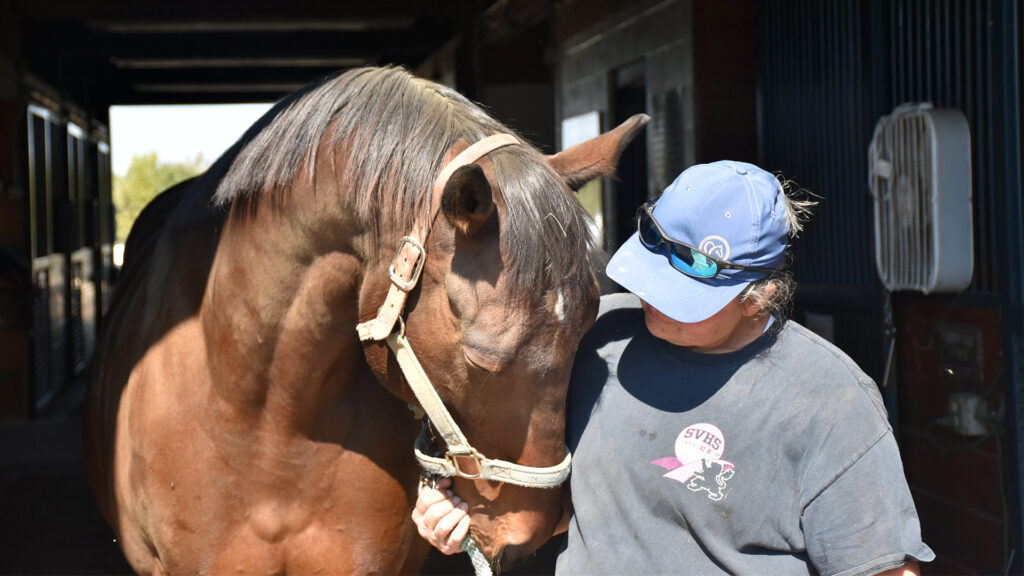
All Posts & News Press Releases Success Stories Aftercare Editorials Retraining Tips Supporter Features Inspector Spotlights Hamburger Toggle Menu [wpdreams_ajaxsearchlite] Previous Post A Perfect Match: Vera Tun & Kid Perfect A Perfect Match: Vera Tun & Kid Perfect By: Alexis Arbaugh April 3, 2025 Success Stories Tags:accredited aftercare, Accredited Organization, Kid Perfect, T.I.P. Championships, The Secretariat Center, Thoroughbred Aftercare Alliance When Vera Tun set out to find her next horse, she was focused on finding a partner for Dressage—one with a good brain, safe in and out of the tack, who moved well, and one she could depend on. Having previously owned two off-the-track Thoroughbreds (OTTBs), Vera knew exactly what she was looking for. “They taught me lessons in groundwork, patience, and the importance of not trying to fit a square peg into a round hole,” Vera explained. Vera’s search led her to The Secretariat Center in Lexington, Kentucky, a Thoroughbred Aftercare Alliance-accredited organization. It specializes in retraining and rehoming OTTBs. The moment Vera met Kid Perfect, she knew he was the one. Despite not having perfect conformation, Kid’s big, floaty movements impressed her, and she was immediately drawn to his potential. Through the adoption process, Vera was impressed by The Secretariat Center’s dedication. “One huge benefit of adopting from a facility like The Secretariat Center is that they can tell you a great deal about the horse’s history and what they’ve already accomplished,” she said. Through The Secretariat Center, Vera also learned about Kid’s early life at Sovereign Farm, where he was bred by Kelli Cross, one of the farm’s managing partners. “Kid hit the jackpot with Vera! Sometimes I feel like I should ask Vera if she would adopt me,” stated Kelli Cross. “He is truly treated like a prince (and Vera assures me regularly he is behaving like a prince and deserves it all.) He was very aptly named!” Kelli Cross, a managing partner of Sovereign Farm located in Paris, Kentucky, was one of the first people to meet Kid Perfect, born on March 28, 2014, was the first foal of Sovereign Farm’s cornerstone mare, Sheza Sweet Lemon. Kid had a successful racing career, with 35 starts, 5 wins, 4 seconds, and 4 thirds, earning $222,905 from 2015 to 2020. When it came time for Kid to retire, Kelli and her team at Sovereign Farm knew they wanted to send him to an accredited aftercare facility. “They never rush the horses,” Kelli said. “The Secretariat Center takes the time to help each one develop new skills in order to help them to be successful in their new career, [and] dealing with the Secretariat Center has been wonderful,” wrote Kelli. After Kid arrived at Vera’s farm in Illinois, they began a careful rest period before starting retraining. Kid adapted quickly, and Vera was impressed by his calm demeanor. “I only found out later that he had never been in an indoor arena before,” Vera remarked. His relaxed attitude toward work made it clear he was a perfect fit for Dressage. “It is important to be in an environment where fellow riders have experience with OTTB’s and can make suggestions or lend a sympathetic ear when things don’t go as planned,” suggested Vera. She would often reach out to the head trainer at The Secretariat Center with any questions or concerns regarding Kid or his retraining. Groundwork became a key part of their training, helping to build their relationship and understanding of each other. Vera noticed Kid’s clear body language—he wasn’t fond of lunging, but she adapted her approach to keep him engaged. “He tolerates lunging but prefers other activities,” Vera laughed. They also incorporated trail rides and cavaletti work into their routine to keep training varied and interesting. Vera took her time with Kid, riding five days a week and focusing on building a strong foundation. She was fortunate to board at a barn with a manager experienced with OTTBs, and with help from local trainers, Kid’s retraining progressed smoothly. His diet was carefully managed, with Nutrena All Life Stages Feed and alfalfa cubes to maintain weight, along with supplements for hoof and immune health. In May 2023, Kid suffered a hoof injury, delaying their training for several weeks. However, with the help of Vera’s farrier, his hoof healed, and by June, they were back to light trail riding. By July, they were participating in a local schooling show and attended a cavaletti clinic in August, both of which helped Kid overcome his fear of trailering. “He took these experiences in stride and seemed to enjoy them,” Vera said. In October 2023, Vera and Kid qualified for the T.I.P. Championships and competed in the Intro B Dressage test division, finishing 8th out of 19. “Considering it was only our third show together, you could probably understand how completely over the moon I was with that outcome,” Vera remarked. “Thoroughbreds are an amazing breed and I am a true fan,” Vere told us. “I honestly would never want to own another breed other than a Thoroughbred. They are so versatile, adaptable, athletic, and you can enjoy training them for whatever your discipline may be. Each horse is an individual which I believe really dictates how each particular rider’s situation plays out. Patience and really listening to the horse is the best advice I can give to anyone thinking about owning an OTTB.” Vera added with a smile, “If you’re familiar with the meme that says, ‘I used to be a winning racehorse and now I’m owned by my mom who kisses me on the nose and gives me treats all day and tells me how handsome I am –,’ that’s me—and I’m proud of it.” Share This Article Do you have a success story that you would like to share? Submit your experience with an accredited organization here: Success Story Submission
Getting to Know Outbound
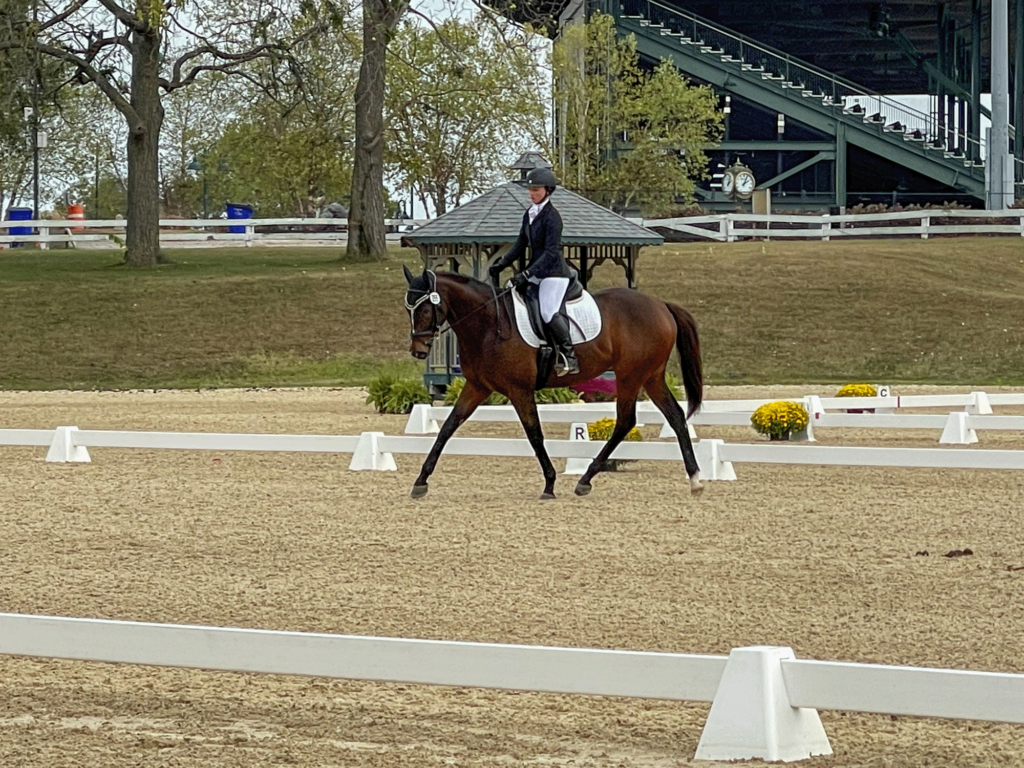
All Posts & News Press Releases Success Stories Aftercare Editorials Retraining Tips Supporter Features Inspector Spotlights Hamburger Toggle Menu [wpdreams_ajaxsearchlite] Previous Post Getting to Know Outbound Getting to Know Outbound By: Alexis Arbaugh March 13, 2025 Success Stories Tags:accredited aftercare, Accredited Organization, Eventing, Retired Racehorse Project, RRP, The Secretariat Center, Thoroughbred Aftercare Alliance Gabrielle Pearce developed a passion for horses at a young age, starting with ponies. As her confidence in the saddle grew, she transitioned to off-the-track Thoroughbreds. One of her earliest experiences with an ex-racehorse was riding Mr. Martini, an older Thoroughbred known for his calm and level-headed demeanor. He became the perfect bridge between ponies and larger horses, helping Gabrielle build the confidence and skills necessary to become a successful rider. After the unfortunate passing of Mr. Martini, Gabrielle found Vinnie, a 6-year-old off-the-track Thoroughbred who had received approximately 60 days of professional retraining. Since Vinnie had already been restarted, he seemed like the ideal next step in Gabrielle’s journey toward retraining an ex-racehorse on her own. “Vinnie was an exceptional athlete who genuinely enjoyed having a job,” Gabrielle recalled. He loved learning new things, and each lesson seemed to carry over to the next ride, as if he remembered everything they did. Their partnership developed quickly, deepening as they learned and grew together. A few years ago, Gabrielle tragically lost Vinnie in an accident, leaving her heartbroken and uncertain about whether she would ever find another horse as special as he had been. When she finally resumed her search, she felt most comfortable adopting a horse from an accredited aftercare organization. Gabrielle had a great experience with the Secretariat Center, a Thoroughbred Aftercare Alliance-accredited organization in Lexington, Kentucky. The organization listened to her needs, never pressured her, and provided honest assessments of each horse. Gabrielle’s list of “must-haves” included a horse at least 16 hands tall, free of prior injuries that could impact training, without cribbing habits, and possessing a calm personality. After trying a few horses, she left undecided. However, when she returned a couple of months later for additional trial rides, she had a gut feeling that Outbound, nicknamed “Porter,” was the perfect match for her. In October 2022, Gabrielle adopted Porter, who at the time had only five retraining rides. “He is the youngest and greenest horse I have owned,” she said. The 16-hand bay gelding is Kentucky-bred by Candy Ride (ARG) out of Zofzig (Danzig). He raced only twice at Horseshoe Indianapolis in Indiana, earning $1,215. As soon as Gabrielle brought Porter home to her family farm, she turned him out alone in a pasture, expecting him to run or buck after the long trailer ride. Instead, he calmly wandered around the field, grazing and quietly taking in his new surroundings. When it came time to meet the other four geldings on the farm, Porter showed no interest in causing trouble. He quickly integrated into the herd, and they all got along seamlessly. Gabrielle’s decision to take on all of Porter’s retraining herself became a valuable learning experience. Her previous show experience, along with lessons and clinics, gave her the foundation she needed to restart a horse. However, she also understood that learning never stops. When she found herself stuck or looking for fresh ideas, YouTube videos and Instagram accounts became valuable resources. Gabrielle feeds Porter Tribute Senior Sport, supplemented with a small amount of Tribute Essential K and Lubrisyn HA. In the winter, she incorporates timothy or alfalfa cubes into his meals to help maintain a healthy weight. Throughout the day, Porter enjoys a mixture of grass hay to complement his diet. Gabrielles goal for Porter was to enter him into the 2023 Retired Racehorse Project. Gabrielle had to carefully plan his training schedule, making sure not to exceed the maximum number of allowed rides as outlined by the competition’s rules. Gabrielle’s first focus was one groundwork, aiming to build mutual respect. She understood that while developing a bond with a horse is important, it should never lead to the horse disrespecting or taking advantage. Establishing this respect created a solid foundation for their under-saddle training. Gabrielle also wanted to teach Porter the fundamentals of being a well-mannered horse. One of their key challenges was getting Porter to stand still at the mounting block. Together, they worked on building up his patience, training him to wait calmly for Gabrielle’s cue before walking on after she mounted. Another hurdle was helping Porter become comfortable with the farrier. As with mounting, he struggled to stand still, but over time, he learned that the farrier was there to help, not harm him. Gabrielle also emphasized spatial awareness to reinforce the importance of respecting each other’s personal space. SEE RELATED RE-TRAINING TIP FEATURE: “Getting Started with Groundwork & Manners for Your Ex-Racehorse” Click HERE for Retraining Tip Feature An essential part of their groundwork involved the use of pressure and release. For example, when Gabrielle applied gentle pressure on the reins, Porter would respond by turning his head, and she would immediately release the pressure as a reward. They also practiced moving his body laterally, using pressure to guide him in the desired direction and releasing it once he responded correctly. This method significantly improved their communication, helping Porter become more responsive and attentive to Gabrielle’s cues. Clipping had been a work in progress, particularly around Porter’s ears, which are often sensitive areas for horses. Many horses dislike having their ears touched, but Gabrielle took a patient, gradual approach to help Porter become comfortable with clippers on all parts of his body. Her steady method ensured he remained relaxed throughout the process. Trailering can be challenging for many horses, even those with previous travel experience like racehorses. Each trailer is slightly different, and that unfamiliarity can cause anxiety. Encouraging a horse to calmly enter and exit what might seem like a dark, intimidating box requires patience. Gabrielle committed to a slow and steady approach, prioritizing Porter’s comfort and confidence throughout the process. Like many
Kiss Him Goodbye
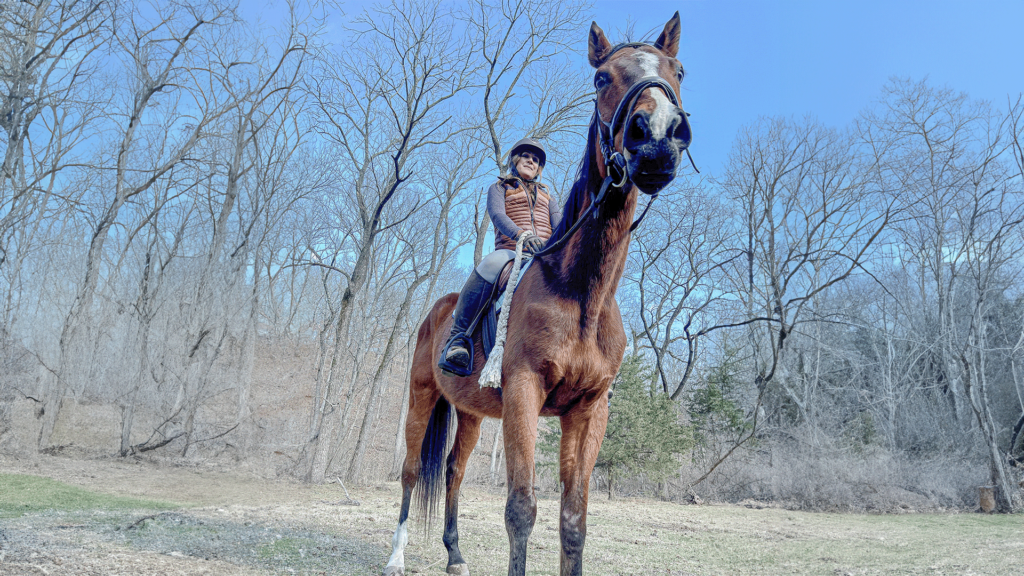
All Posts & News Press Releases Success Stories Aftercare Editorials Retraining Tips Supporter Features Inspector Spotlights Humberger Toggle Menu [wpdreams_ajaxsearchlite] Previous Post Kiss Him Goodbye Kiss Him Goodbye By: Alexis Arbaugh September 27, 2024 Success Stories Tags:accredited aftercare, Accredited Organization, fox hunting, Horse and Hound Rescue Foundation, Success story, Thoroughbred Aftercare Alliance Fox Hunting is a complex and demanding sport, requiring a horse with bravery and composure amid the excitement. When Michelle Stephen Seigel was searching for her next Fox Hunting prospect, Kiss Him Goodbye seemed like the perfect match. Aware that most off-the-track Thoroughbreds come with their own set of challenges, Michelle, as a therapist, was well-prepared and equipped with the tools to help him thrive in this new role. During the summer of 2021, Michelle was scrolling through the Horse and Hound Rescue Foundation’s social media pages and was instantly fascinated by Kiss Him Goodbye. After watching a video of him in a round pen, she fell in love with his beautiful movement. “I was seeking a horse I could Fox Hunt, and he is tall and athletic, so I knew he would be a great fit for me,” Michelle shared. She quickly scheduled a visit to meet him. Horse and Hound is an accredited organization by Thoroughbred Aftercare Alliance. Located in Guthrie, Oklahoma, they take in retired Thoroughbred racehorses after their racing careers end, specializing in retraining and rehabilitation. The staff wholeheartedly believes that just because a horse may not be suited to racing doesn’t mean that they won’t succeed in a new career. Kiss Him Goodbye is a 2015 bay Thoroughbred gelding who had 30 starts and earned a total of $62,709 during his four-year racing career. Upon arriving at Horse and Hound, Michelle learned that “Kissy” had undergone some Monty Roberts training with certified trainer Jamie Jennings. Monty Roberts’ program focuses on natural horsemanship principles, educating individuals about horse behavior and fostering a collaborative partnership between horse and owner. “The people of Horse and Hound were supportive and genuine,” Michelle explained, noting that “the adoption was easy.” Although she did not ride Kissy during her visit—only observing him in the round pen—she quickly realized she had found her next Fox Hunting partner and agreed to take him home in August 2021. Once they arrived at the ranch, Michelle noticed that Kissy had some anxiety, which is common for off-the-track horses transitioning to new environments. Kissy would get bored and start cribbing, and he also struggled with trailer loading. Rather than being discouraged, Michelle’s therapist instincts kicked in, and she was eager to help him overcome these habits. Michelle and Kissy made it to their first hunt that December, where she intended to ride him in the third group of less experienced horses for his Fox Hunting debut. However, “it was too much for him,” Michelle admitted. When the horns sounded and the hounds were released, Kissy became frightened and bolted, taking off for a solo tour of the property. After their challenging first outing, the pair decided to slow things down significantly. Michelle and Kissy focused on clicker training and groundwork to help ease his anxiety, also spending time on trail rides. Kissy was often ridden by Michelle’s husband in a Western saddle—“who thought he would be a husband horse?” Michelle joked. Their hard work paid off, as Kissy transformed into a Fox Hunting star. He not only became a perfect gentleman in the field but also learned to load and unload from the trailer with ease. “Last season, I rode him in the second field and moved him up to the first field by the end of the season… he’s a joy,” wrote Michelle. The future looks bright for Michelle and Kissy, as they plan to continue building their confidence in the field and hope to participate in Fox Hunts across the United States. Share This Article Do you have a success story that you would like to share? Submit your experience with an accredited organization here: Success Story Submission
Rescued Hearts
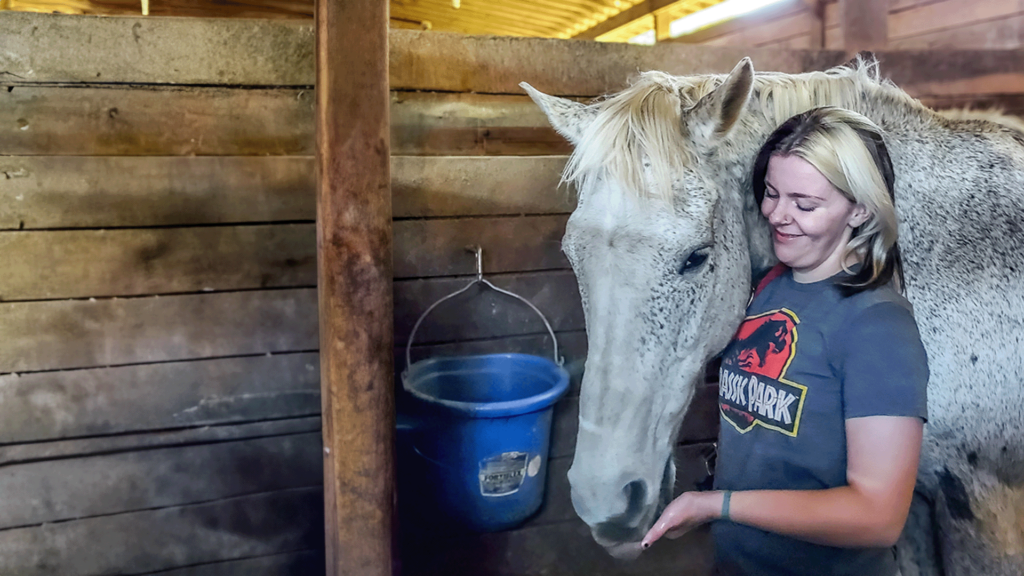
All Posts & News Press Releases Success Stories Aftercare Editorials Retraining Tips Supporter Features Inspector Spotlights Humberger Toggle Menu [wpdreams_ajaxsearchlite] Previous Post rescued hearts Rescued Hearts By: Alexis Arbaugh September 26, 2024 Success Stories Tags:Accredited Organization, Brook Hill Retirement Center for Horses, Equine Therapy, equine-assisted therapy, Jumping, Thoroughbred Aftercare Alliance, United States Pony Club, USPC Misty’s Blue Knight, a 2000 grey Thoroughbred gelding, was abandoned in a field in Maryland. Thankfully, Animal Control rescued him and brought him to Brook Hill Retirement Center For Horses in Forest, Virginia. Brook Hill Retirement Center For Horses is a Thoroughbred Aftercare Alliance accredited organization that specializes in rehabilitation, retraining, adoption, equine-assisted therapy, and sanctuary for Thoroughbreds. It is also certified by the Professional Association of Therapeutic Horsemanship (PATH). Misty’s Blue Knight, affectionately known as Basil, had raced five times at Pimlico Race Course and Timonium Race Track in Maryland before being abandoned. When he arrived at Brook Hill, the staff had no knowledge of his previous training. However, it soon became clear that Basil had a new role to play at the farm: helping at-risk youth as part of Brook Hill’s Equine Therapy program. Here, Basil found a new purpose, supporting people with physical and mental disabilities. “He is wonderful with kids with mental health disabilities,” Jo Anne wrote. To everyone’s delight, Basil had been trained to jump in his past life, which allowed the young riders at Brook Hill to progress in their horseback riding skills. Along the way, Basil formed a special bond with Molly Allen, a young girl struggling with depression and anxiety. Molly chose Basil as her project horse, and their partnership became a source of healing for both. Basil, with his tendency to rush around jump courses, challenged Molly to manage her own anxiety to help Basil relax. If Molly remained calm, Basil would also have to practice being calm, but as soon as she got worked up, he would get too anxious. Their partnership has been mutually beneficial, as both have learned to control their excitement and nerves to calm each other and tackle the tasks at hand. In July 2022, Basil and Molly competed in the 2’6″ division at The United States Pony Clubs (USPC) Championships held at the Tryon International Equestrian Center in Mill Spring, North Carolina. They were joined by four teammates, each paired with their own rescue horses, as well as Brook Hill’s stable manager. This was a milestone for Brook Hill, as it marked the first time the farm had an entire team qualify for the Championships. Basil and Molly secured 6th place overall in their division, a notable achievement for both horse and rider. Their journey demonstrates how a strong partnership can provide meaningful second chances for both horses and people. Share This Article Do you have a success story that you would like to share? Submit your experience with an accredited organization here: Success Story Submission
Thoroughbred Aftercare Alliance Grants $3.8 Million to Accredited Organizations for 2023
All Posts & News Press Releases Success Stories Aftercare Editorials Supporter Features Inspector Spotlights [wpdreams_ajaxsearchlite] Previous PostNext Post Thoroughbred Aftercare Alliance Grants $3.8 Million to Accredited Organizations for 2023 Thoroughbred Aftercare Alliance Grants $3.8 Million to Accredited Organizations for 2023 FOR IMMEDIATE RELEASE November 17, 2023 News Tags:accredited aftercare, Accredited Organization, Thoroughbred Aftercare Alliance LEXINGTON, KY — Thoroughbred Aftercare Alliance announced today, Nov. 17, that $3.8 million will be awarded as grants to 86 Thoroughbred aftercare organizations that currently hold Thoroughbred Aftercare Alliance accreditation for 2023. Since inception in 2012, Thoroughbred Aftercare Alliance has now awarded more than $31.9 million in grants to their accredited Thoroughbred aftercare organizations. Over the course of 12 years as the overarching entity for Thoroughbred aftercare, Thoroughbred Aftercare Alliance has experienced remarkable growth, expanding from 23 to 86 accredited organizations and from $1 million to $3.8 million in annual grants. In total, Thoroughbred Aftercare Alliance has awarded over $31.9 million in grants—earmarked specifically for equine care. These funds have been directed to Thoroughbred Aftercare Alliance-accredited organizations, which, through their collective efforts, have successfully retrained, retired, and rehomed over 16,500 Thoroughbreds across approximately 180 facilities. The goal of this financial support is to empower them to provide exceptional care and rehabilitation services for retired racehorses. Receiving accreditation from Thoroughbred Aftercare Alliance is a significant recognition for the organizations dedicated to the care and support of retired racehorses. This prestigious accreditation signifies that these organizations adhere to specific standards and criteria concerning horse welfare, facility care, and management. Thoroughbred Aftercare Alliance accreditation serves as a testament to an organization’s commitment to maintaining high-quality practices in every aspect of equine well-being, reinforcing the assurance that the retired racehorses under their care receive exceptional treatment and support. “Congratulations to the 86 accredited organizations for receiving grants from Thoroughbred Aftercare Alliance this year. These organizations exemplify exceptional equine care, and we take great pride in supporting their efforts in retraining, retiring, and rehoming Thoroughbreds. As they persist in their tireless care for retired racehorses, Thoroughbred Aftercare Alliance’s essential funding serves as a valuable resource, helping them to carry out their important work,” said Thoroughbred Aftercare Alliance, Accreditation and Grants Manager, Janice Towles. Thoroughbred Aftercare Alliance President Jeffrey Bloom stated, “Each year the Thoroughbred Aftercare Alliance team works hard to raise funds for our exemplary accredited organizations who are doing right by these retired Thoroughbred racehorses. We are very appreciative of our industry stakeholders for helping to raise these funds. Your contributions this holiday season would greatly assist in caring for our Thoroughbreds throughout North America.” Accredited organizations undergo a thorough application and inspection process prior to accreditation being awarded to ensure they meet the Thoroughbred Aftercare Alliance’s Code of Standards, which covers five key areas: operations, education, horse health care management, facility standards and services, and adoption policies and protocols. Facility inspections are conducted at all facilities housing Thoroughbreds for each organization. Ongoing updates and re-inspections are required of all organizations as a condition of accreditation. Thoroughbred Aftercare Alliance is supported by members from every aspect of the Thoroughbred industry, including owners, breeders, trainers, stallion farms, racetracks, sales companies, horsemen’s groups, foundations, veterinarians, horseplayers, racing fans, wagering technology companies, and many others. The generous donations from these varied sources throughout the year collectively contribute to the funds allocated for grants awarded to Thoroughbred Aftercare Alliance-accredited organizations at the end of each year. These collaborative efforts highlight the industry-wide commitment to the well-being and post-racing life of Thoroughbreds, reinforcing Thoroughbred Aftercare Alliance’s mission. About Thoroughbred Aftercare Alliance Based in Lexington, KY, Thoroughbred Aftercare Alliance is a 501(c)(3) nonprofit that accredits, inspects, and awards grants to approved aftercare organizations to retrain, retire, and rehome Thoroughbreds using industry-wide funding. Along with continued funding from its original partners Breeders’ Cup, The Jockey Club, and Keeneland Association, Thoroughbred Aftercare Alliance is supported by owners, trainers, breeders, racetracks, aftercare professionals, and other industry members. Since inception in 2012, Thoroughbred Aftercare Alliance has granted more than $31.9 million to accredited aftercare organizations. Currently 86 aftercare organizations comprised of approximately 180 facilities across North America have been granted accreditation. To learn more about Thoroughbred Aftercare Alliance, visit thoroughbredaftercare.org. Contact Samantha Smith859-224-2882ssmith@thoroughbredaftercare.org Emily Dresen352-362-6934edresen@thoroughbredaftercare.org Share This Release
Thoroughbred Aftercare Alliance Accredits 46 Organizations
All Posts & News Press Releases Success Stories Aftercare Editorials Supporter Features Inspector Spotlights [wpdreams_ajaxsearchlite] Previous PostNext Post Thoroughbred Aftercare Alliance Accredits 46 Organizations Thoroughbred Aftercare Alliance Accredits 46 Organizations FOR IMMEDIATE RELEASE November 9, 2023 News Tags:Accredited Aftecare, Accredited Organization, Thoroughbred Aftercare Alliance, Thoroughbred Aftercare Alliance Organizatinon LEXINGTON, KY — Thoroughbred Aftercare Alliance announced today that 46 Thoroughbred aftercare organizations have been awarded accreditation for 2023. The 46 organizations include 37 organizations who are continuing their accreditation and 9 that earned accreditation this year. Thoroughbred Aftercare Alliance, the gold standard and only accrediting body in Thoroughbred aftercare, now has a network of 86 organizations with approximately 180 facilities in North America. The 9 organizations earning accreditation this year are: After The Races NY Inc., Bowman Second Chance Thoroughbred Adoption, Central Virginia Horse Rescue, Dale and Patti Shirley Equine Encore Foundation, Desert Oasis Rescue LLC, Hidden Pond Farm Equine Rescue, Rising Starr Horse Rescue Corporation, and Run for the Ribbons Inc., and Thoroughbred Retirement Network of Louisiana. The 37 organizations that are continuing their accreditation this year are: ACTT Naturally, Inc., After the Homestretch – Arizona, Akindale Thoroughbred Rescue, Beyond The Roses Equine Rescue & Retirement, Blue Bloods Thoroughbred Adoption and Placement, Inc., Brook Hill Retirement Center for Horses, CANTER California, Circle A Home for Horses Inc., Equine Rescue of Aiken, Florida TRAC, Glen Ellen Vocational Academy, Inc., Hope After Racing Thoroughbreds, Hope for Horses, Inc., Horse and Hound Rescue Foundation, James River Horse Foundation, Kentucky Equine Adoption Center, LoneStar Outreach to Place Ex-Racers, LongRun Thoroughbred Retirement Society, Lucky Orphans Horse Rescue, MidAtlantic Horse Rescue Inc., New Beginnings Thoroughbreds, Inc., New Stride Thoroughbred Adoption Society, New Vocations Racehorse Adoption Program, Old Friends Equine Retirement, Racing For Home, Inc., Redwings Horse Sanctuary, ReRun, Inc., Second Wind Thoroughbred Project, Inc., Secretariat Center, South Florida SPCA, The Exceller Fund, Inc., Therapeutic Horses of Saratoga, Thoroughbred Placement Resources, Inc., Thoroughbred Retirement Foundation, United Pegasus Foundation, Virginia Thoroughbred Project, and Win Place Home, Inc. Accreditation from Thoroughbred Aftercare Alliance is an important recognition for organizations that provide care and support for retired racehorses. It signifies that these organizations meet certain standards and criteria in terms of horse welfare, facilities, and management. Thoroughbred Aftercare Alliance accredited organizations undergo a thorough application and inspection process prior to accreditation being awarded to ensure they meet the Thoroughbred Aftercare Alliance Code of Standards, which covers five key areas: operations, education, horse health care management, facility standards and services, and adoption policies and protocols. Facility inspections are conducted at all facilities housing Thoroughbreds for each organization. Ongoing updates and re-inspections are required of all organizations as a condition of accreditation. All organizations that hold Thoroughbred Aftercare Alliance accreditation are eligible to receive financial grants to support the care of their Thoroughbreds. Grant applications are currently being reviewed and the total grant amount awarded by Thoroughbred Aftercare Alliance will be announced this month. Since 2012, Thoroughbred Aftercare Alliance has awarded $28.1 million to accredited organizations. “We are extremely grateful to have a record number of 86 accredited organizations this year. We take great pride in having them as part of our network because they demonstrate a commitment to both themselves and the racing industry in ensuring the proper retraining, retirement, and rehoming of Thoroughbreds once their racing careers have concluded,” said Thoroughbred Aftercare Alliance, Accreditation and Grants Manager, Janice Towles. “We are deeply honored to be recognized and accredited by Thoroughbred Aftercare Alliance. This acknowledgment reaffirms our commitment to the welfare and well-being of retired Thoroughbred racehorses,” said Brandi Goode from Desert Oasis Rescue LLC. “Being a part of this incredible network not only strengthens our mission but also provides us with valuable resources, support, and the opportunity to collaborate with like-minded organizations. We look forward to making a positive impact and contributing to Thoroughbred Aftercare Alliance’s admirable efforts in caring for our horses.” The full list of 86 organizations, information about the accreditation process, and the Thoroughbred Aftercare Alliance’s Code of Standards can be found on thoroughbredaftercare.org. About Thoroughbred Aftercare Alliance Based in Lexington, KY, Thoroughbred Aftercare Alliance is a 501(c)(3) nonprofit that accredits, inspects, and awards grants to approved aftercare organizations to retrain, retire, and rehome Thoroughbreds using industry-wide funding. Along with continued funding from its original partners Breeders’ Cup, The Jockey Club, and Keeneland Association, Thoroughbred Aftercare Alliance is supported by owners, trainers, breeders, racetracks, aftercare professionals, and other industry members. Since inception in 2012, Thoroughbred Aftercare Alliance has granted more than $31.9 million to accredited aftercare organizations. Currently 86 aftercare organizations comprised of approximately 180 facilities across North America have been granted accreditation. To learn more about Thoroughbred Aftercare Alliance, visit thoroughbredaftercare.org. Contact Samantha Smith 859-224-2882 ssmith@thoroughbredaftercare.org Emily Dresen 352-362-6934 edresen@thoroughbredaftercare.org Share This Release