This August, CJ Wilson was invited to South Korea to share her expertise in Thoroughbred aftercare. As the founder and lead trainer of Win Place Home, a Thoroughbred Aftercare Alliance-accredited organization, she draws on years of experience working with retired racehorses. In this blog, CJ recounts her daily experiences, from classroom lectures to hands-on training, and the connections she made along the way.
Overall Reflections
From the moment I arrived in South Korea, I was welcomed with such graciousness and care. Everyone I met was kind, respectful, and went out of their way to express gratitude for my being there. I was deeply touched by the thoughtful gifts, the attention to my dietary needs, and the effort to ensure I had comfortable accommodations throughout my stay. At every venue, I felt not only welcomed as a guest but also valued as a partner in the conversation about horse care and Thoroughbred aftercare.
Most importantly, I was impressed by the welfare and condition of the horses I encountered. Across the board, they looked well cared for and clearly loved. At the Equine Training Center in particular, the professionalism and dedication of the professors stood out. Their approach consistently reflected a priority on the horse’s wellbeing. It was encouraging to see that shared commitment to putting the horse first, which mirrors my own philosophy.
At the same time, I believe there is room to build on this strong foundation by deepening the understanding of how horses think and how they communicate back to us. The greatest progress comes when trainers listen as much as they direct, creating a true dialogue rather than one-sided instruction. I also observed moments where horses seemed under pressure to “perform” or progress by a certain timeline. While the intention is often to develop them quickly, the reality is that pressure and stress can actually delay learning. A horse who feels safe and understood will advance more consistently. That trust, once earned, lasts a lifetime. It’s a gift that carries forward to every future rider, trainer, or adopter who works with that horse.
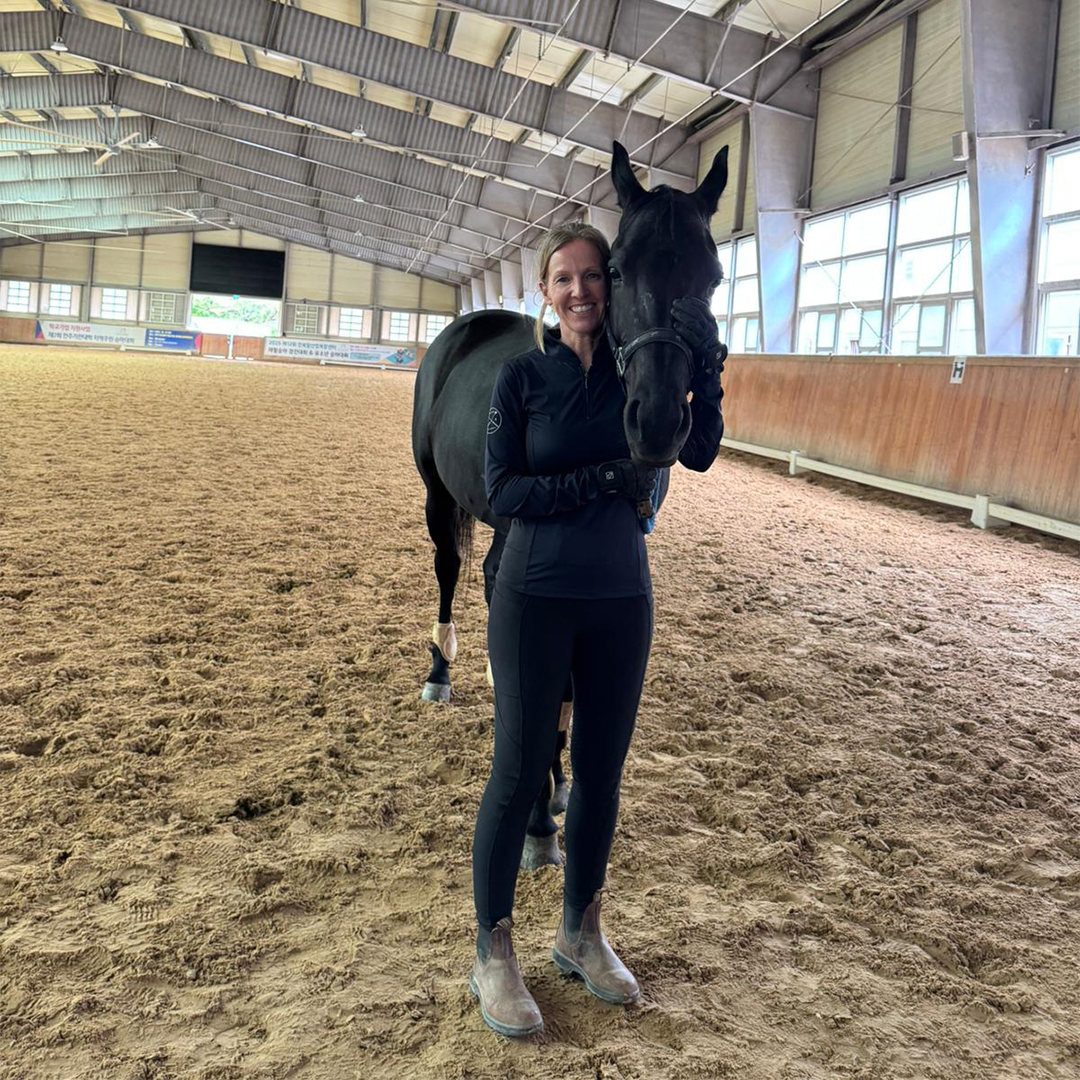
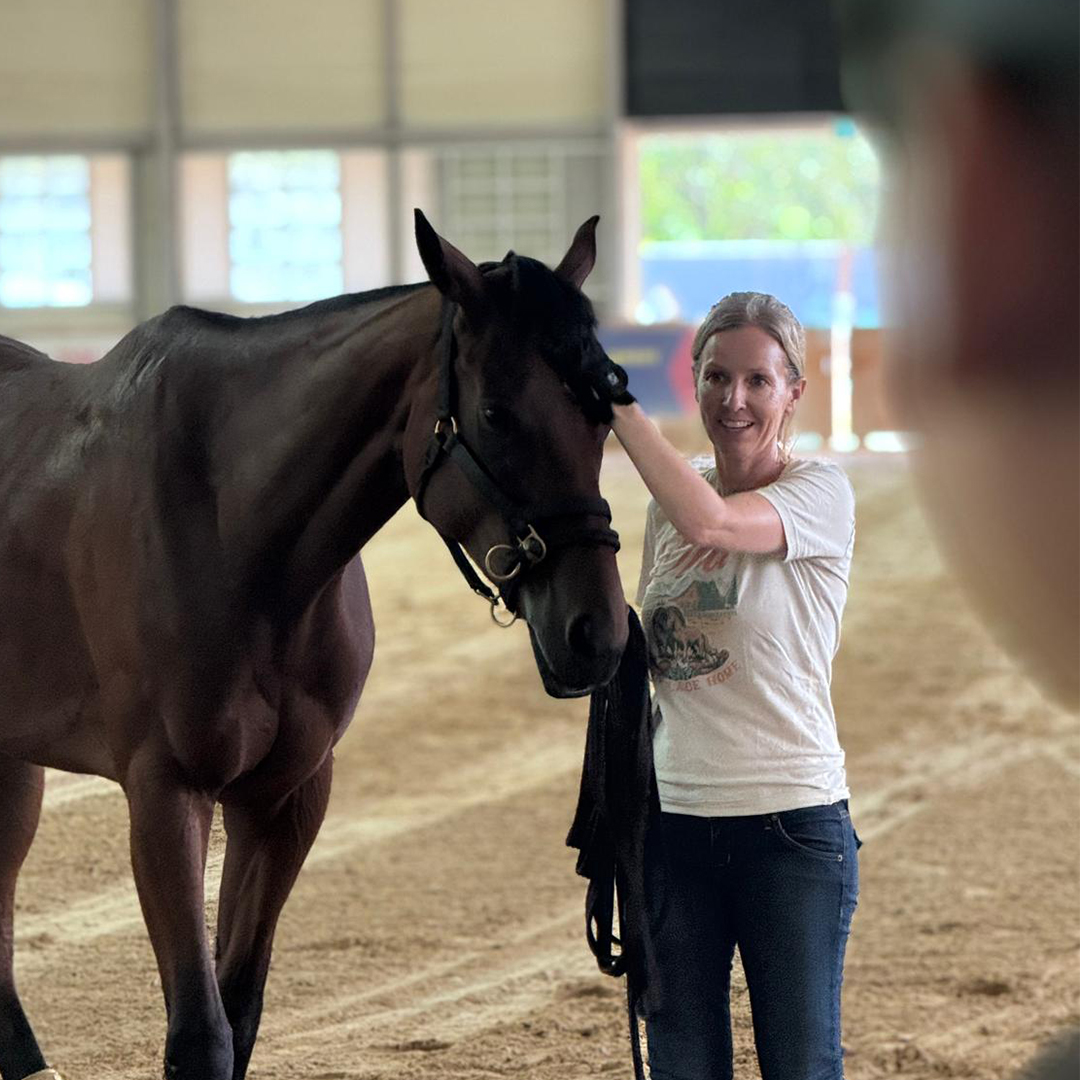
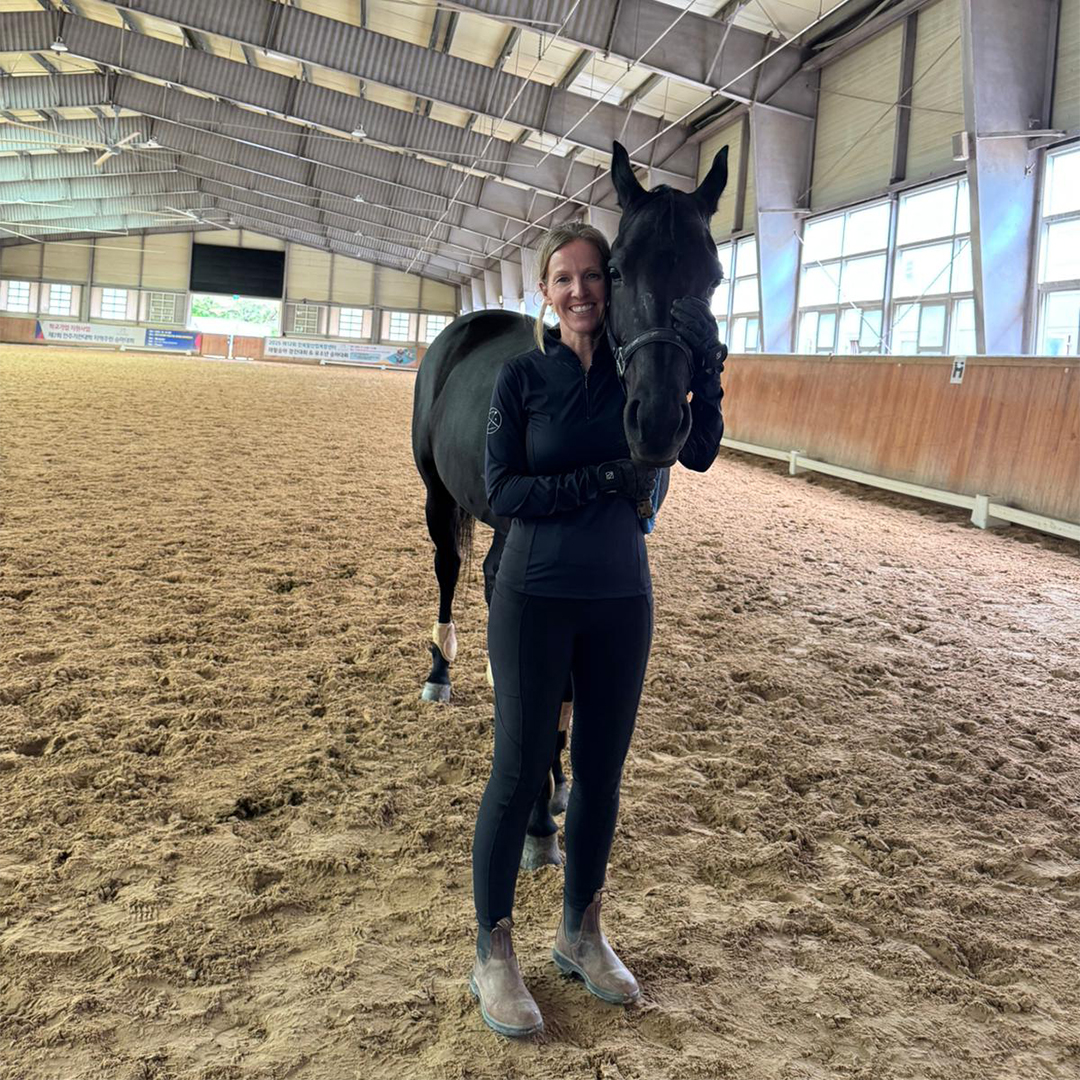
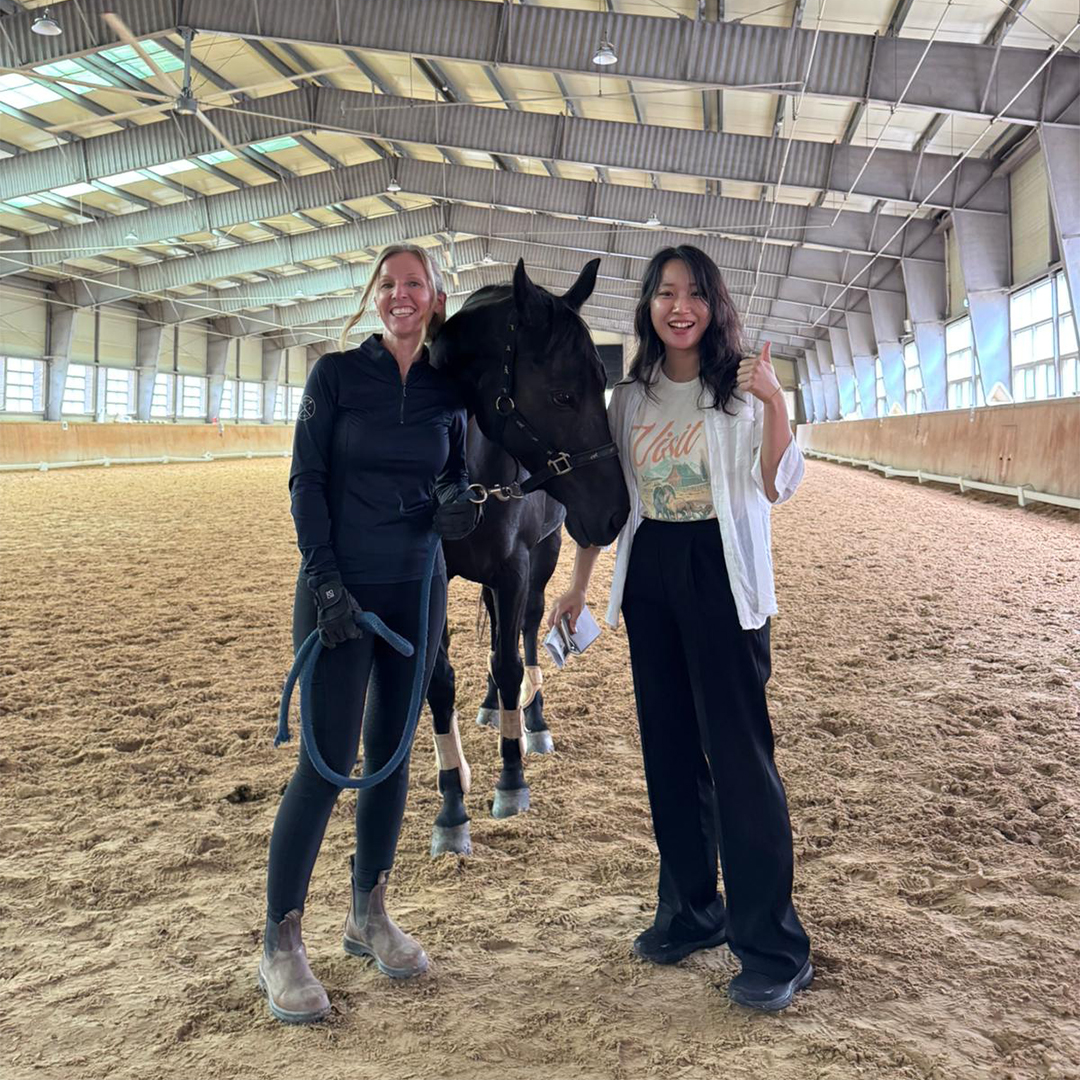
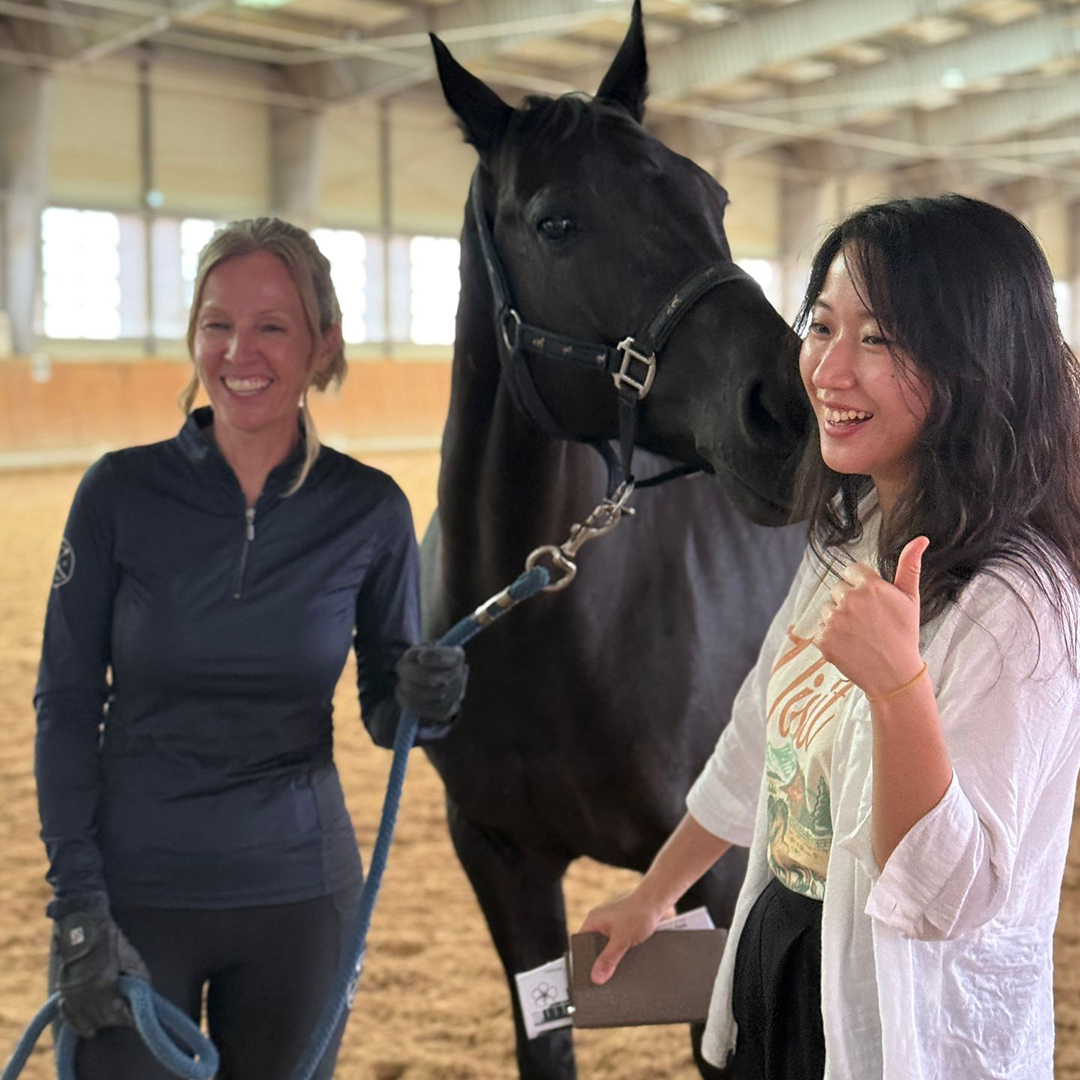
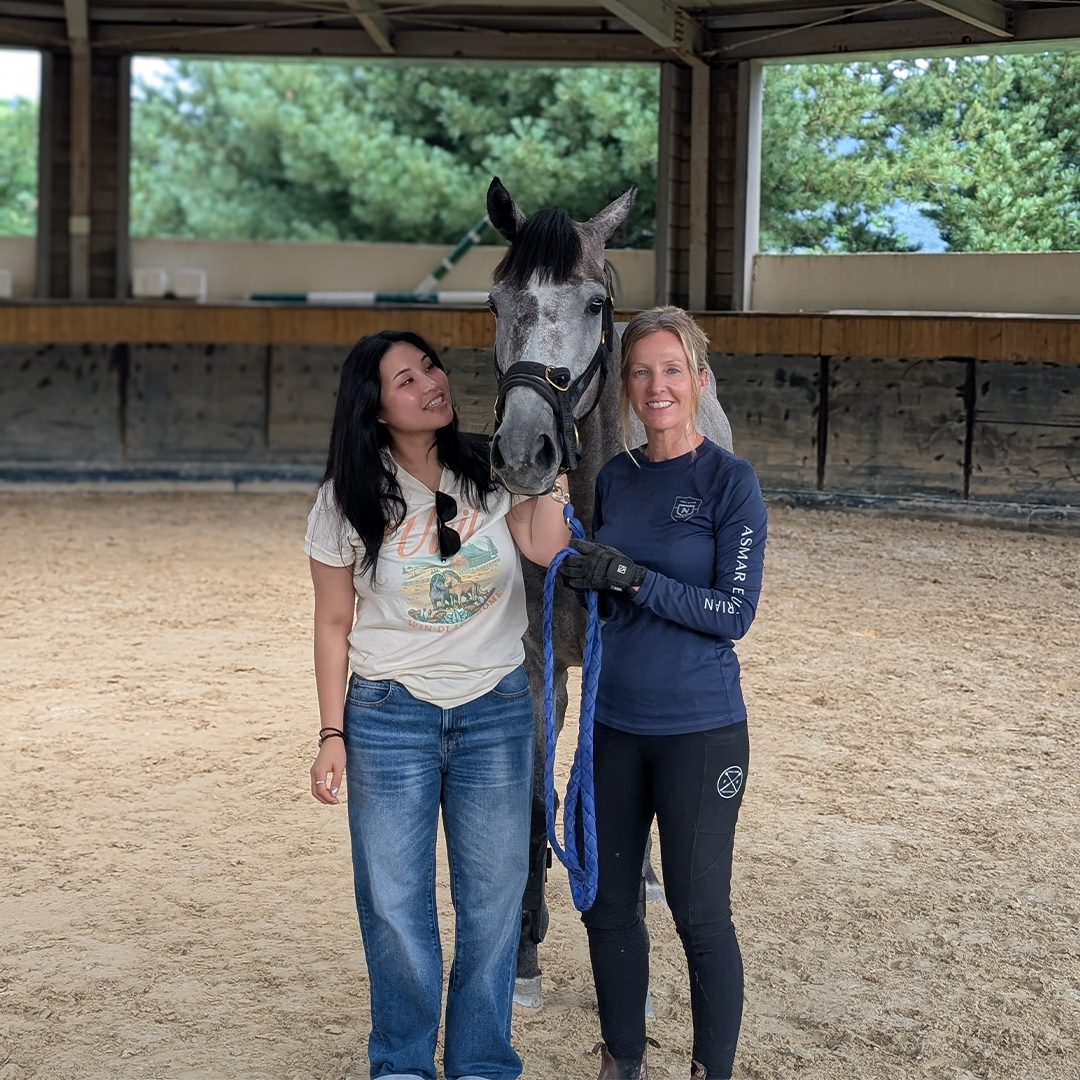
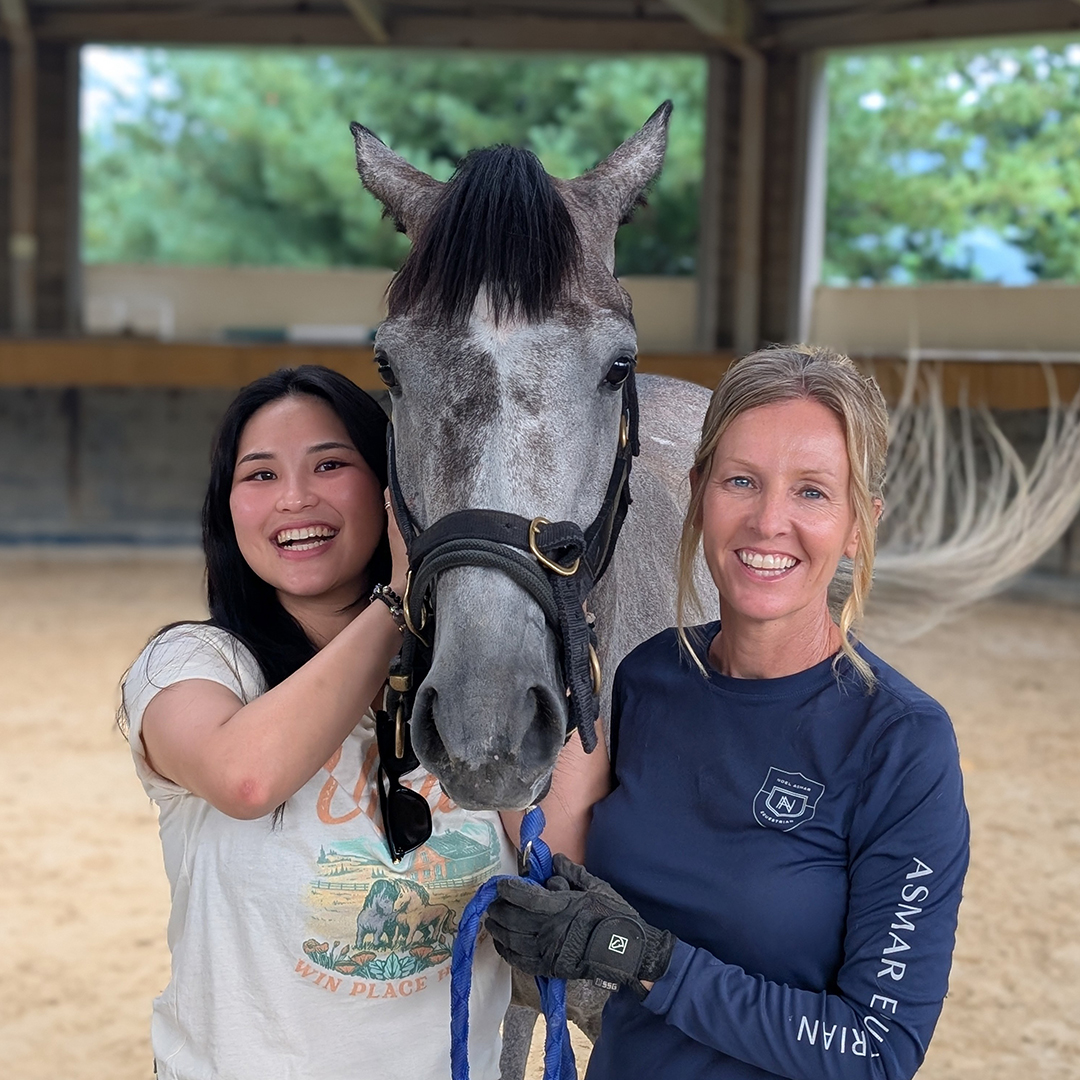
CJ Wilson pictured with a horse in South Korea on her trip to speak about Thoroughbred Aftercare.
Day One – August 22
After a very long flight, I landed in Seoul in the afternoon and was warmly welcomed at the airport by my interpreter, Somin, and the project manager, Singsu. From the very beginning, I knew I was in good hands.
Somin was a joy to work with. Not only is she a talented dressage rider and coach, but she had also studied my lecture materials in advance, which made her an exceptional interpreter despite it not being her usual profession. By the end of our first few days together, she was anticipating my teaching points so naturally that she seemed to know what I was going to say before I even said it. Her equestrian knowledge made all the difference as she wasn’t just translating words, she was translating meaning. She was truly a dream partner for this trip.
From the airport, we drove straight to KRA and the Let’s Ride Park, where I met the KRA staff. Together, we reviewed the schedule for the week and discussed which presentations would be most impactful to deliver the next day. I appreciated how thoughtful and collaborative they were in shaping the program. They always made sure the sessions were adapted to the audience, which showed their genuine commitment to making the experience meaningful.
That evening, we all shared dinner together at a local chicken restaurant. In a gesture of generosity, they ordered every chicken and cheese dish on the menu so that I could try a little of everything. It was a delicious welcome meal and a wonderful start to my time in Korea. Afterward, I returned to my hotel to rest and prepare for what I knew would be a busy and rewarding week ahead.
Day Two - August 23
The day began with a special meeting with the Vice President of the Korea Racing Authority. From the very start, he was warm and thoughtful, immediately expressing concern that I might not get to enjoy good Korean food during my stay because of my restrictions and that kindness set the tone for the rest of our conversation. He asked why I chose the name Win Place Home. I explained that it was a nod to the racing term Win Place Show, but with my own twist: the horses Win on the track, are Placed with me, and then I find them a Home. He loved the meaning behind it.
He generously presented me with a beautiful gift: a rainbow-painted horseshoe inlaid with small diamonds, framed so it could be treasured. When he asked why I started my charity, I shared my years working on the track, how I could see the potential in retired racehorses for second careers, and how I was always being offered horses in need of transition. It became clear to me that this was my calling. He listened intently and told me he could see how naturally I communicate with animals and how special that is.
That morning, I gave my first presentations to KRA staff responsible for animal welfare, along with veterinarians and vet assistants. I shared both my Thoroughbred Aftercare Alliance presentation and my Win Place Home presentation. The audience asked thoughtful questions, especially about the accreditation process and how WPH operates day to day. Their engagement showed me how deeply they cared about improving the system for horses.
Photo from CJ's trip to South Korea - Day 2
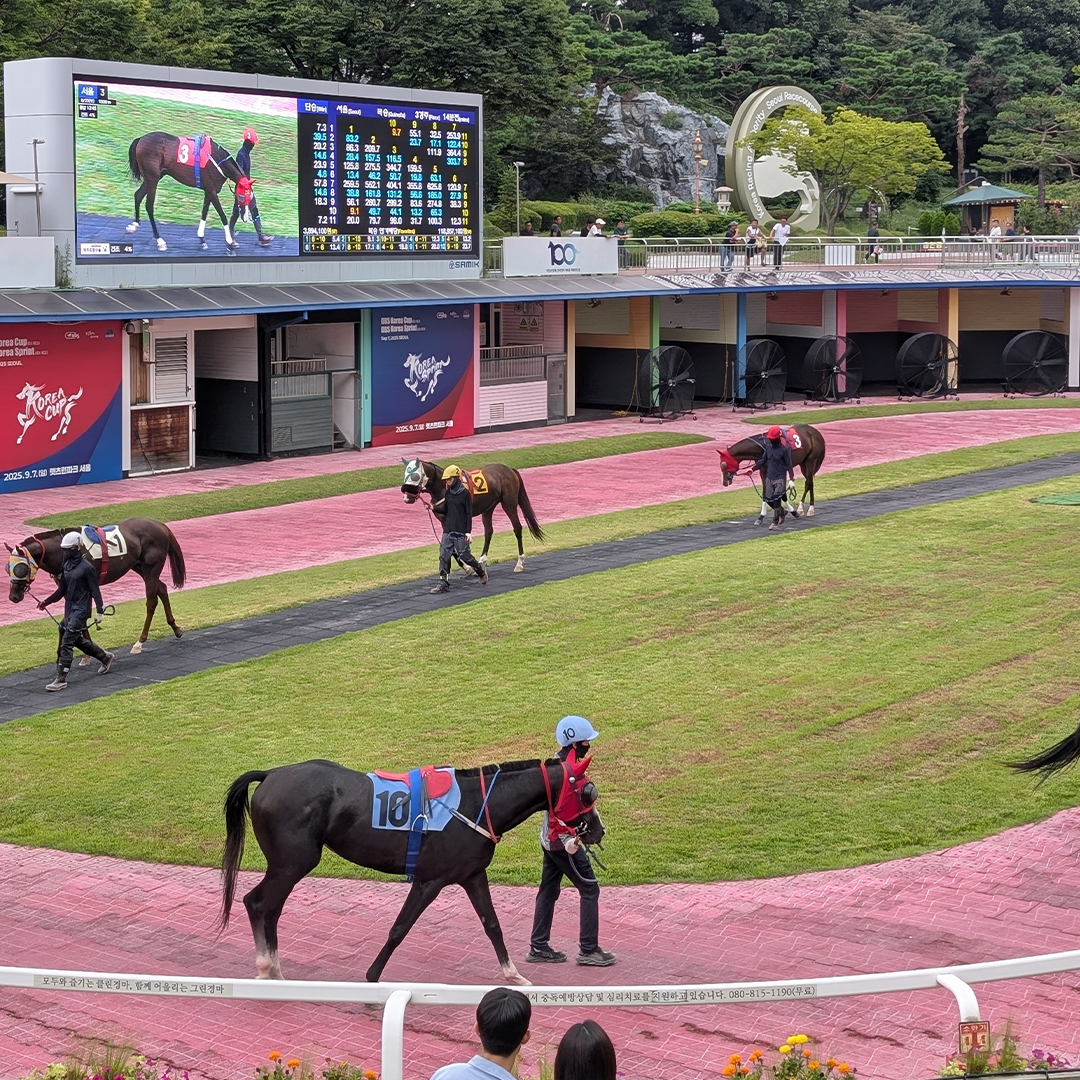
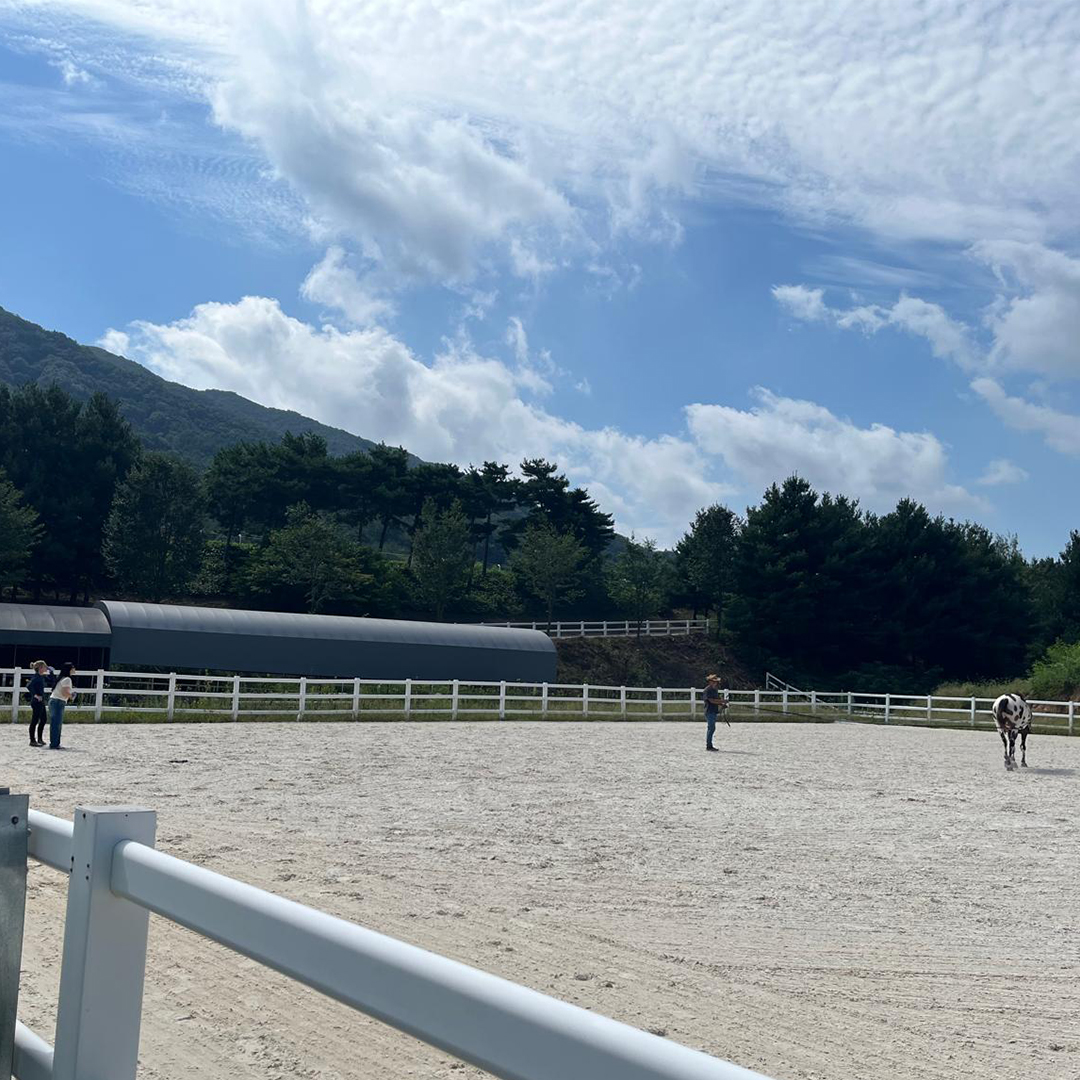
View of the racetrack paddock in South Korea
For lunch, I joined Somin and Singsu at the racetrack. We had a wonderful meal and then were able to watch one of the races. To their amazement, I picked the winner of the race! I also picked two other horses who, in my opinion, would have made great second-career candidates for aftercare. They came in at the back of the pack, but in my world, that just means their real purpose lies elsewhere.
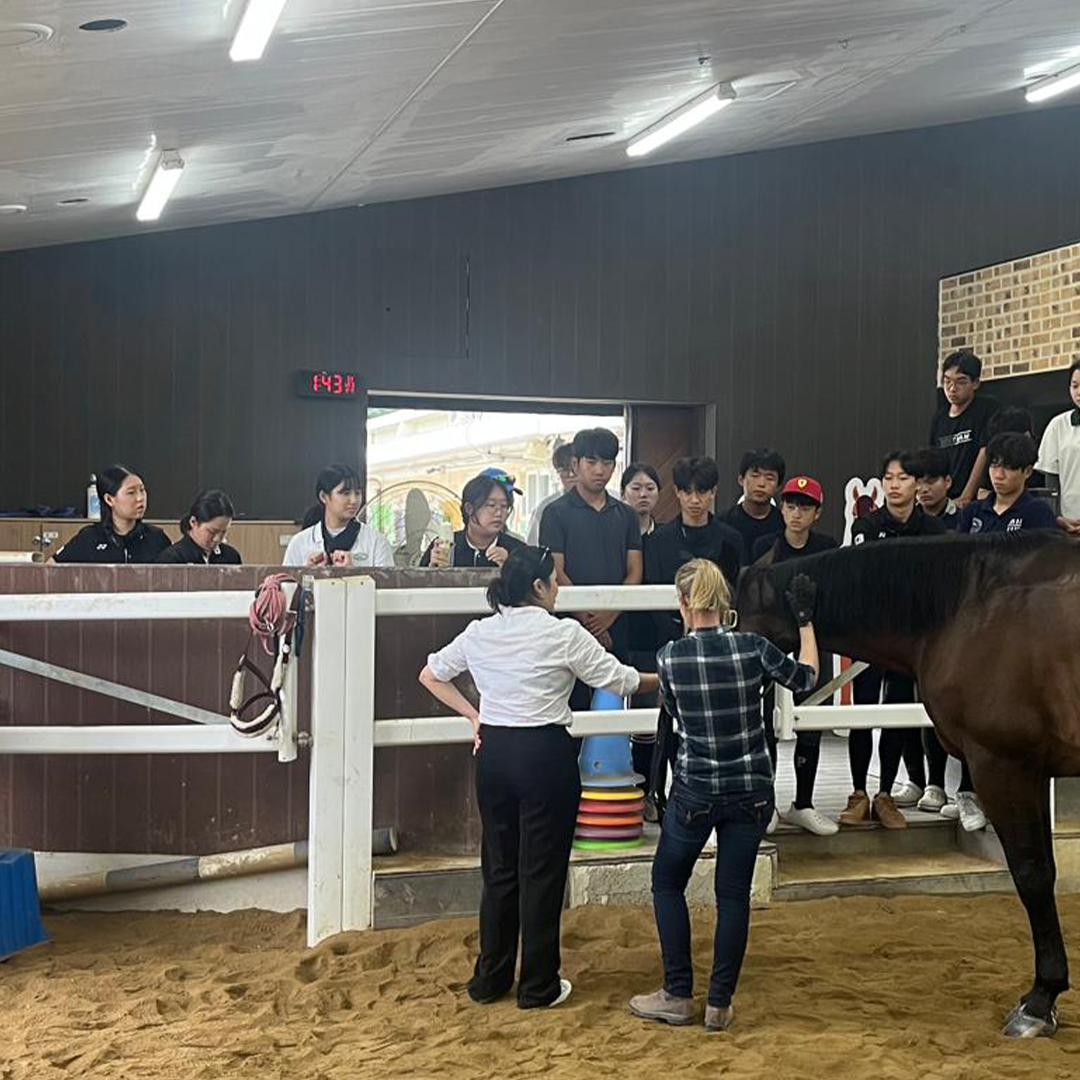
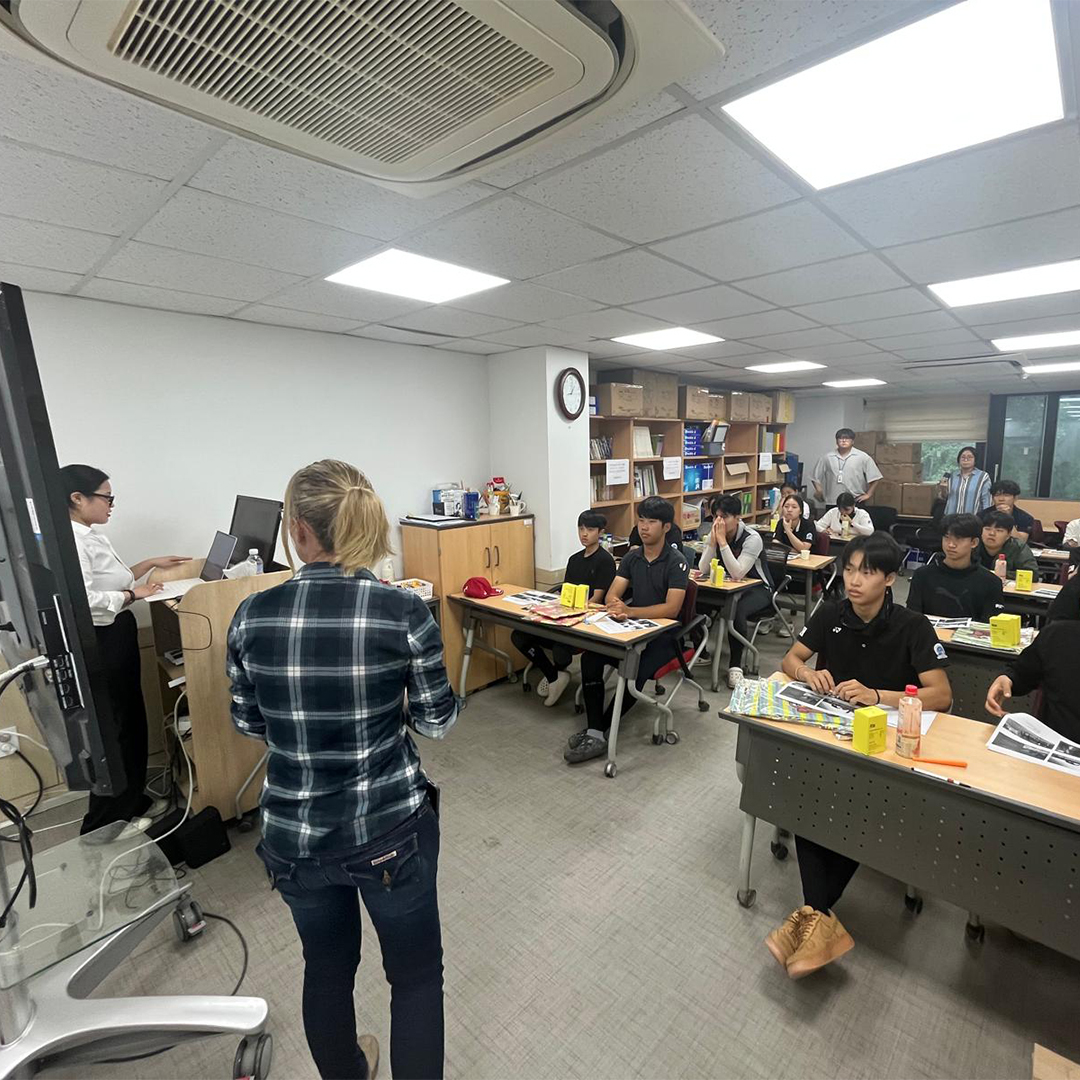
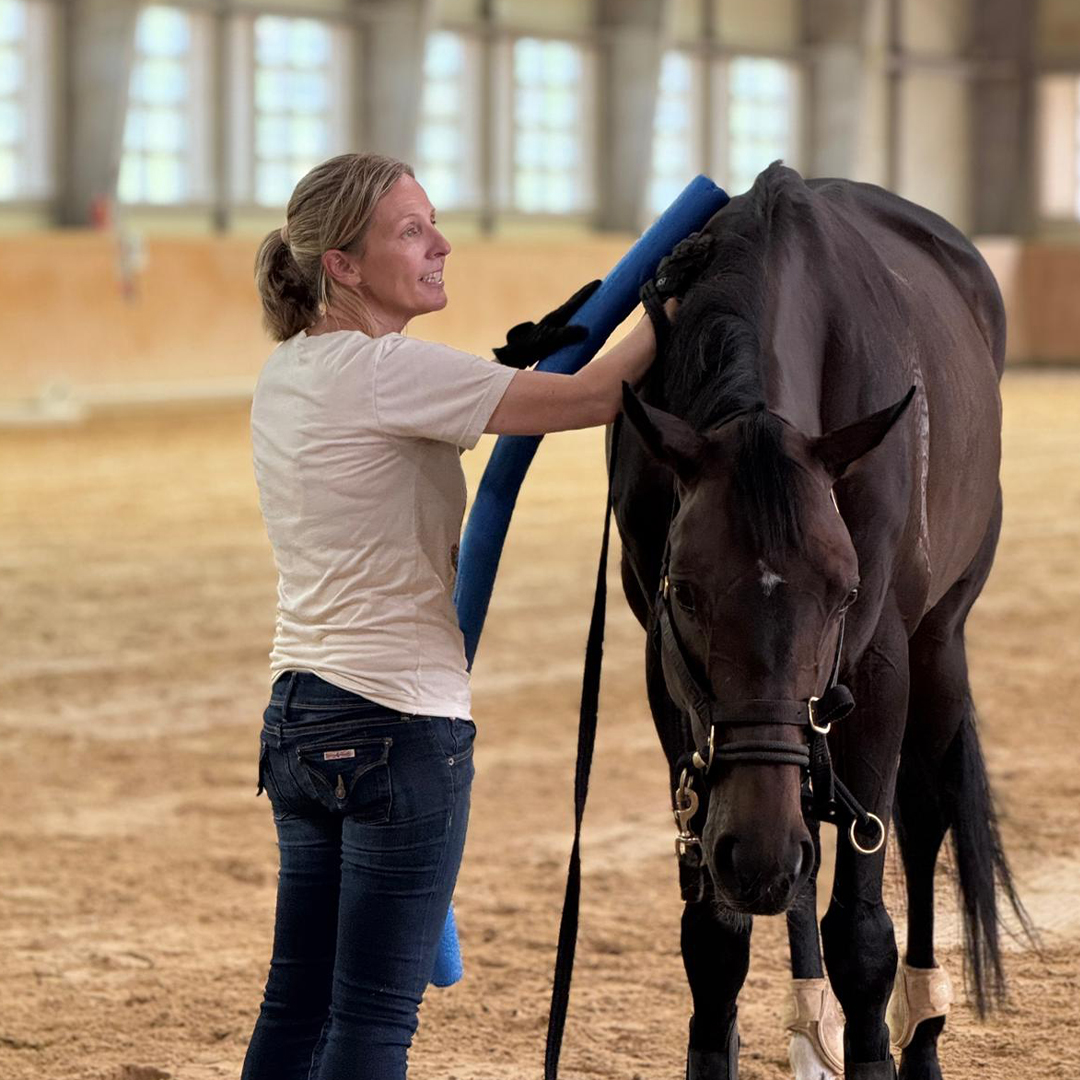
In the afternoon, I worked with a group of high school equestrian students. I began with my Horsemanship 101 lecture, then moved to the barn for two demonstrations: Dually halter work with Join-Up, followed by Desensitization exercises with a pool noodle. The students watched closely, and when the mare I worked with turned in and joined up with me, the entire group gasped aloud in unison, a beautiful “wow” moment that showed just how powerful and moving that connection can be. Afterward, the students practiced the Dually and Desensitization exercises themselves with a pool noodle and a flag, and I walked among them, offering guidance. Their eagerness to learn was inspiring.
If there was one thing that defined the day besides the horses, it was the heat. It was in the high 90s Fahrenheit, with matching humidity. I’m not sure I’ve ever sweated so much in my life! Still, despite the weather, it was an incredible day filled with learning and connection.
CJ teaches hands-on demonstrations for Horsemanship 101
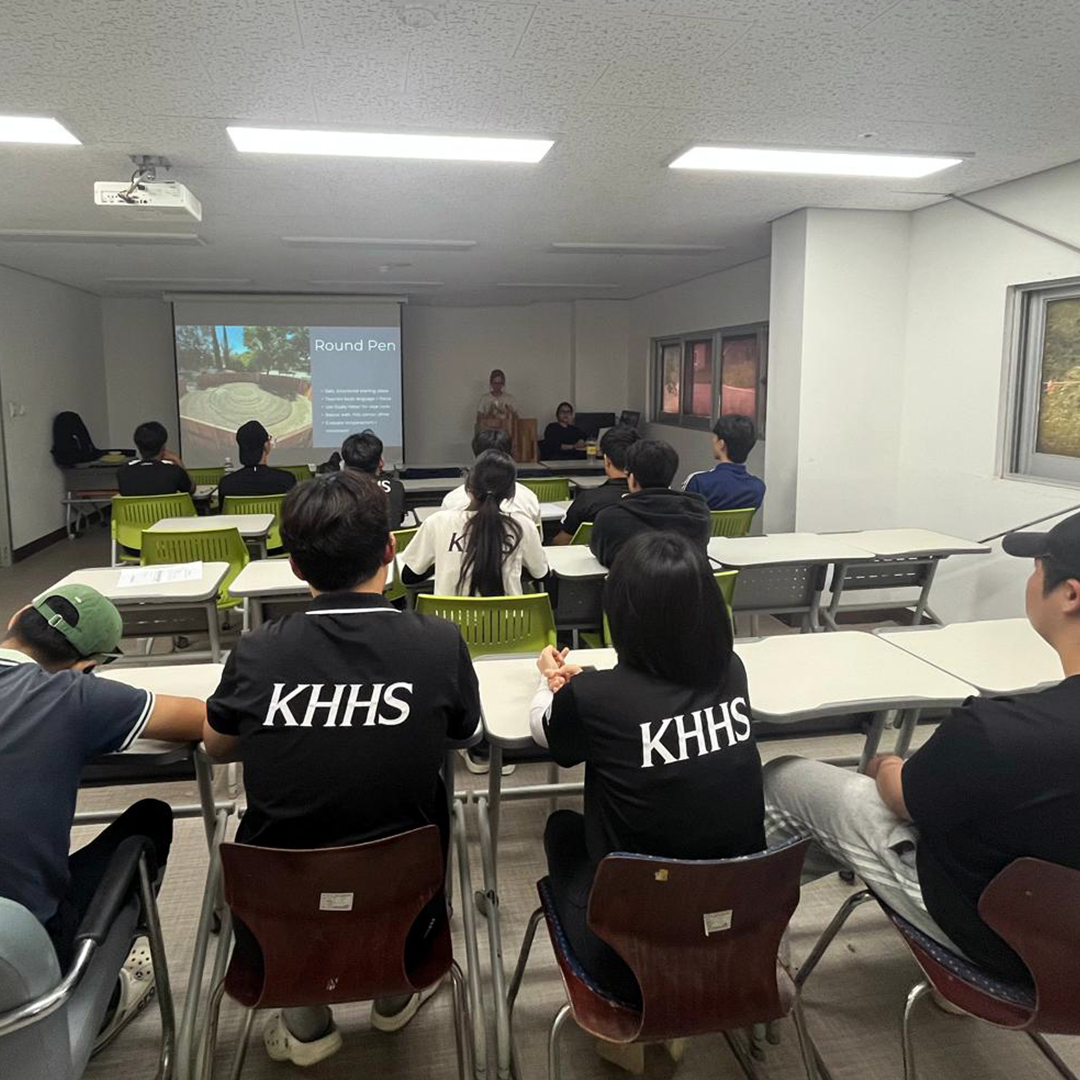
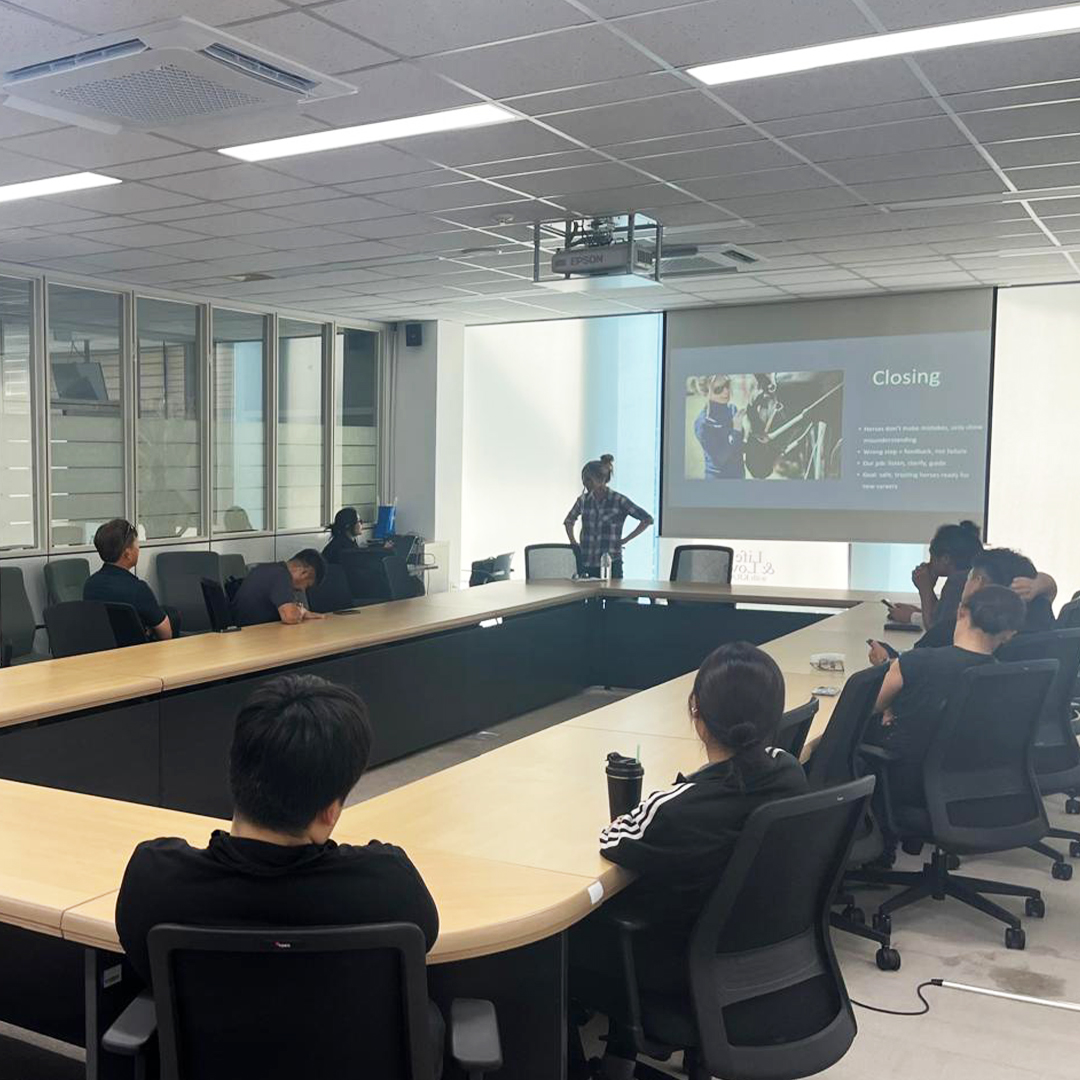
CJ in the classroom for Day 2 of her trip in South Korea teaching Horsemanship 101
CJ teaches hands-on demonstrations for Horsemanship 101
Day Three – August 24
This day was dedicated to trainers, including several who already work with retired racehorses. I’ll admit, I went in feeling a little intimidated as trainers can sometimes be cautious or even skeptical when another trainer arrives with new ideas. But I had absolutely nothing to worry about. They were gracious, open, and truly eager to learn.
We began with my Horsemanship 101 presentation. The trainers were highly engaged, asking thoughtful and detailed questions throughout. They told me afterward that they had learned things they hadn’t known before which was incredibly rewarding, given their depth of experience. It was a reminder that no matter how long we’ve worked with horses, there’s always something new to learn when we keep our minds open.
After lunch, we moved into demonstrations. I had the chance to show Dually halter work and Join-Up, followed by Desensitization with the pool noodle and the lines, Long Lining, and Mounting exercises. I was fortunate to work with the same mare I had used the previous day which gave the trainers a chance to see continuity in her progress, and for her to “teach” alongside me by showing how quickly she was adapting to each exercise. She was a wonderful partner in making the lessons clear and practical.
CJ teaches Horsemanship 101 in the classroom for Day 3 in South Korea
Later in the afternoon, the Vice President and his team met me at the onsite coffee shop. He wanted to say his goodbyes that day, since he would not be present on Friday when I returned. He warmly invited me back to South Korea and said that the next time I come, he would like me to have a VIP experience at the races. His support and encouragement meant a great deal and it felt like a genuine validation of the work I was doing.
From there, we set off on a 2 ½ hour car ride to our next location. Along the way, we stopped at a rest stop and had a delicious dinner of noodles with crispy tofu which was so yummy. When we arrived, I went straight to my hotel room to rest and prepare, knowing that the next day would be a long and full one.
Day Four – August 25
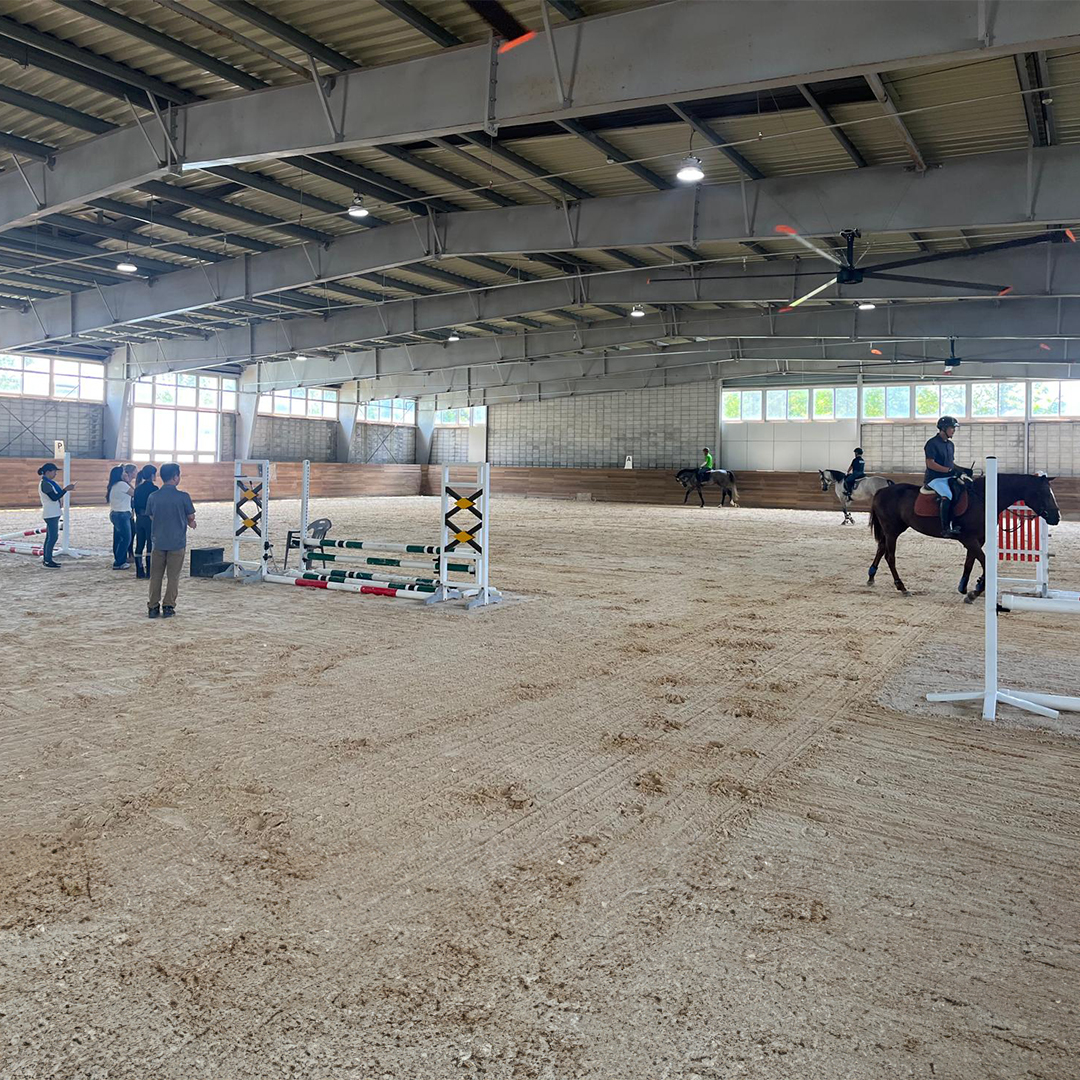
Day Four brought us to a new venue: the Equine Training Center. This facility was an impressive proper school setting with well-equipped classrooms and a stunning indoor arena that made it an ideal place for teaching. From the moment I arrived, it was clear that the staff and students here were deeply invested in learning and in putting the horses first.
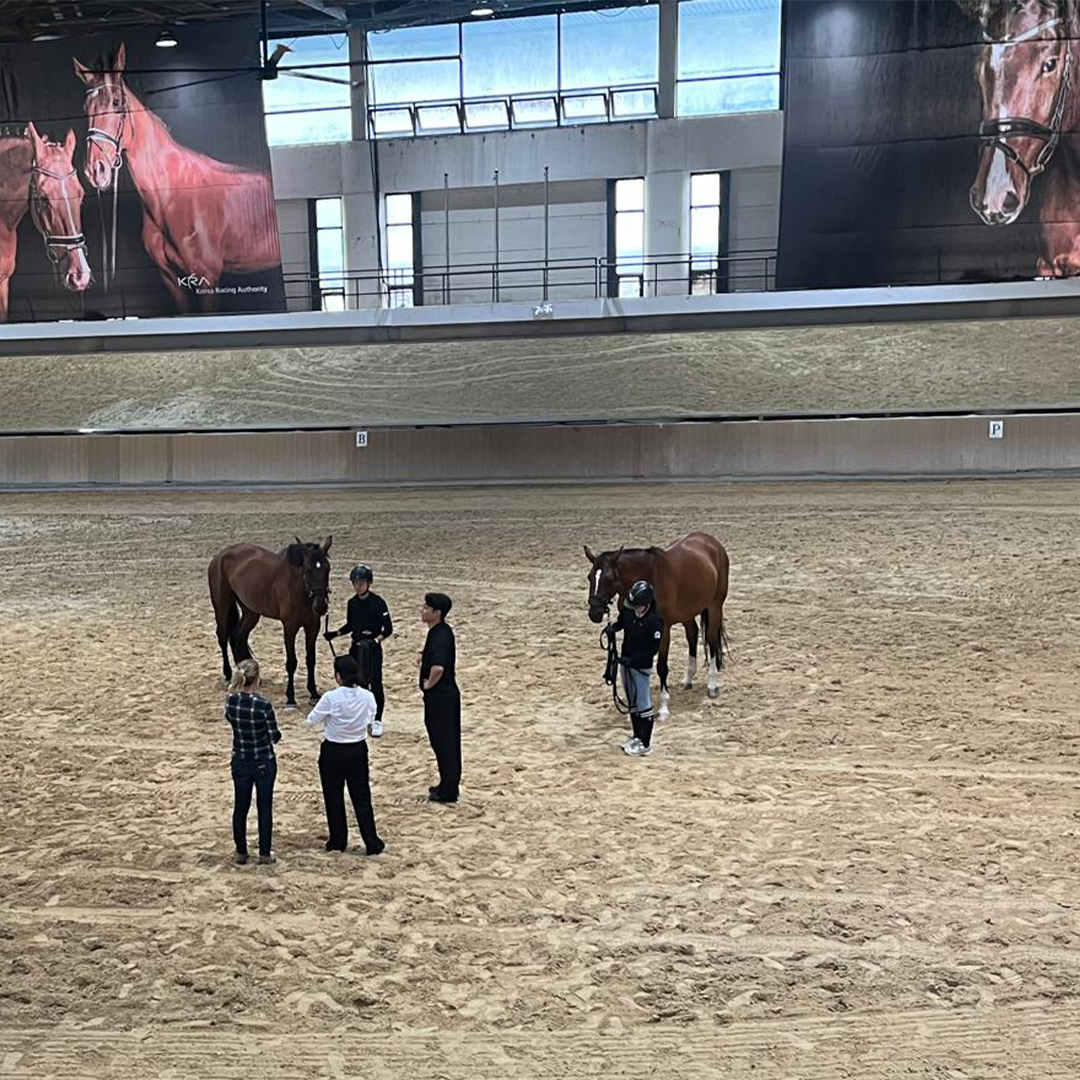
The morning began with university students in the equine training departments. I presented Horsemanship 102, focusing on how to apply foundational knowledge from Horsemanship 101 into everyday handling and early training. We then moved into demonstrations: the Dually halter, desensitization exercises, and long lining. Unfortunately, there wasn’t a suitable round pen, so I couldn’t demonstrate join-up which is an important piece that shows how powerful it is when a horse chooses to connect with you rather than being driven to comply. I shared with the students why this step matters so much, because it’s about the horse’s decision to partner with us, not just to obey us.
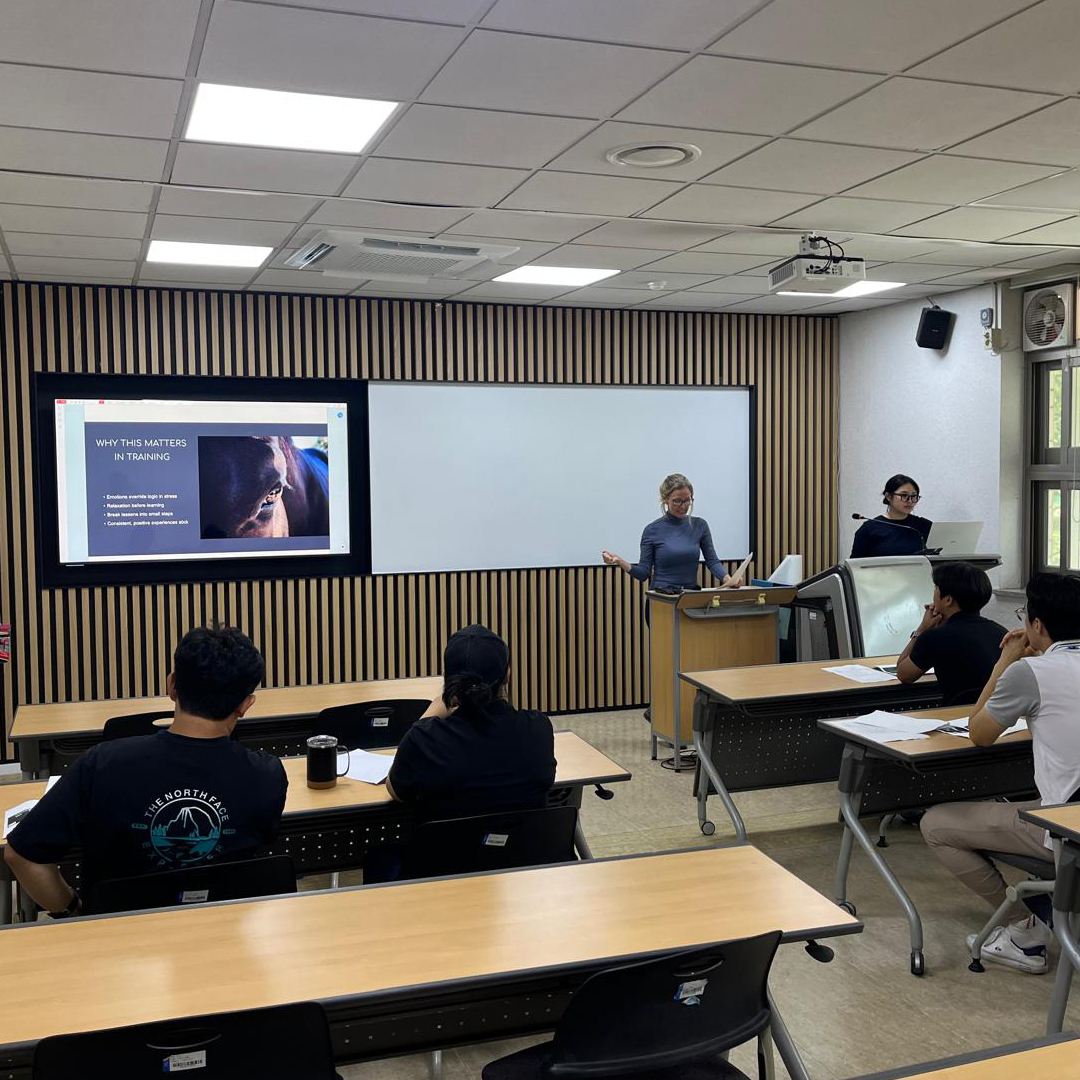
CJ teaches Horsemanship 102 in the classroom on Day 4 of her trip to South Korea
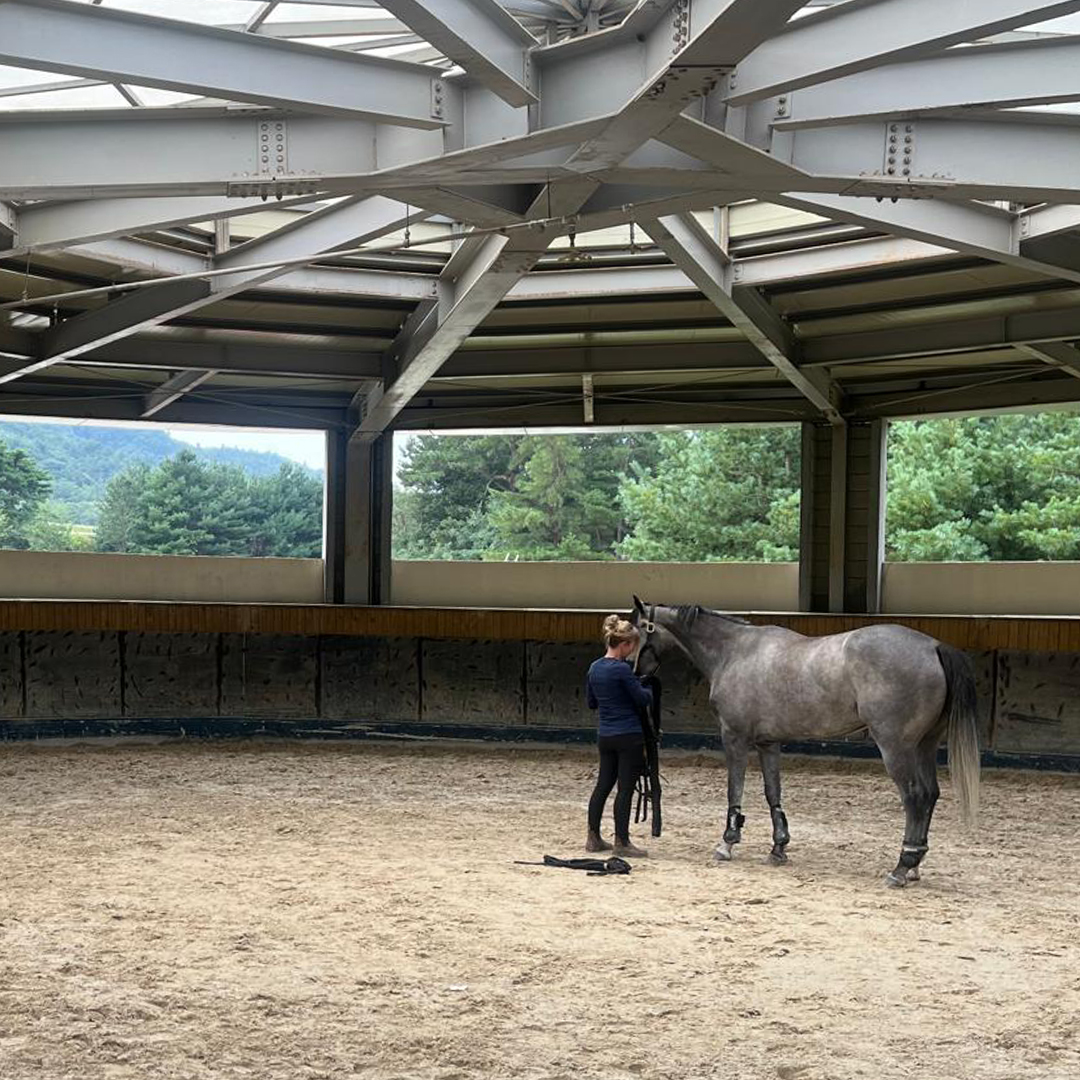
CJ demonstrates long lining for Horsemanship 102
The students were especially eager when it came to long lining. Some had never done it before, so I let them get hands-on. I explained how long lining helps build balance and straightness in horses who are naturally crooked from racing, and how it gives the horse a “new language” of communication, one based on voice, relaxation, and pressure-and-release. Watching them discover this for themselves was incredibly rewarding.
In the afternoon, I worked with high school equestrian students. They too received the Horsemanship 102 presentation and demonstrations, but what made this session so special was that each of the 18 students received an individual long lining lesson. We rotated through different horses, and I was intentional about changing horses when I could see that one had done enough for the day. I deeply appreciated that the staff allowed me to keep the horses’ welfare as the priority, a reminder that the best lessons happen when we let the horse’s voice guide the pace.
By the end of the day, I was tired but deeply satisfied. The students’ willingness to try new techniques, to listen carefully, and to adapt their approach gave me a lot of hope for the next generation of horsemen and women in Korea.
CJ teaches Horsemanship 102 in the classroom on Day 4 of her trip to South Korea
CJ demonstrates desensitization exercise with a pool noodle for Horsemanship 102
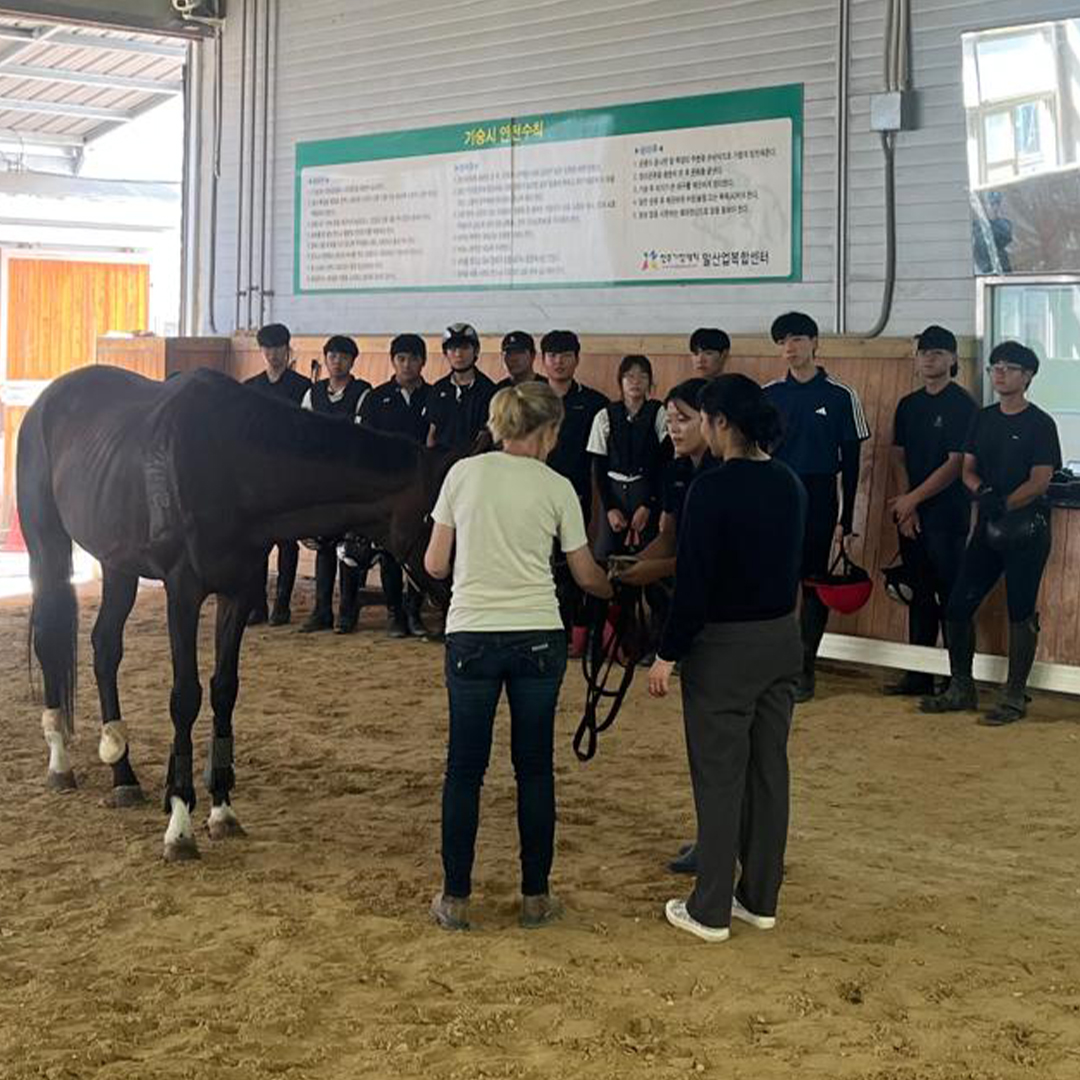
CJ provides hands-on demonstrations for Horsemanship 102
Day Five – August 26
The morning began with a downpour on the way to the Equine Training Center. It was still hot and humid, but with the sheets of rain it made it more tolerable. Once on site, I had the opportunity to observe and consult during practical training sessions led by Korean equine professors. One professor gave a PowerPoint presentation on lunging, which gave me insight into how the students are taught and what they are tested on. Another professor followed with a live demonstration of in-hand lunging for the class. It was valuable to see their approach, and it gave me context for the sessions I would later teach in the afternoon.
During lunch, I toured the barns and met more of the horses including a couple of adorable mini horses! I was also shown two pastures with young foals of various ages. They were bright, curious, and friendly, walking right up to say hello. Afterward, the professors kindly gave me a tour of their Equine Museum, which was full of history, artifacts, and educational material about horses. It was clear how much pride they took in both the academic and cultural side of their equine program.
In the afternoon, I worked with the same group of students I had observed in the morning. I presented my Horsemanship 102 lecture, then moved into demonstrations with the Dually Halter, Desensitization, and Long Lining. The students were attentive and engaged, and it was rewarding to see them connect the theoretical with the practical.
CJ touring the Korean Equine Museum
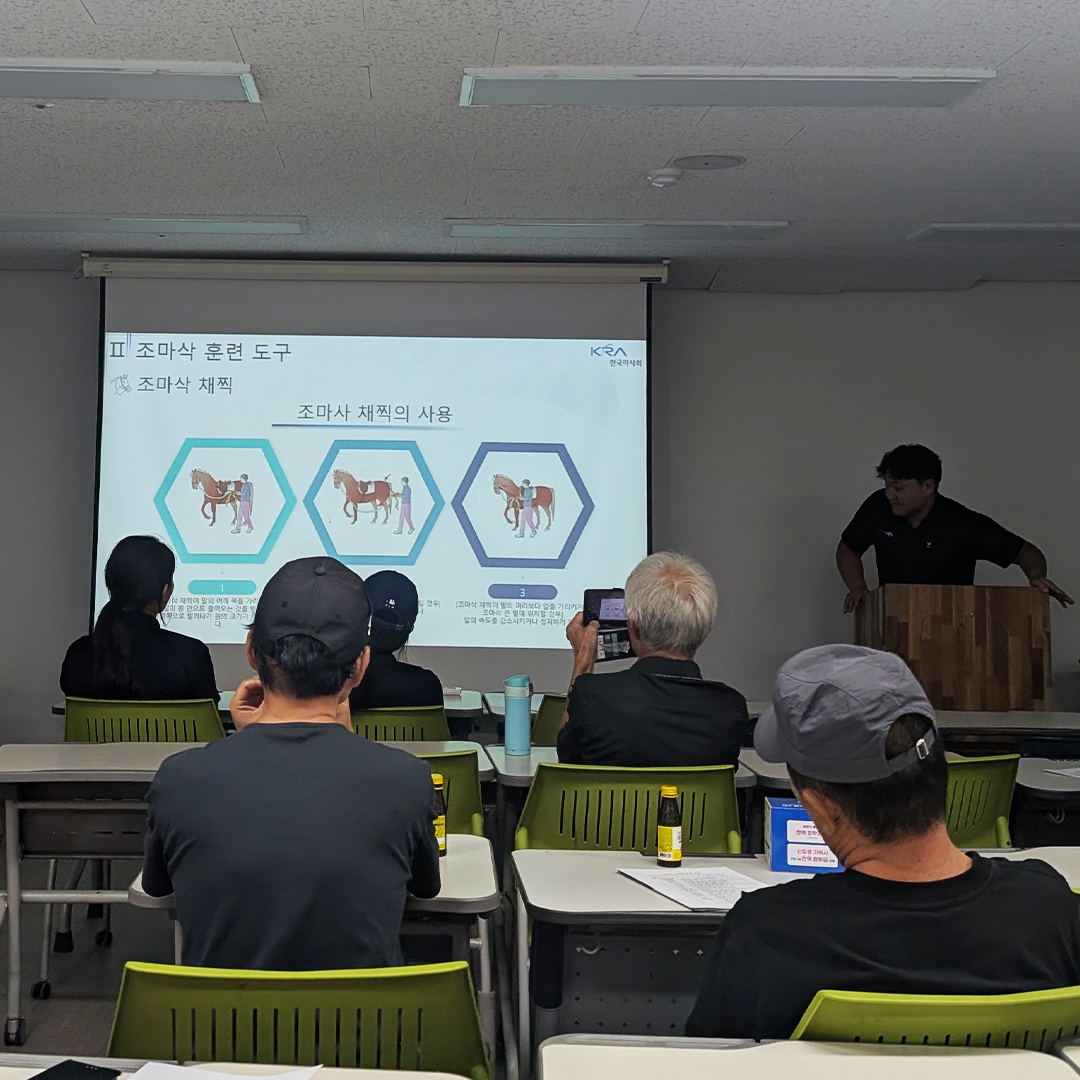
Professor at Equine Training Center giving a presentation in the classroom
CJ teaches Horsemanship 102 hands-on demonstration
CJ teaches Horsemanship 102 hands-on demonstration
CJ and student pictured during Horsemanship 102 hands-on demonstration
CJ and student pictured during Horsemanship 102 hands-on demonstration
Day Six – August 27
Day Six took me to Jangsu Farm, a nearly 400-acre facility that would be my base for the next three days. For this portion of the trip, I worked with the same group of horse breeders and owners who had brought in a total of 11 horses from across the country to participate.
I began by delivering my Horsemanship 102 presentation. From there, we moved into hands-on work. My first horse of the day was a three-year-old filly, a recently retired racehorse who was proving to be a challenge for her trainer. She wasn’t retaining lessons from one day to the next. With her, I started with the Dually halter exercises and some desensitization work. Unfortunately, we didn’t have a proper round pen for the participants to observe a full Join-Up, so we missed that key step where the horse chooses connection but we still focused on building her confidence and clarity.
I explained to the group the importance of ending sessions before a young horse becomes overwhelmed. Horses are latent learners; they need time between lessons to process and retain what they’ve been shown. By recognizing that limit and stopping at the right moment, we can set them up for much greater success in the long run.
Later in the day, I observed three participants lunging their own horses. I offered feedback based on what their horses were “telling” me. Some horses were stressed, distracted, or ready to give more effort. But it was important for them to release the pressure of work when they were doing the right action. So the horse learned what the right action was! All of the horses brought to this session were young, so the emphasis was on patience, timing, and laying down the kind of foundation that would support them for years to come.
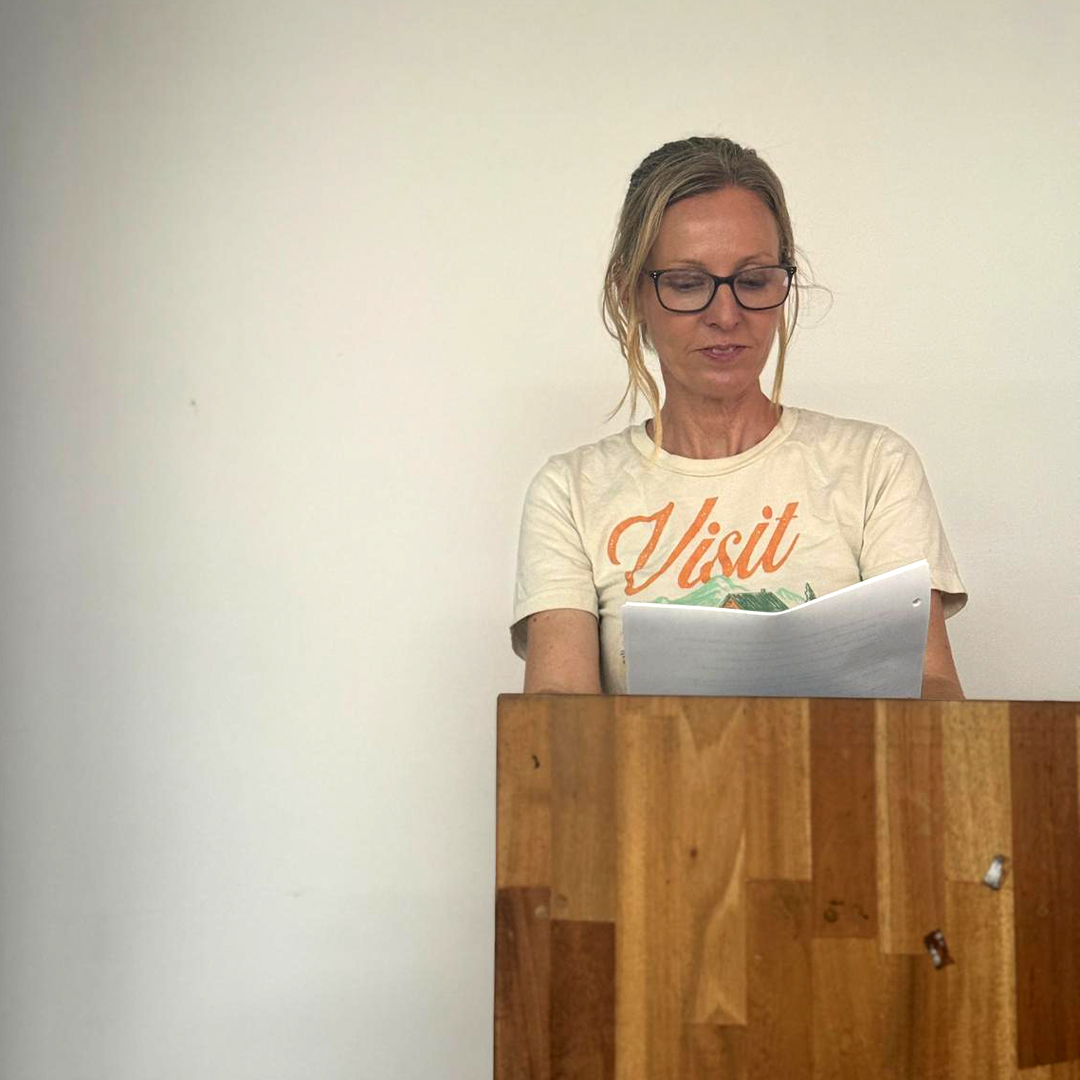
Photo from CJ's trip to South Korea - Day 6 in the classroom
Day Seven – August 28
The day began with the same three-year-old filly I had worked with the day before. This time, I introduced her to long lining. She did wonderfully, retaining what we had worked on previously and that relaxation must come first. When a horse is relaxed, they are capable of learning; when they trust you, they look forward to working with you.
The participants then practiced long lining with their own horses, as well as working in the Dually halter and surcingle. One breeder brought in a four-year-old who had poor manners and was literally walking on top of him. Within minutes of working with the horse, I was able to set clear boundaries using pressure and release. The horse quickly understood and felt calmer because when he followed the rules, the pressure disappeared and he was able to feel safe and relax. Importantly, all of this was done without pain or fear. I used only clear, fair communication.
A staff member then demonstrated his own method for achieving a similar result: pressing a whip against the horse’s forehead. While it eventually worked, it took much longer for the horse to understand. I explained to the group that my approach makes more sense because it aligns with how horses naturally communicate. Horses in the wild don’t press objects on each other’s heads, but they do apply pressure to move another horse’s feet, and release it when the other responds. That’s the principle I use: no fear, no force, just speaking the horse’s language.
Hands-on work and activities during Day 7 of CJ's trip.
CJ shares a delicious dinner alongside the participants and staff of Jangsu Farm
In the afternoon, I gave a group riding lesson with six young horses in the indoor arena. It was chaotic. Many riders relied on excessive equipment (strong bits, whips, spurs, draw reins) which only created fear in these young horses. Babies trained this way don’t learn to trust; they learn that work means discomfort. Out of the group, only two riders had the feel and timing to be working with green horses. One of them returned later for a private session from me with another of his horses, which was a much more positive experience. The others clearly meant well, but they simply lacked the skills to communicate effectively at this stage of training.
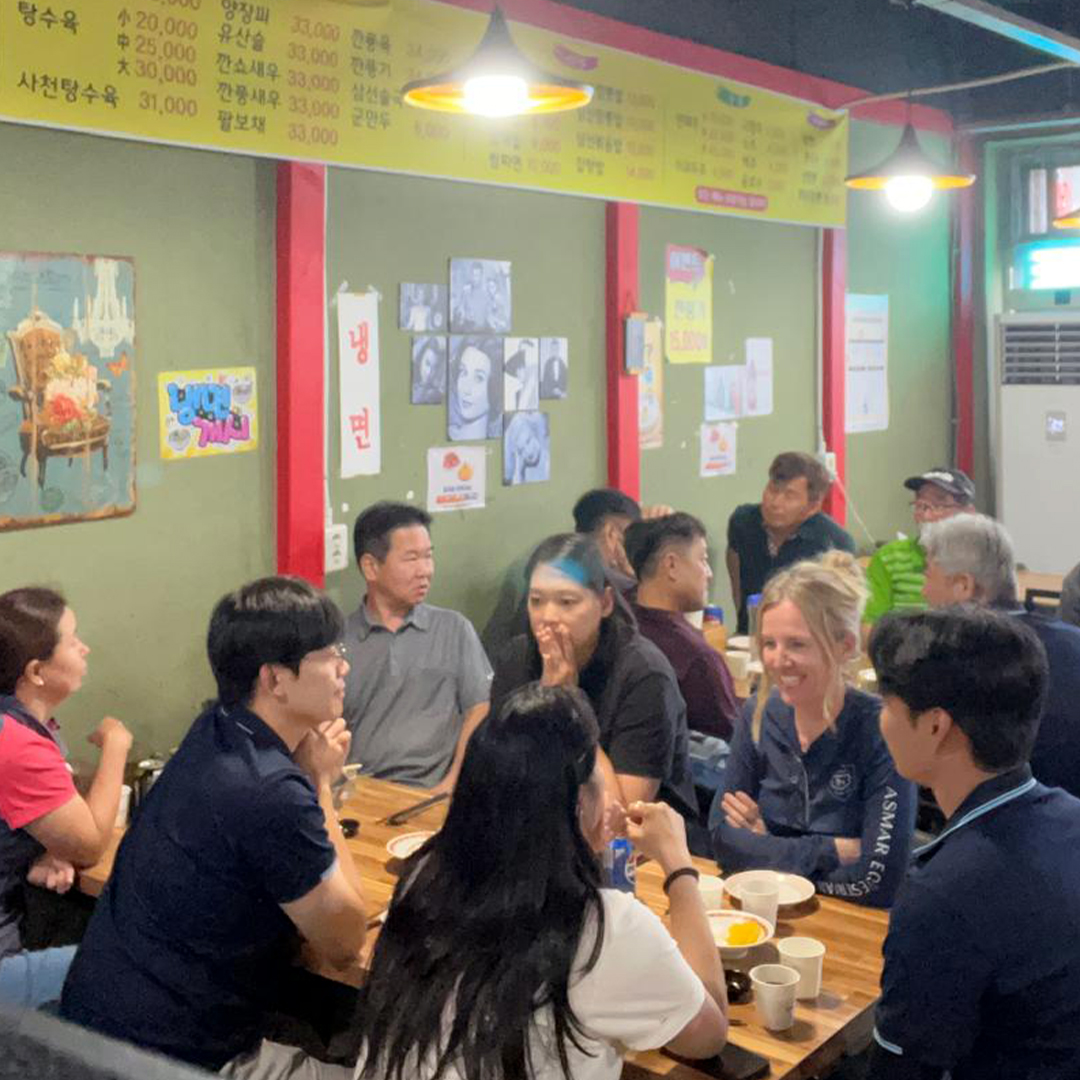
We closed the day with a delicious dinner alongside the participants and staff of Jangsu Farm, sharing stories and reflections from the day’s lessons.
Hands-on work and activities during Day 7 of CJ's trip.
CJ and student pictured with horse.
CJ teaches group riding lessons.
CJ and student pictured with horse.
Day 8 – August 29
My final day began with individual long lining lessons. I worked with five of the participants and their horses, helping them develop clear communication and balance from the ground. Groundwork is such a powerful tool—it allows horses to understand concepts more clearly, which then translates more smoothly to their work under saddle.
One trainer shared with me that the 3-year-old filly I had been working with was terrified of tarps. He explained that her previous owner had tried to help her by putting a tarp in a small stall with her. Unfortunately, this only caused trauma, as she had no choice and nowhere to escape. I explained that for her, rebuilding trust would take patience and time. I suggested he start with other desensitization tools first, so she could feel success and safety. From there, he could introduce the tarp gradually—rolled up small at first, used like a ground pole, and only increasing its size once she was confident. I reminded him never to let her reach the point of panic. If she began to worry, he should go back to what she already understood and end the session there. That way, she would learn not just to face her fears, but also that her trainer was listening and could be trusted.
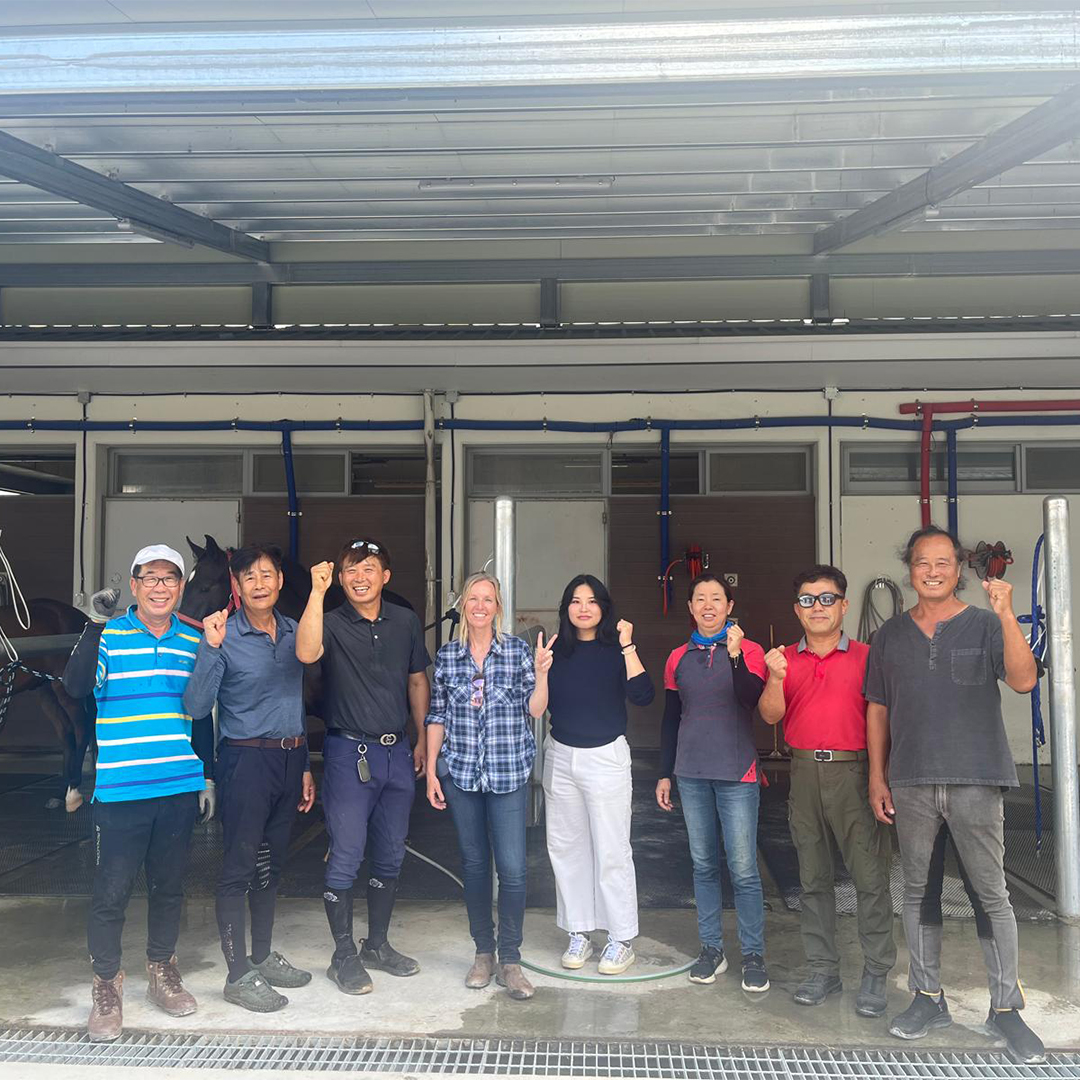
Group photo of CJ with staff and participants of Jangsu Farm
Photo shared by CJ from her last day in South Korea
After the practical sessions, we gathered for a group photo with the staff and participants of Jangsu Farm. In the afternoon, we drove back to KRA headquarters for one final meeting. It was an opportunity to reflect on the week, share feedback, and express gratitude before officially concluding the program.
With my official duties complete, my interpreter Somin and I spent the evening exploring Suwon Hwaseong Fortress. We ended the day at a local café, enjoying coffee and desserts. It was the perfect way to close a week that had been as exhausting as it was rewarding.
Closing
Overall, I was deeply encouraged by how receptive and engaged the majority of participants were. Most came eager to learn and genuinely interested in trying new approaches to better serve the horses in their care. The last group I worked with presented the greatest challenge, as some participants were more resistant and focused on proving what they already knew. Still, I could see that at the heart of it, they wanted to do right by their horses, they simply lacked the tools and perspective to get there.
I believe all groups would have benefited from even more of the theoretical lecture presentations, in addition to the demonstrations. While the hands-on sessions are always exciting, the principles we explored in Horsemanship 101 and 102 (understanding how horses think, how they learn, and how they communicate back to us) are what truly transform training. Concepts like “adrenaline down, learning up,” the four phases of asking, and respecting the horse’s natural instincts are critical pieces that, once understood, unlock lasting success.
Despite the challenges, I left feeling hopeful. The enthusiasm, curiosity, and love for horses were unmistakable. With time and continued education, I believe this community can build even deeper partnerships with their Thoroughbreds. And it was an honor to contribute, in some small way, to that journey.
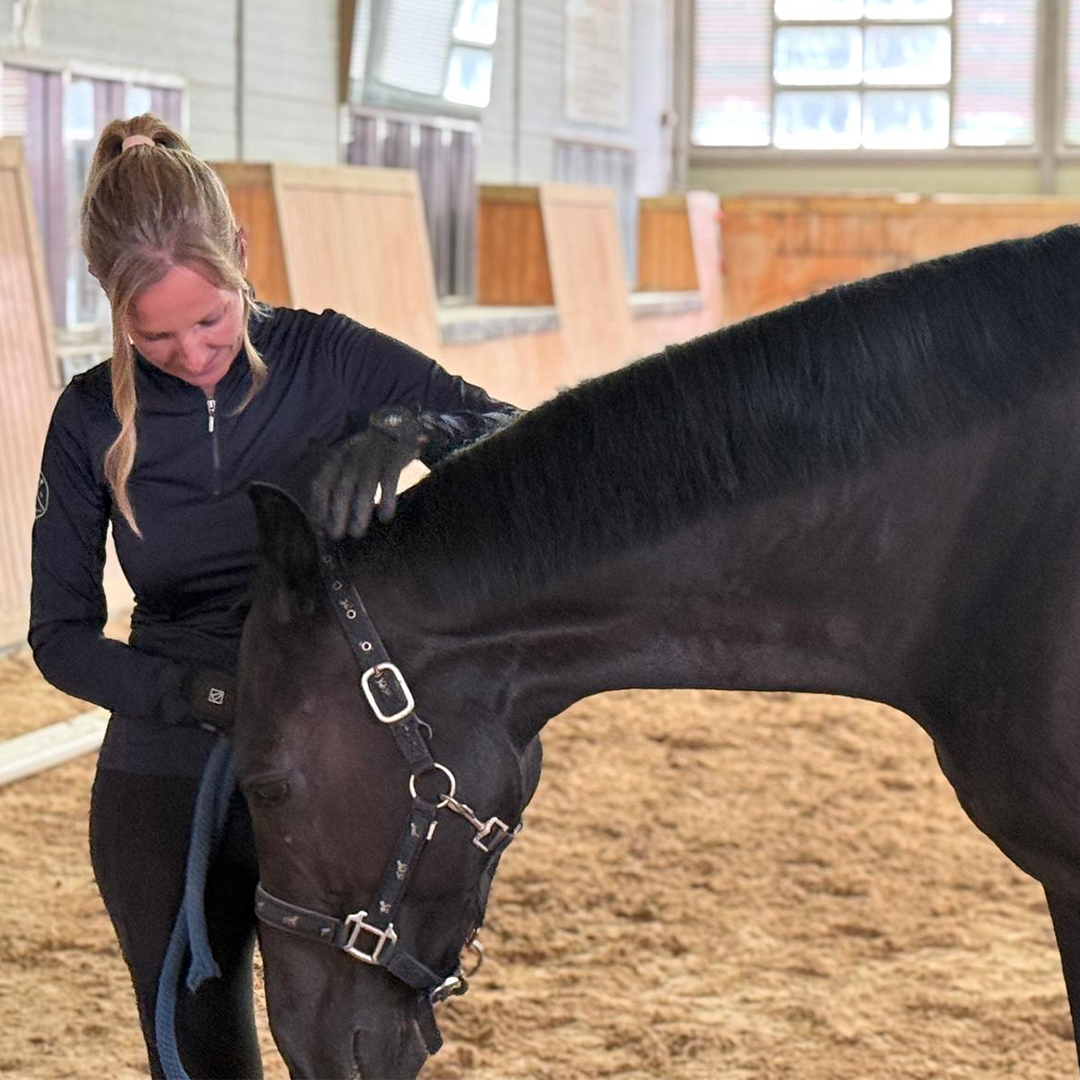
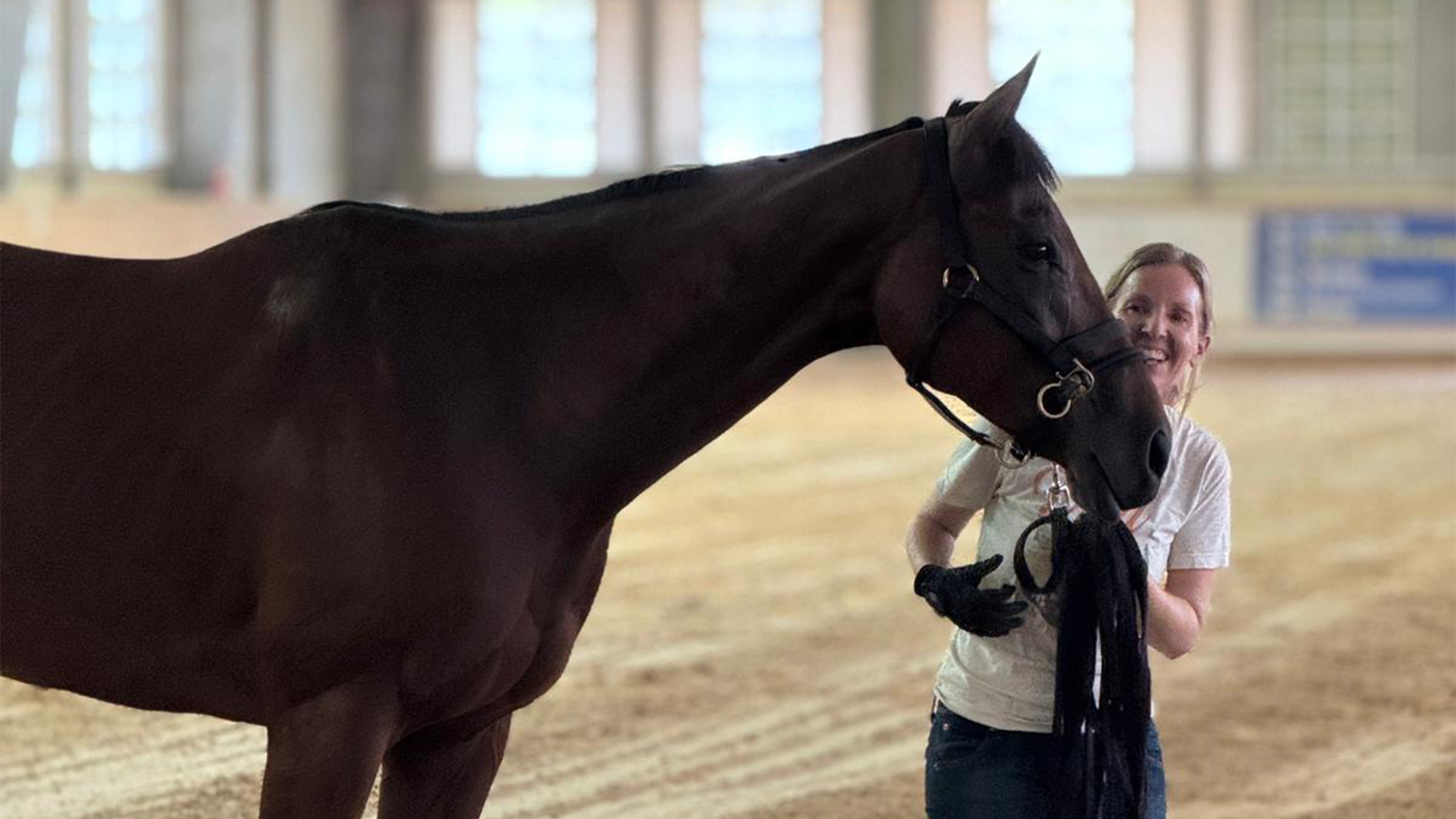
CJ pictured with horse from her demonstrations during her time in South Korea.