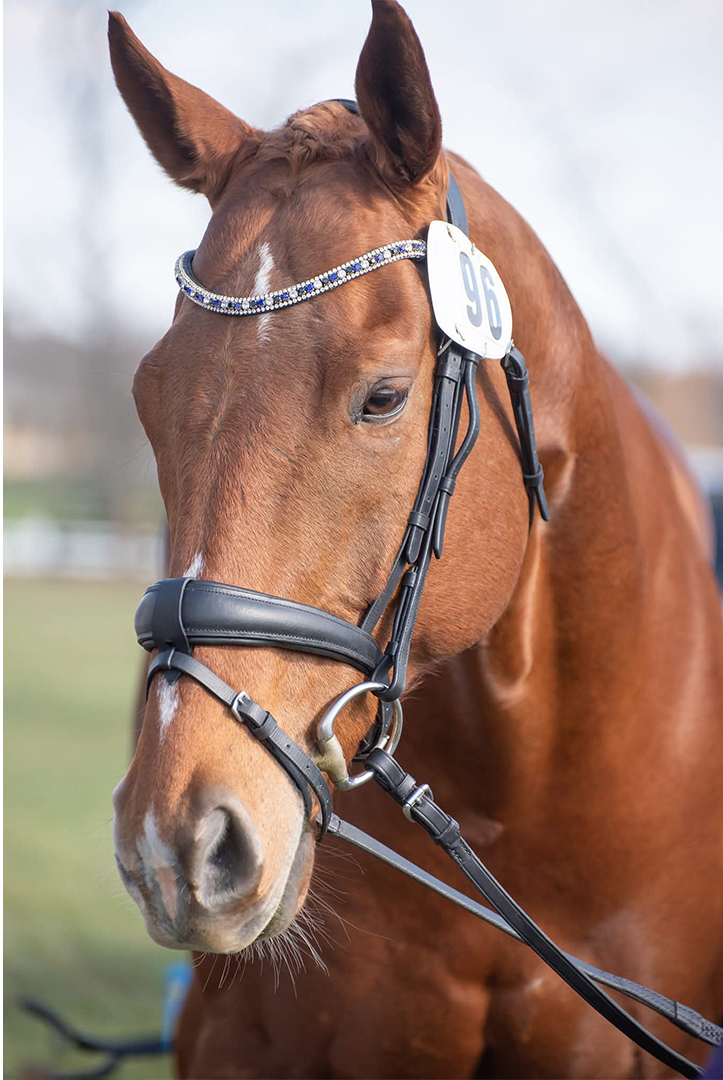
Laura Otten had previously owned an off-track Thoroughbred and always intended to return to riding and horse ownership. Over the years, she had followed several aftercare organizations, hoping to adopt another Thoroughbred someday. When the COVID pandemic happened, it unexpectedly accelerated those plans. Laura began actively searching for her next horse, specifically a gelding suited for pleasure riding and low-level Eventing. “I knew I wanted a gelding and was willing to work with professional trainers and had no plans to resell, ever!” she shared.
Laura applied through Thoroughbred Retirement, Rehabilitation, and Careers (TRRAC), a Thoroughbred Aftercare Alliance-accredited organization based in Coatesville, Pennsylvania. Interestingly, The Astral Rascal wasn’t the horse she initially applied for. Instead, TRRAC staff thoughtfully matched them based on her experience and long-term goals. “Because of the pandemic, we were not able to visit, so the first time we met our guy was when he stepped off of the trailer!”
The adoption process was thorough, including a detailed application, interviews, references, and veterinary checks designed to ensure the right placement. Before Rascal arrived, his breeder, owner, and racing connections shared extensive information about his personality, history, and previous knee surgery. This gave Laura a strong understanding of his background. “I felt I had a pretty good idea of who he was and what he was capable of,” she explained.
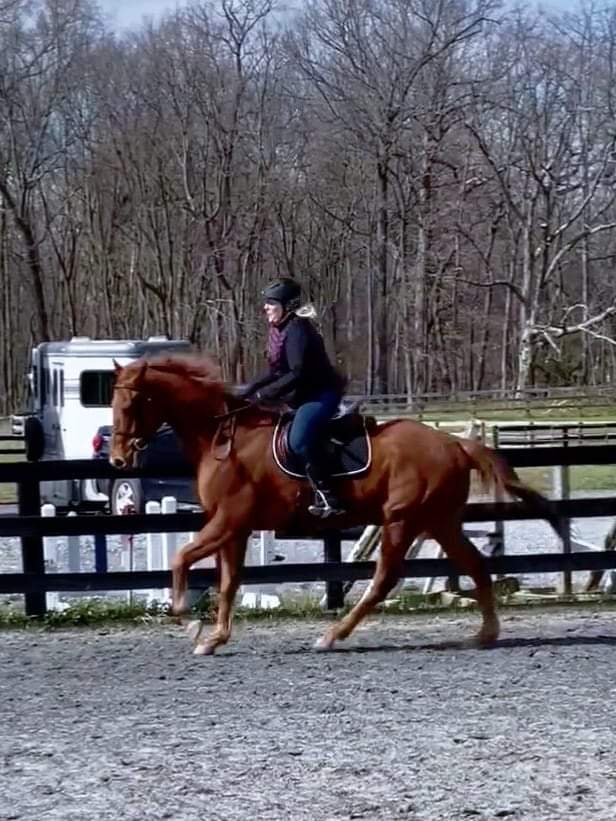
Laura's first canter on Rascal. Photo Credit: Tamara Zerbo
Rascal arrived at his new home well let down from racing, which allowed Laura to focus on groundwork and handling first. “We added professionals when it was time to restart under saddle,” she recalled.
With plans to pursue Eventing, his retraining began with Dressage to establish foundational skills. “During his first training show he danced out of the arena!” Laura exclaimed. Gradually, poles and crossrails were introduced, helping him develop confidence and coordination. At his first off-property show, Rascal carefully walked near standards and poles, learning to navigate new environments and tasks. Over time, his balance and coordination improved, preparing him for Show Jumping.
Cross-Country training came last and required the most patience. Early outings were challenging, particularly with water obstacles. “Rascal used to be very distracted on cross country and was so unsure about water that he had to be led through by a friend at his first horse trial,” Laura shared. With consistent training and experience, he grew comfortable across all three phases. “In August of [last] year he competed at the novice level for the first time and was second on his dressage score of 27!!” Laura updated.
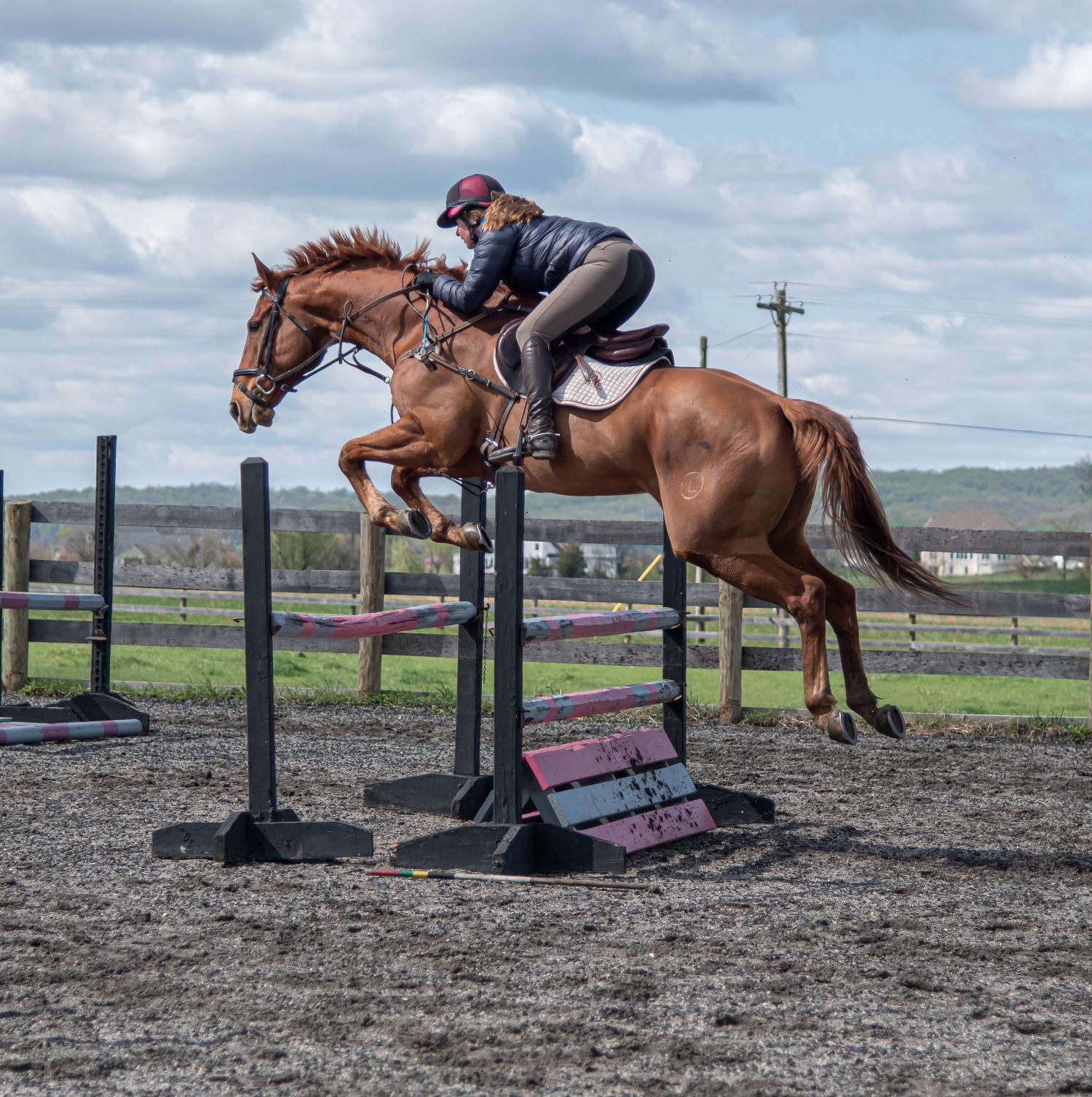
Trainer Jacqui Ross Riding Rascal. Photo Credit: Sheri Knauer
Laura’s goal for Rascal is to keep him fit, sound, and happy in his work. “Thoroughbreds are bred to work, and they need physical and mental stimulation. The neat thing is they can really go in any direction,” Laura said. “If at any point Rascal says enough is enough, we stop.” His routine emphasizes regular training on fundamentals. This is balanced with socializing, which includes turnout with other horses, interactions with people of all ages, and time with barn pets.
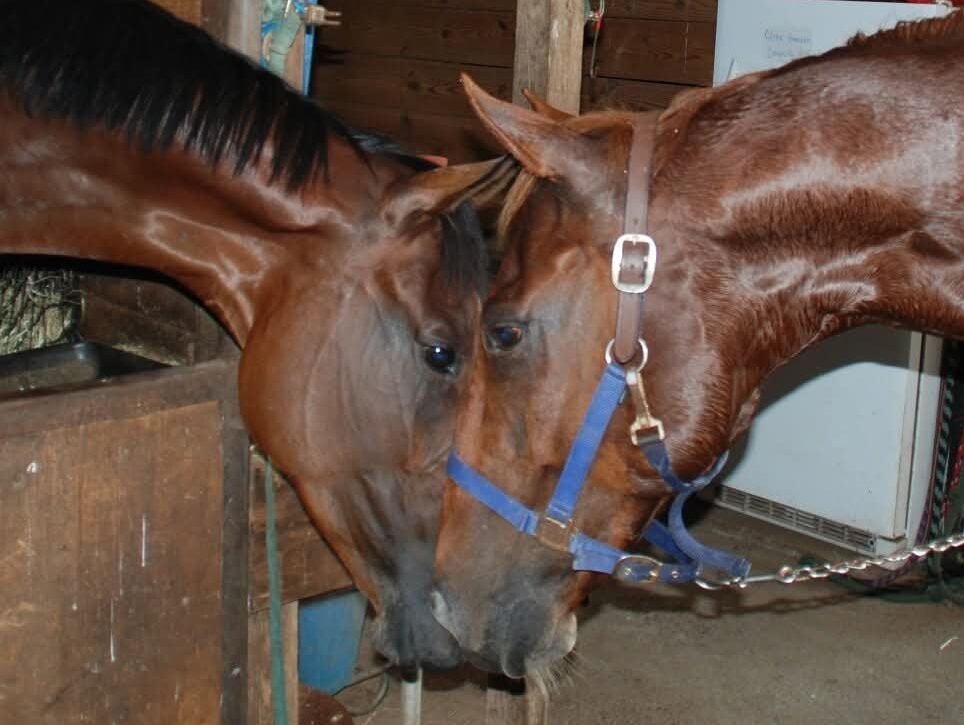
Maintaining a connection to Rascal’s racing history has become an important part of his journey. Laura built a friendship with the woman who bred, trained, and raced him, and his former connections often attend competitions when possible. That relationship eventually led to the arrival of Rascal’s full brother, Harpersgonefishing, who retired from racing this past summer and joined Laura’s farm to begin retraining for Eventing. “She has become a friend and asked us to take Harper when he finished racing this past summer,” Laura shared. She also captured a special moment: “Here is a picture of the brothers meeting for the first time. Harper on the left and Rascal on the right. Love them both!”
Rascal and Harper meeting for the first time. Photo Credit: Laura Otten
Share This Article
Do you have a success story that you would like to share?
Submit your experience with an accredited organization here: