

Dr. Hipp
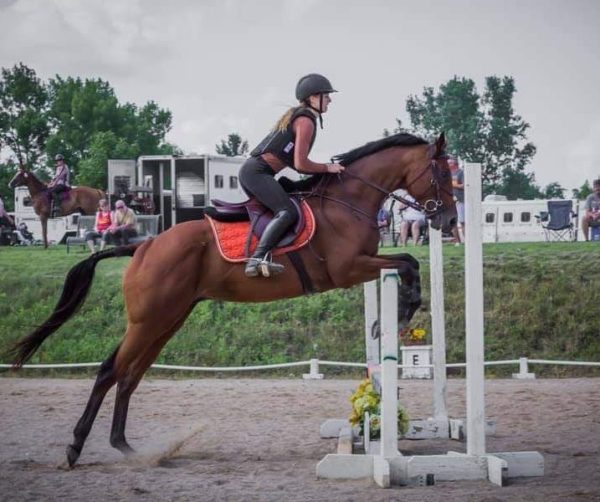
Dr. Hipp was thoughtfully retired by his connections to TAA-accredited Hope After Racing Thoroughbreds. The Iowa-based organization spent two months rehabbing Dr. Hipp before he was cleared to begin retraining for a second career.
Ide B a Classic
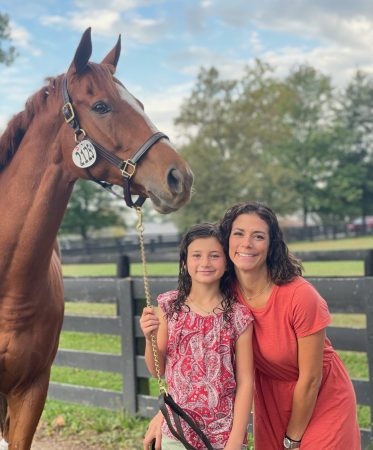
Ohio native Dr. Ashlie Henricks grew up showing on the A circuit in the hunter ring but put her successful show career aside to attend vet school at Ohio State and start a family. After accomplishing such major milestones, Henricks was ready to take on another exciting challenge. “I was introduced to the OTTB world as a veterinary student at Ohio State,” Henricks said. “I would help ride some OTTBs at a local barn for an adoption organization. After vet school, I took some time off from riding to focus on my new career and to start a family. I always kept in the back of my mind that one day it would be really rewarding to adopt an OTTB.” In 2020, Henricks did just that and adopted Ide B a Classic from TAA-accredited New Vocations Racehorse Adoption Program in Louisiana. “I had been looking for a while for an OTTB,” Henricks recalled. “The trainer at the New Vocations Louisiana facility thought there might be a better fit for me who was recently retired from racing and just coming off an injury. I remember when she texted me the first photo of him and my heart was pounding. It was a feeling I couldn’t ignore. Of all the horses I had been looking at over the past few months, this was the first one that caused my heart to jump and an instant gut reaction.” With two young kids at home, Henricks was excited to share her passion for Thoroughbreds and wanted to find a horse that the whole family could love. After 30 starts in five seasons on the track, Ide B A Classic retired with a record of 5-5-3 and earnings of $57,925. The son of Ide may not have found success as a racehorse but earning his warhorse status equipped the chestnut gelding with the perfect temperament to join the Henrick family. “Seeing how excited my family was to meet him the day he walked off the trailer and watching them each create their own bond with him over the past year is really what this is all about,” Henricks said. This past year, riders from across the country and from various disciplines and backgrounds set their sights on the Retired Racehorse Project’s Thoroughbred Makeover. Following the cancellation of 2020’s event, 2021’s Thoroughbred Makeover combined the entries from 2020 and 2021— including Henricks. At the Makeover, Henricks was most proud of how Ide B A Classic, now known as “Mac,” handled the electric atmosphere of such a large event. “I was worried how he would handle it because it was by far the largest show we had ever taken him to,” she recalled. “He was so calm, cool, and collected the whole time.” The pair competed in both the show hunter and show jumper divisions, with large, competitive class sizes exceeding 65 competitors. Although Mac and Ashlie did not make it to the finale of the makeover, she was more than happy to take home the judges’ feedback to make improvements for the next show season. With her short-term goal of competing in the Mega Makeover now complete, Henricks looks towards her ultimate goal for Mac— to share the ride with her young daughter. “It’s a testament to the fact that these ex-racehorses are 100% capable of learning new skills, starting new careers, and creating unwavering human-animal bonds with new families,” she said. “I never would have imagined the bond we have formed with him could happen this quickly or how fulfilling this whole journey would actually be.”
Kid Blast
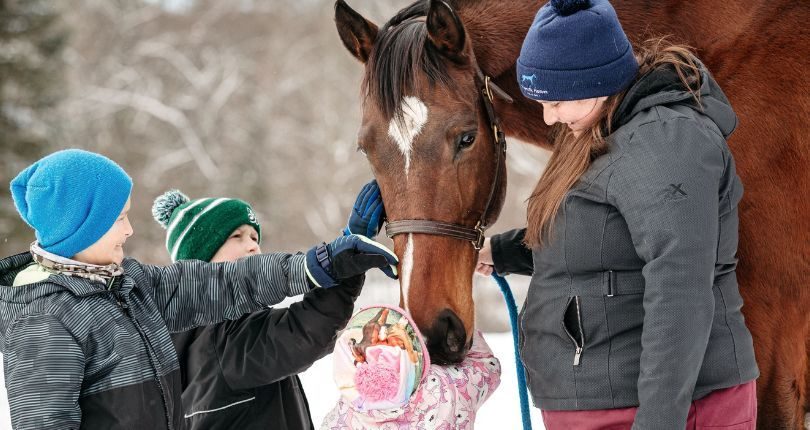
Upon retirement from racing, “Kid”, as he is affectionately known, became a track pony at NYRA, his friendly and easy-going personality making him a good candidate for assisting racehorses on the track.
Crazed
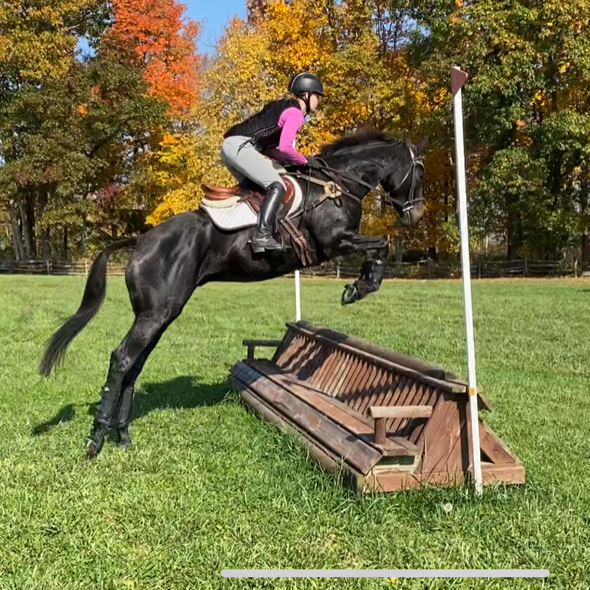
Bred in Maryland and campaigned on the east coast, Crazed retired from racing sound and ready for a second career.
Joe Pike
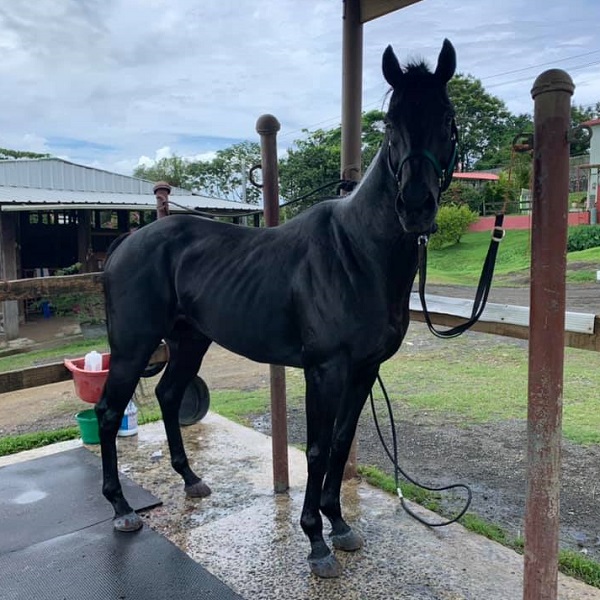
By: Eric Mitchell/BloodHorse Florida breeder Joanna Reisler had been thrilled to watch Joe Pike , a son of Benny the Bull who she bred and raised, blossom from a $7,500 sale yearling to a stakes winner in Puerto Rico. Purchased and raced initially by high-profile Puerto Rican trainer Ramon Morales, Joe Pike won four of five starts at 2 and was stakes-placed. At 3, he won six of seven starts and won the Copa Quatro de Julio Stakes, which is considered a grade 1 stakes in Puerto Rico but is an ungraded, black-type stakes internationally. In the one race at 3 that he didn’t win, he was second in the Clasico Jose Celso Barbosa Stakes, another Puerto Rican-only grade 1. “He was kind of a celebrity,” recalled Reisler. “He had a following and a little fan club.” Joe Pike kept winning and placing in races through his 5-year-old season for a variety of owners and trainers. In 2018, when he was 7 and already earned more than $130,000, his form took a turn for the worse. Reisler knew racehorses that go off-form in Puerto Rico face few good options. Concerned about Joe Pike’s future, Reisler contacted Kelley Stobie, co-founder of the TAA-accredited Caribbean Thoroughbred Aftercare program, in 2018 and told Stobie she was willing to take Joe Pike back if the owner no longer wanted to race him. The horse’s owner told Stobie at the time he had plans to stand Joe Pike as a stallion, a plan that ultimately did not pan out because the horse was a reluctant breeder. Two and half months ago, Reisler got a call from Stobie who told her the horse had been turned over to the CTA and wanted to know if Reisler still wanted him back. Absolutely, was Reisler’s answer. The challenge, however, would be covering the more than $3,800 required to get Joe Pike through quarantine, flown to Miami, and then vanned from Miami to Reisler’s 10-acre farm near Ocala. “I can certainly afford to keep him, but I could not pull together the money necessary for the shipping and quarantine,” Reisler said. This is the quandary CTA faces every day. Shouldering the escalating cost of managing and shipping horses back to the U.S. that don’t have a future in racing but could have useful second careers, like Joe Pike. In the recent past, the association would have 40 such horses to manage annually, but a spike in the importing of inexpensive racehorses from the States has dramatically increased the demand for its services. As of June 21, the CTA has already taken in 38 horses, according to Stobie. An increase in financial support has not accompanied the increased demand. The CTA does get a portion of money wagered at Camarero Racetrack, but its 3% cut is on the on-track handle only, while the vast majority of wagers are made at simulcast outlets and through advance-deposit wagering. The CTA’s portion from the on-track handle is about $1,000 per month, according to Stobie. The CTA’s annual operating budget is around $270,000. Last year, according to a June 4 article published by the Center for Investigative Journalism in Puerto Rico, the organization received $5,580 from Camarero, $7,912 from the Puerto Rico Breeders’ Association, and $27,977 from the Puerto Rico Horse Owners Association. CTA also got $60,000 from the Gaming Commission allocated over four years. In total, these sources cover around 21% of the CTA’s total operating costs and the shortfall has to be made up for through donations. The organization does get grants and donations from the U.S. horse community. “Joe Pike gave his all as a racehorse and was successful, he doesn’t deserve to be euthanized,” said Stobie. Hundreds of racehorses in Puerto Rico don’t have the options afforded Joe Pike. The Center for Investigative Journalism in its recent article about problems within the island’s horse racing industry reported more than 1,400 horses were euthanized from 2015-20 at the Equestrian Confederation Clinic, the larger of two veterinary clinics operating in the stabling area of Camarero. Why each horse was euthanized during that six-year period is not documented, though a communication from the Puerto Rico Gaming Commission reportedly indicates this documentation will be required beginning this year, according to the report. So while some horses were euthanized due to fractures or other career-ending injuries, many were euthanized because they have chronic injuries and are no longer competitive, according to several Puerto Rican owners and breeders. These owners and breeders told BloodHorse about 30 horses are euthanized each month. “Each owner treats their horse how they want,” Orlando Rivera Carrión, executive director for the Puerto Rico Gaming Commission, told the Center for Investigative Journalism. “Those who have many resources treat their horses well. Those who have few resources, treat them with few resources.” With Reisler willing to take Joe Pike, the CTA bore the cost of the blood work and vaccinations necessary to be sure the horse was healthy and had him gelded. He was then doctored and monitored to be sure he could withstand the rigors of shipping. Stobie said each time the CTA puts a horse in quarantine, it puts out a call for funding for its Flight Fund. She said the donations rarely equal the cost for each horse, which forces the CTA to dig into its reserves. Reisler welcomed Joe Pike back home June 19. Without the CTA, she said, bringing the old warrior to the States likely would not have happened. “The CTA really did a great job staying in touch with the owner in Puerto Rico and reminding him he had other options if he no longer wanted the horse. Then once the horse was surrendered, they made sure he was healthy enough for the flight,” Reisler said. “He has had some soundness problems in the past and he has a softball-sized ankle, but now he is moving sound.” Joe Pike joins a couple of other retired geldings that Reisler has on her farm. Reisler said the
Hemingway’s Key
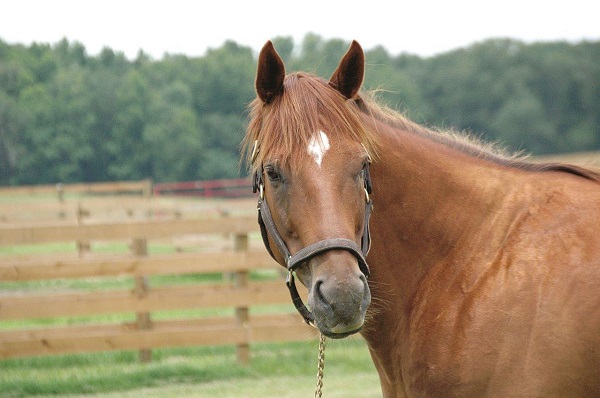
Retired Preakness Runner Hemingway’s Key Remains in Good Company By: Maryland Jockey Club Fifteen years ago, the chestnut Thoroughbred colt Hemingway’s Key was keeping some impressive company. Racing under the silks of Kinsman Stable and trained by Hall of Fame horseman Nick Zito, Hemingway’s Key spent the winter of 2006 on the Triple Crown trail competing against the top 3-year-olds in the country, such as Kentucky Derby (G1) winner Barbaro, Preakness (G1) winner Bernardini, Belmont (G1) winner Jazil and Grade I winners Corinthian, Flashy Bull and First Samurai. After finishing third in the Preakness and that summer’s Jim Dandy (G2) at Saratoga, Hemingway’s Key raced into his 5-year-old season before retiring to TAA-accredited Thoroughbred Retirement Foundation (TRF) in Lowell, FL in August of 2008. Hemingway’s Key has been a favorite at the TRF’s Second Chances Program at the Lowell Correctional Facility. But now the 18-year-old son of Notebook is taking on another role by being selected as one of four horses to work on the just-announced TRF initiative with Florida’s Department of Juvenile Justice aimed at using retired Thoroughbreds to help at-risk youths. The TRF’s Second Chances Juvenile Program will give at-risk juveniles a chance to learn hands-on training in animal skills and life skills that they can use once released. Hemingway’s Key has been a favorite with the women at the Lowell Correctional Institution. “He’s a nice horse and he’s probably the horse my students ride the most,” said John Evans, farm manager at Lowell. “He’s really sound and is a great saddle horse.” Photo: Tammy Gantt
Tizno
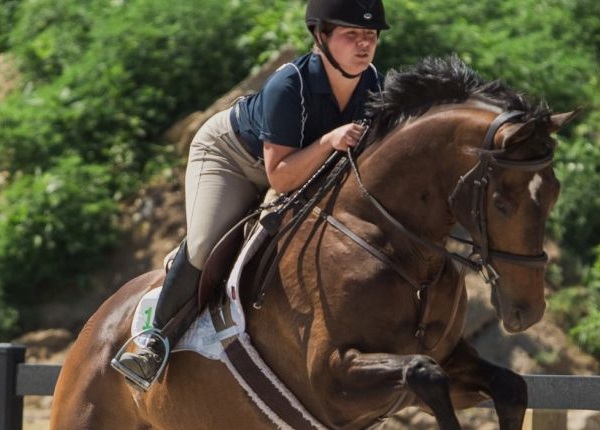
Love at first ride: Tizno makes the leap into a new life
First Lieutenant
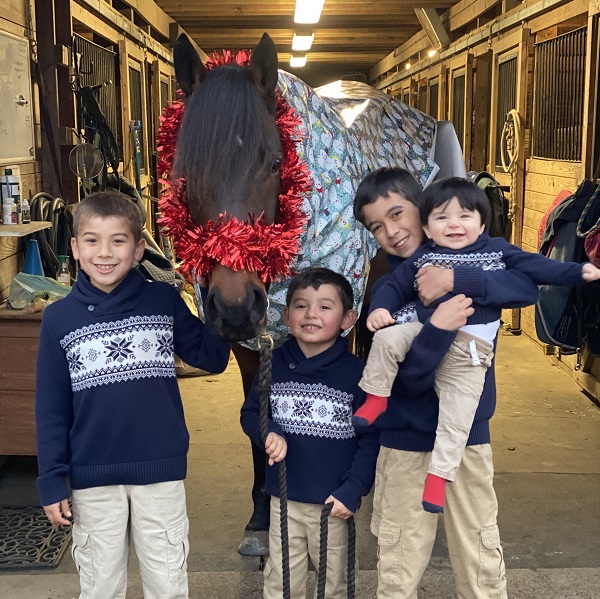
After three starts at Penn National, a handsome bay gelding suffered a slab fracture, thus ending his career on the track.
Shewasnicerthen
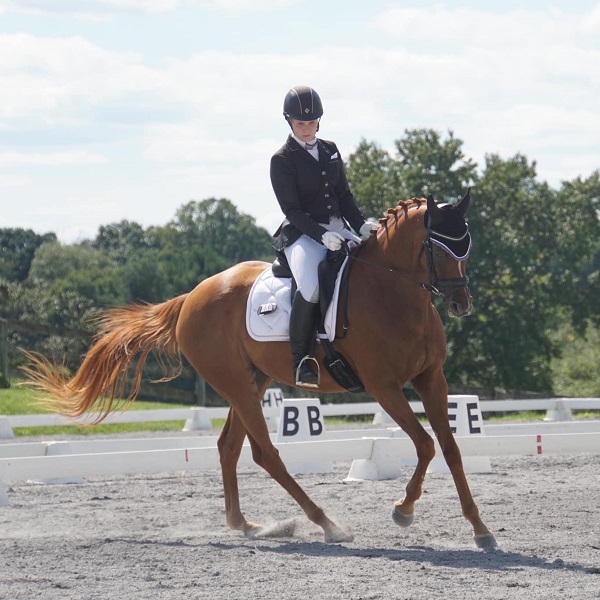
Shewasnicerthen made 14 starts at Parx before retiring to After the Races at age 3, having earned $43,011 with a record of 1-3-3.
The Cake Is a Lie
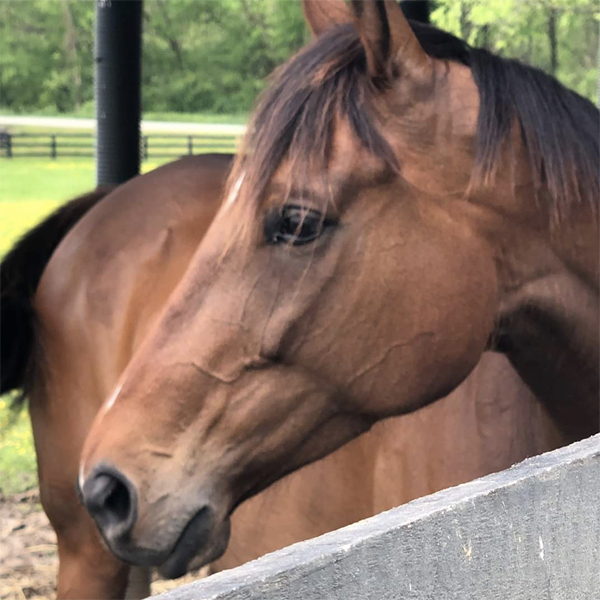
Before stepping foot on the grounds of TAA-accredited After the Races, volunteer Susan Miller repeatedly told herself that taking a horse home was out of the question. But that changed when she met The Cake Is a Lie.